
As an Amazon Associate, AddWatch earns from qualifying purchases. This does not affect our reviews.
Is Orient a good watch brand? Yes. Orient is one of the best-value watch brands in the world because it makes its own automatic movements and sells them in watches that often cost less than $300. Its Bambino, Mako and Kamasu are among the most recommended first mechanical watches, and its Orient Star line competes with watches costing far more.
Short answer: Orient watches are good, especially for automatic watches under $400. Expect excellent value, in-house movements and classic designs; accept looser accuracy, simple bracelets and mineral glass on the cheapest models.
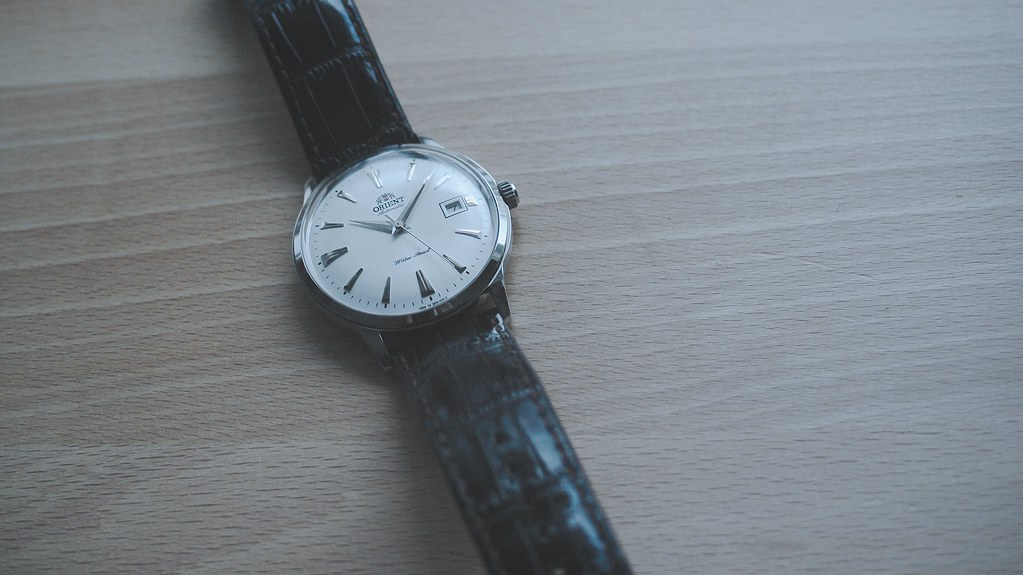
Is Orient a good watch brand?
Orient is a good watch brand because it does something few companies at its price can: it designs and builds its own mechanical movements in Japan. That gives you a genuine in-house automatic watch for the price of a mass-market fashion watch.
The company was founded in Tokyo in 1950 and grew out of a watch shop that dates back to the start of the 20th century. Orient became part of Seiko Epson in 2009, but it still runs its own design and movement production, separate from Seiko. That is why Orient watches look and feel different from Seiko even though the two companies are now related.
Orient's focus has always been mechanical watches at accessible prices. Rather than chasing trends, it refines classic designs: dress watches like the Bambino, dive watches like the Mako and Kamasu, and the more refined Orient Star line above them.
Are Orient watches good quality?
Orient watch quality is excellent for the price, with a few predictable compromises. The movements are the strongest part; the bracelets and crystals on entry models are the weakest.
Movements
Most current Orient automatics use calibers from the F6 family, such as the F6922 in the Mako II and Kamasu and the F6724 in the Bambino. They hack (the seconds hand stops when you set the time), hand-wind and run for about 40 hours. Orient rates the F6922 at +25 to -15 seconds per day, which is typical for this price, and many owners report results comfortably inside that range.
Cases, crystals and bracelets
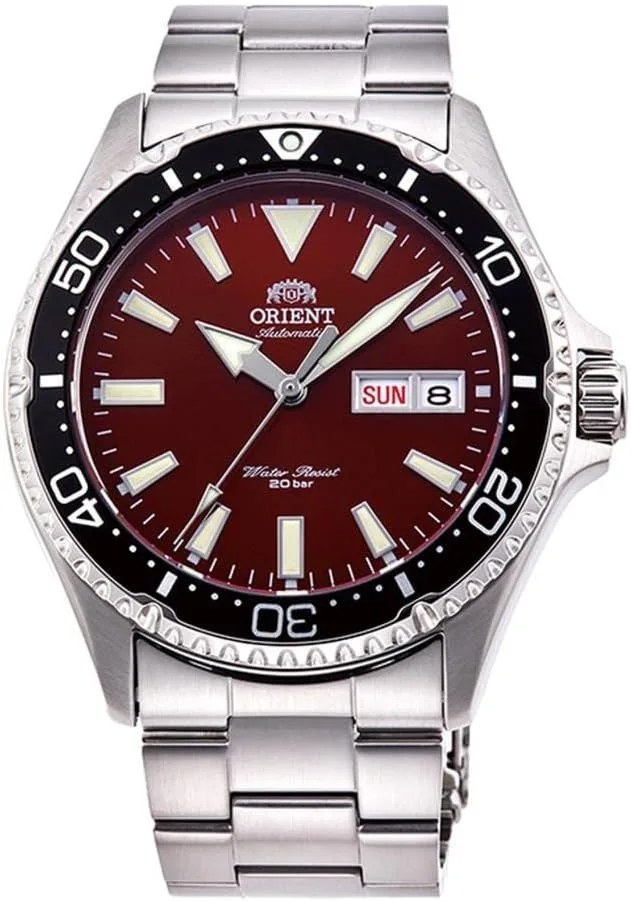
Cases are solid stainless steel and finishing is good for the price. The main compromise is the crystal: the Mako II and Bambino use mineral glass, while the Kamasu and Mako 40 step up to sapphire. Bracelets on cheaper models are light, with stamped clasps and hollow or folded end links.
Reliability
Orient movements have a strong reputation for running for years with little attention. Because they are simple and widely used, servicing is affordable.
The best Orient watches
Three Orient models cover most needs and are covered in detail elsewhere on the site.
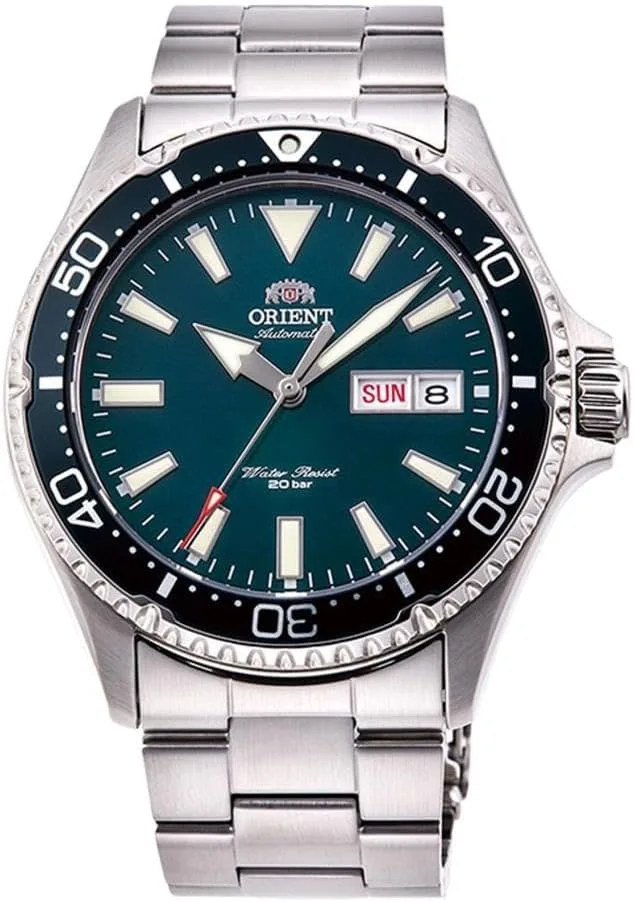
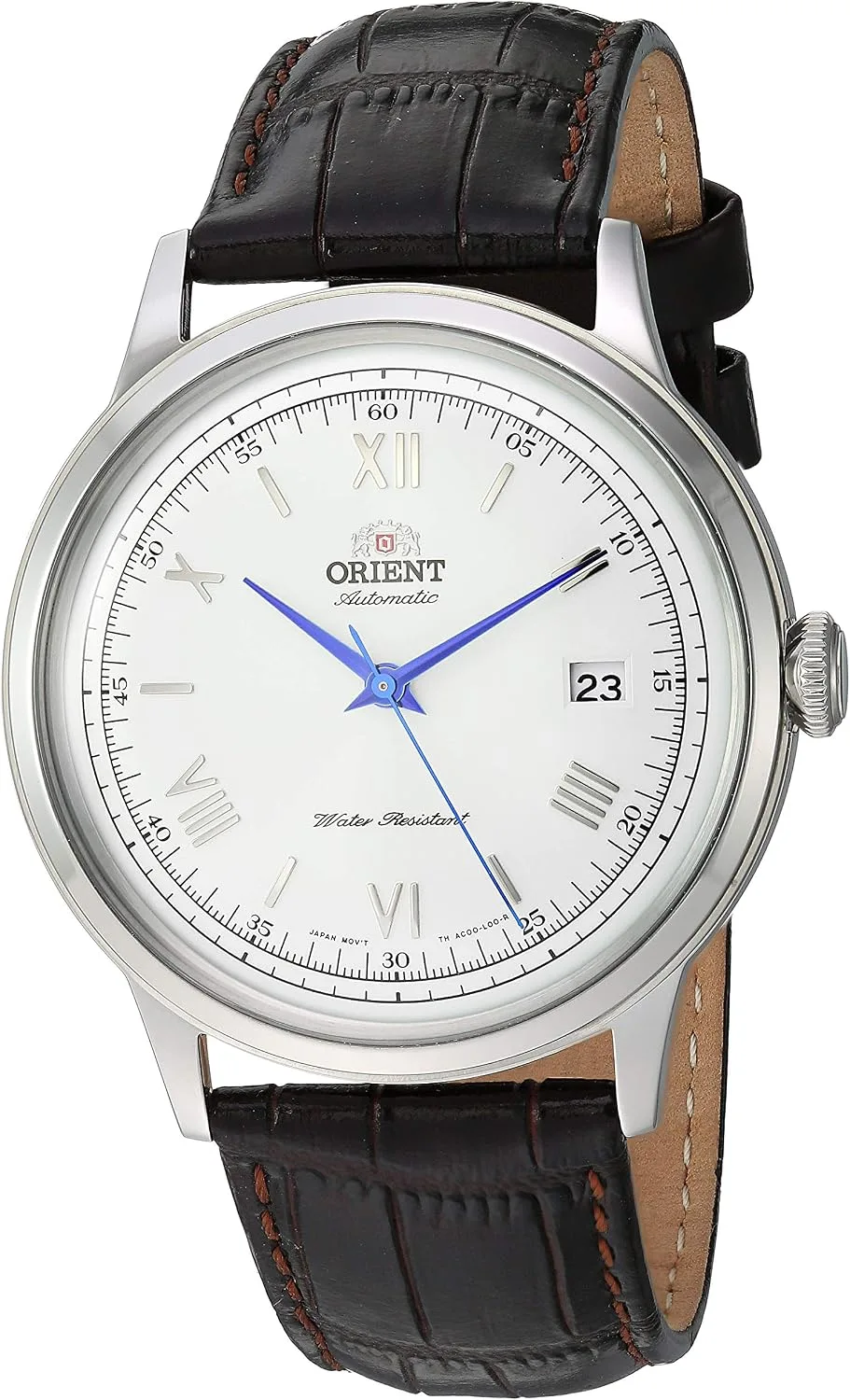
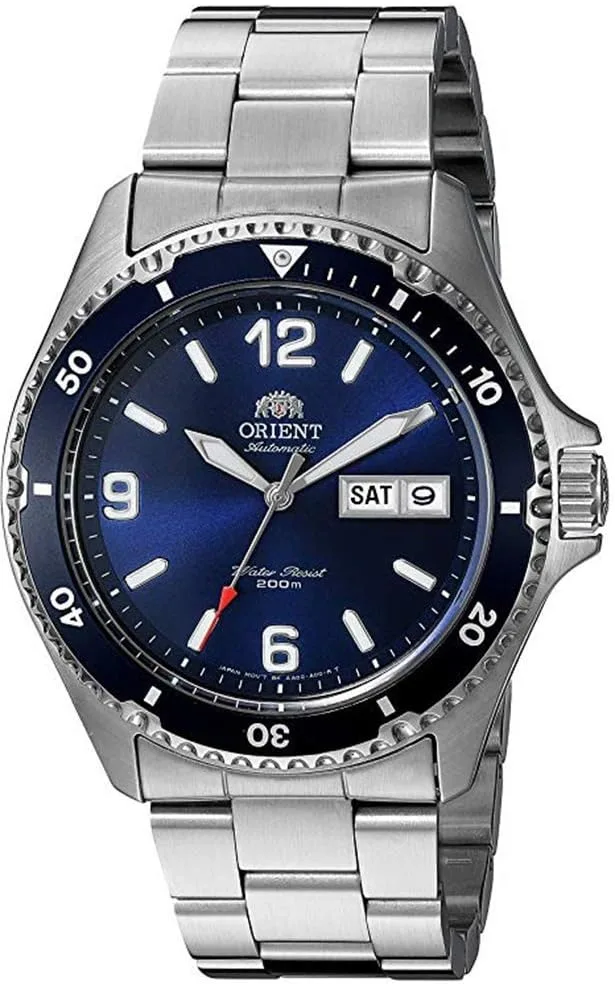
Orient Kamasu: the best all-rounder
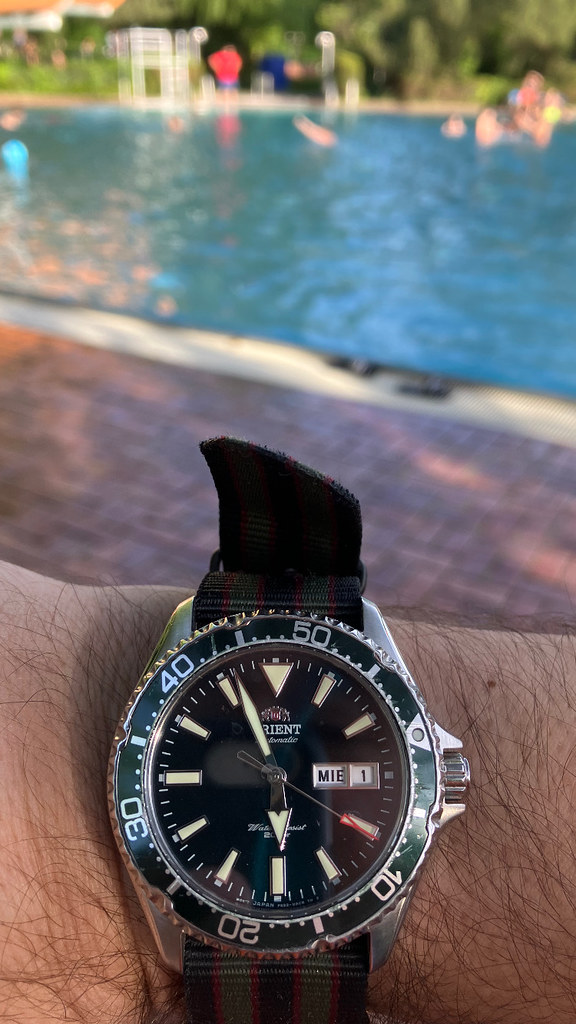
The Kamasu is the Orient most people should buy: a 41.8 mm dive watch with sapphire, 200 m of water resistance and the F6922 automatic, usually for $250 to $380. Read our full Orient Kamasu review.
Orient Bambino: the best dress watch
The Bambino is the classic affordable dress watch, with a domed crystal and simple dial on a leather strap, usually for $180 to $260. Our Orient Bambino review covers every version.
Orient Mako II: the best budget diver
The Mako II is the cheapest real automatic diver worth buying, with 200 m, a 120-click bezel and day-date, usually for $180 to $280. Our Orient Mako guide compares the Mako II, Mako 40, Kamasu and Mako GMT.
Orient vs Seiko
Orient and Seiko are both Japanese, both make their own movements and both now sit within the wider Seiko group, but they compete directly. The choice usually comes down to price, crystal and range.
| Area | Orient | Seiko |
|---|---|---|
| Entry automatic | Mako II, Bambino | Seiko 5 Sports |
| Typical entry price | $180 to $280 | $220 to $300 |
| Entry movement | F6922 or F6724, about 40 h | 4R36, about 41 h |
| Rated accuracy | +25 to -15 s/day | +45 to -35 s/day |
| Sapphire under $400 | Yes (Kamasu, Mako 40) | Rare |
| Range above $1,000 | Limited (Orient Star) | Wide (Prospex, King Seiko, Grand Seiko) |
Orient usually wins at the entry level: its movements carry a tighter accuracy rating and you can get sapphire for less money. Seiko wins on range, brand recognition and options above $500. Read whether Seiko watches are good for the other side of the comparison.
Orient Kamasu vs Seiko 5
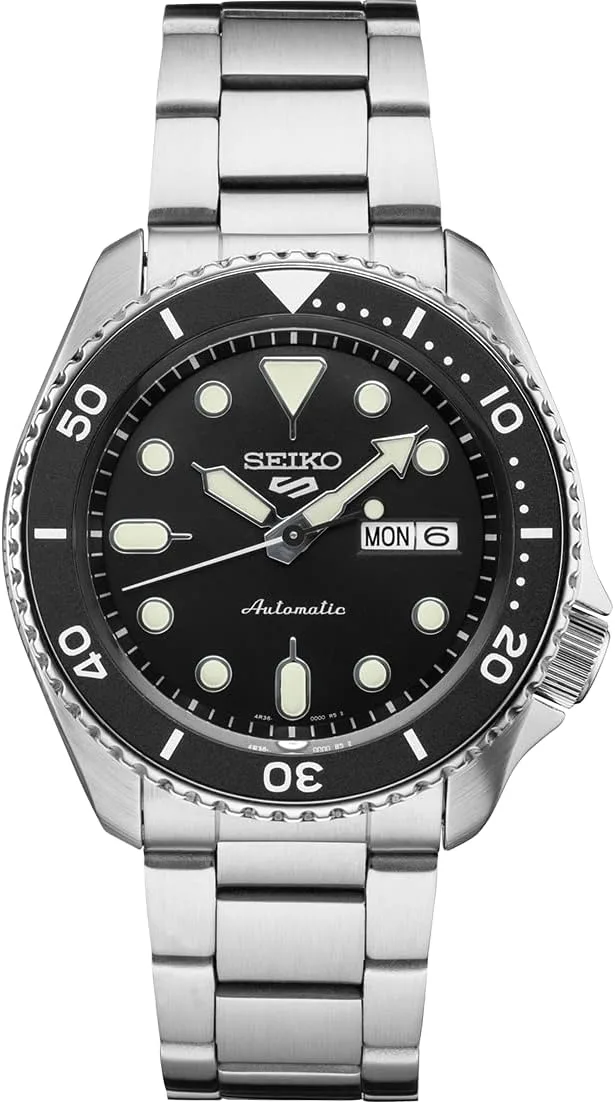
The most common head-to-head is the Kamasu against the Seiko 5 Sports. The Kamasu has sapphire, 200 m of water resistance and a screw-down crown; the Seiko 5 has 100 m, a Hardlex crystal and a display caseback, and comes in far more styles. For pure specs, the Kamasu wins; for design choice and a see-through caseback, the Seiko 5 is the pick. See our Seiko 5 Sports review.
Orient vs Orient Star
Orient Star is Orient's premium line. It uses higher-grade movements, often with a power reserve indicator on the dial, better finishing and more refined cases and bracelets, at prices that usually start a few hundred dollars above standard Orient models.
Standard Orient is about maximum value: a solid automatic for as little as possible. Orient Star is about refinement, and it competes with Seiko Presage and entry Swiss automatics. If you love Orient's designs but want a dressier, better-finished watch, Orient Star is the next step.
Orient watch reviews: what owners say
Orient watch reviews from owners are consistently positive, and the same themes come up across the Bambino, Mako and Kamasu. Thousands of Amazon ratings for these models average around 4.5 stars or higher.
Owners most often praise the value, the look of the dials in person and the fact that a sub-$300 watch has a genuine in-house automatic movement. Many describe an Orient as the watch that got them interested in mechanical watches. The Bambino's domed crystal and the Kamasu's sunburst dials are mentioned again and again as looking more expensive than they are.
The criticism is just as consistent and mostly concerns details rather than reliability: bracelets that feel light, mineral crystals that scratch, lume that is good but not class-leading and accuracy that varies from piece to piece. Very few owners report serious movement problems.
Are Orient watches good for the money?
Yes, and value is the main reason to choose Orient. An Orient Mako II or Bambino gives you an in-house automatic with hacking and hand-winding for around $200, while many brands at that price use outsourced movements or quartz. The Kamasu adds sapphire and 200 m for under $400, a combination that usually costs more elsewhere.
The value is weaker above $500, where Orient Star competes with strong rivals from Seiko, Citizen and the entry Swiss brands. Below $400, though, few brands match Orient for mechanical watches. For broader comparisons by budget, see our best watches under $500 guide.
Common Orient complaints
Orient's weak points are consistent, and most affect the cheapest models:
- Mineral crystals on the Mako II and Bambino scratch over time
- Light bracelets with stamped clasps and hollow end links
- Accuracy varies between pieces, as with any mechanical watch at this price
- Bezel alignment is occasionally slightly off on dive models
- Limited availability in some countries, where Orient is sold mainly online
None of these is unusual at under $300, and the movements themselves are rarely the problem.
Who should buy an Orient watch
Orient suits buyers who want a real mechanical watch without spending much. It is an especially good choice for a first automatic, a dress watch on a budget or a sapphire dive watch under $400.
Skip Orient if:
- You want a quartz or solar watch; Citizen and Casio are stronger there
- You need very tight accuracy; choose quartz
- You want a wide choice above $1,000; Seiko and Swiss brands offer more
For more starter options, see our best watches under $200 for men.
How we evaluated Orient
We have not tested these watches on our own wrists for this guide. We reviewed Orient's official specifications for its main models and calibers, compared typical US prices, read a broad sample of owner reviews and compared Orient with Seiko at the same prices.
FAQ
Yes. Orient makes its own automatic movements and offers some of the best value in mechanical watches, especially under $400. The main compromises are mineral crystals and basic bracelets on the cheapest models.
Orient is part of Seiko Epson, a company within the wider Seiko group, but it designs its own watches and makes its own movements.
At the entry level Orient often offers better specs for the money, including sapphire on the Kamasu. Seiko offers a far wider range and more models above $500.
The Kamasu for most people, the Bambino for a dress watch and the Mako II if you want the cheapest automatic diver.
Orient is a Japanese brand, and it designs and makes its own movements in Japan.
Orient Star is the premium line, with higher-grade movements, power reserve indicators on many models and better finishing, at higher prices.
Our verdict
Orient is a good watch brand, and for automatic watches under $400 it is one of the best. Choose the Kamasu for an all-round sapphire diver, the Bambino for a dress watch and the Mako II for the lowest price. Step up to Orient Star if you want more refinement.
Check the Orient Kamasu on AmazonImage credits: Orient Bambino by MIKI Yoshihito, CC BY 2.0; Orient Kamasu at the pool by illustir, CC BY 2.0.