
As an Amazon Associate, AddWatch earns from qualifying purchases. This does not affect our reviews.
The best watch for the money is not one watch. It is the model that gives you the most real watch at the price you are willing to pay, and that answer changes a lot between $20, $300 and $700. Below are our 12 value picks across three budgets, from a $20 Casio that keeps time for a decade to a Swiss automatic that holds its own against watches costing twice as much.
Short answer: if you want one recommendation, the Orient Kamasu is the strongest all-round value we know of: an in-house automatic movement, a sapphire crystal and 200 meters of water resistance for roughly $250 to $380. If your budget is under $150, the G-Shock GA-2100 is the pick. If you can stretch to $600, the Hamilton Khaki Field Mechanical is the best mechanical watch at its price.
Quick picks
- Best overall value: Orient Kamasu, for sapphire, 200 m and an automatic movement under $400
- Best under $25: Casio F-91W, the cheapest watch that still does everything most people need
- Best tough everyday watch: Casio G-Shock GA-2100, slim, shock resistant and good for 200 m
- Best first automatic: Seiko 5 Sports SRPD55
- Best dress watch on a budget: Orient Bambino Version 2
- Best Swiss watch under $500: Tissot PRX quartz
- Best for looking expensive: Seiko Presage Cocktail Time SRPB41
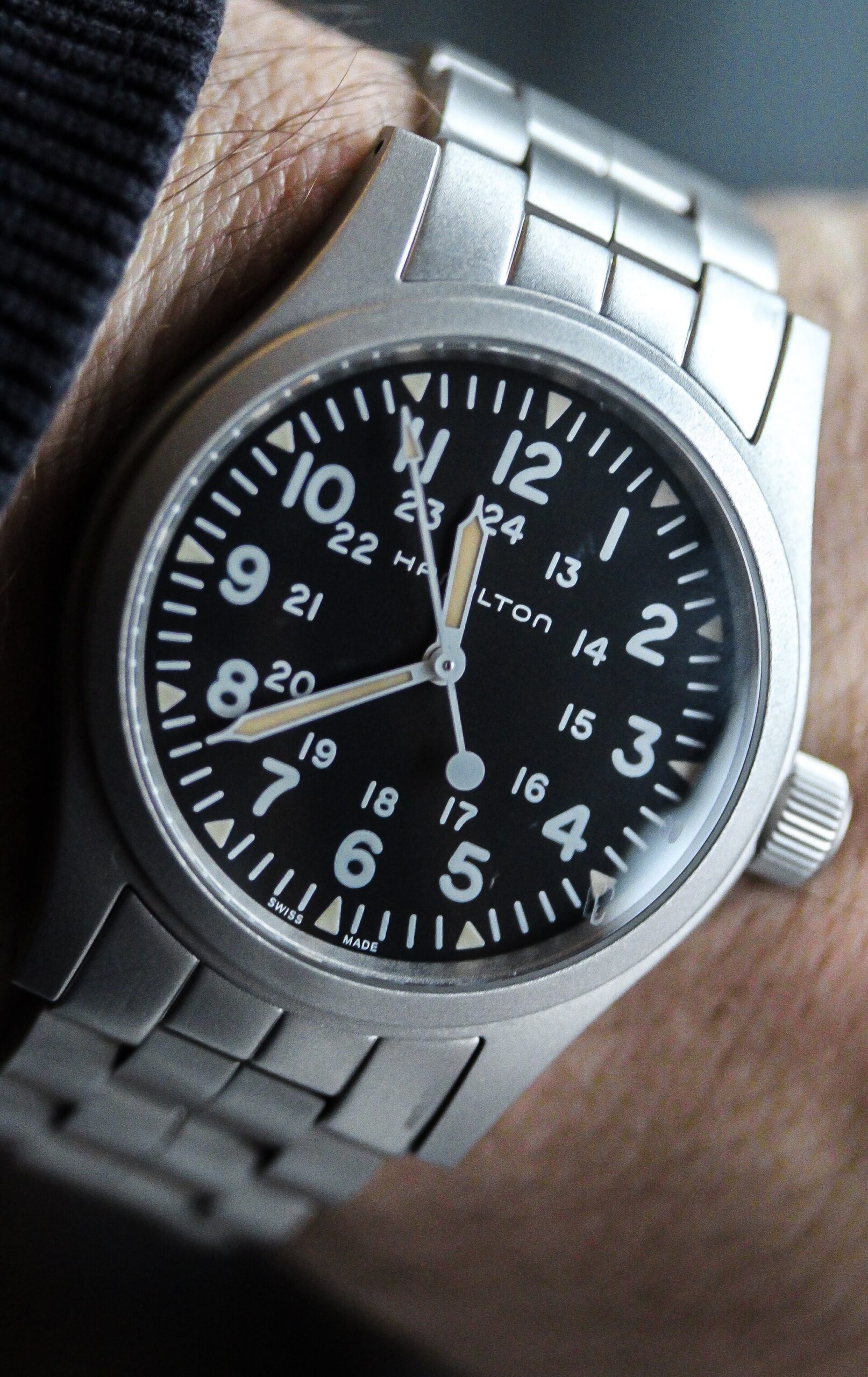
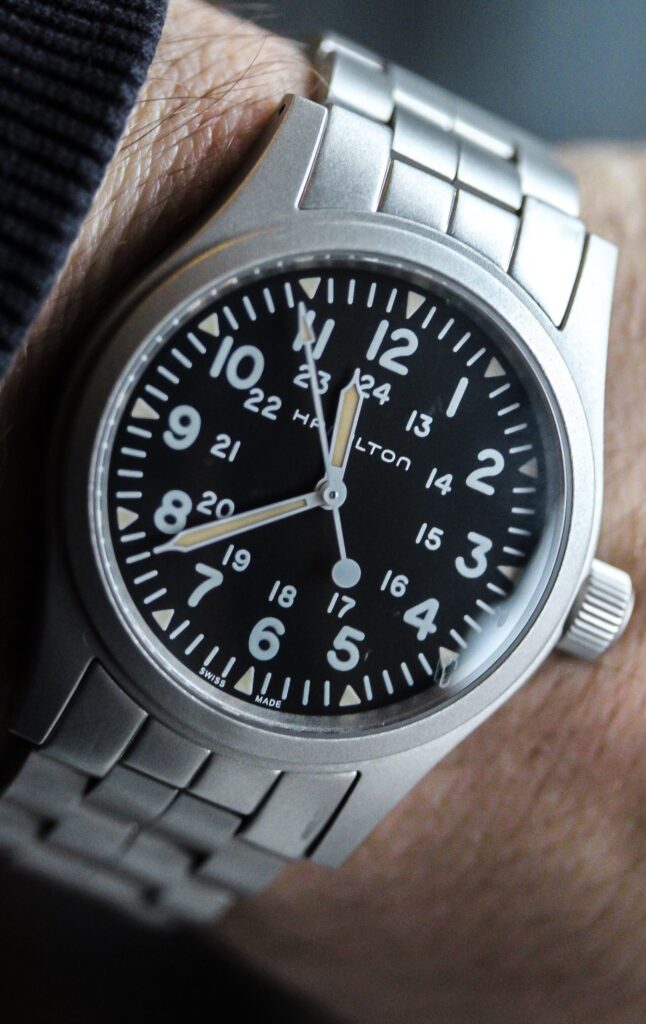
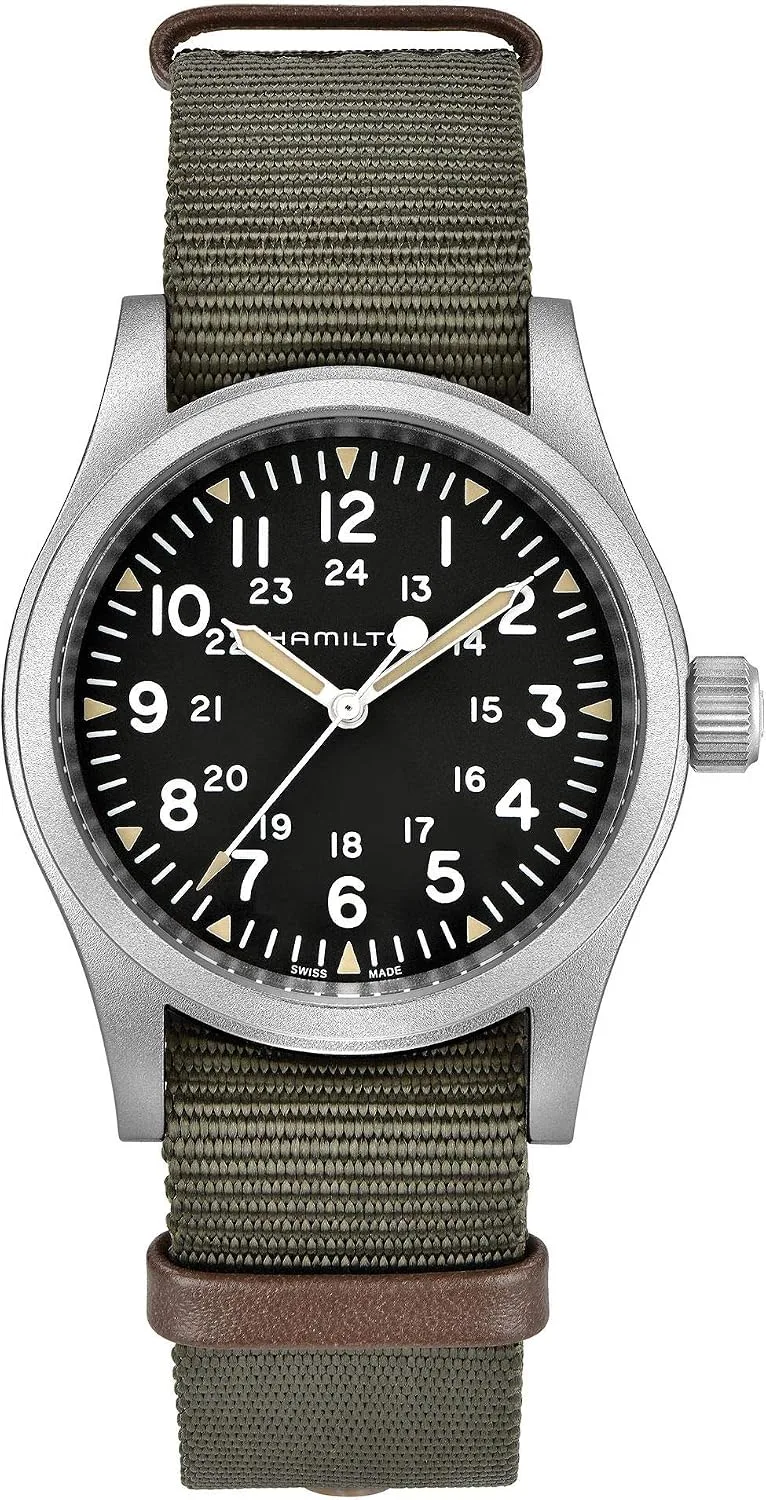
- Best mechanical splurge: Hamilton Khaki Field Mechanical 38mm
The best watch for the money at every budget: all 12 compared
| Watch | Movement | Case | Water resistance | Usual price | Best for |
|---|---|---|---|---|---|
| Casio F-91W | Digital quartz | about 35 mm, resin | Splash only | $15 to $25 | Spending almost nothing |
| Casio Duro MDV107 | Quartz | 44 mm, steel | 200 m | $60 to $90 | A cheap real diver |
| G-Shock GA-2100 | Analog-digital quartz | 45.4 mm, carbon resin | 200 m | $99 to $120 | Daily abuse |
| Seiko 5 Sports SRPD55 | Automatic 4R36 | 42.5 mm, steel | 100 m | $220 to $300 | First automatic |
| Orient Bambino V2 | Automatic F6724 | 40.5 mm, steel | 30 m | $200 to $260 | Office and weddings |
| Citizen Promaster Diver BN0150 | Solar quartz | 44 mm, steel | 200 m (ISO) | $180 to $300 | Never changing a battery |
| Orient Kamasu | Automatic F6922 | 41.8 mm, steel | 200 m | $250 to $380 | Best spec sheet per dollar |
| Tissot PRX quartz 40mm | Swiss quartz | 40 mm, steel | 100 m | $375 to $450 | Swiss name, fair price |
| Seiko Presage SRPB41 | Automatic 4R35 | 40.5 mm, steel | 50 m | $380 to $475 | A dial that looks expensive |
| Bulova Lunar Pilot 96B251 | 262 kHz quartz chrono | 45 mm, steel | 50 m | $400 to $500 | Accuracy and history |
| Hamilton Khaki Field Mechanical | Hand-wound H-50 | 38 mm, steel | 50 m | $550 to $675 | A mechanical watch for life |
| Tissot PRX Powermatic 80 | Automatic, 80 h | 40 mm, steel | 100 m | $650 to $850 | Swiss automatic value |
How we chose these watches
We did not wear-test these watches for this article. We built the list from the things that decide value on paper and in owners' hands: the movement and who makes it, the crystal (sapphire, Hardlex or mineral), real water resistance, the bracelet or strap that comes in the box, and how long the model has been in production without serious reliability complaints. We checked every spec against the manufacturer's own listing and read through owner feedback to find the problems that show up after months of wear, not just on unboxing day.
Our idea of the best watch for the money is simple: the most real watch per dollar. Two rules shaped the list. First, a pick had to beat the other watches at its price on at least one thing that matters, not just look nice. Second, no fashion brands. A $150 watch with a designer logo usually contains the same $5 quartz movement as a $20 Casio, and the extra money goes to marketing. Prices below are typical street prices, which move often, so treat them as ranges.
Best watch for the money under $150
These are inexpensive watches, but not cheap ones. At this level, value means a movement that never needs attention, a case that survives daily life and a price low enough that you will not worry about it. All three picks here are quartz, and that is the right call: cheap automatics exist, but at this money they cut corners on everything else.
1. Casio F-91W: best watch under $25
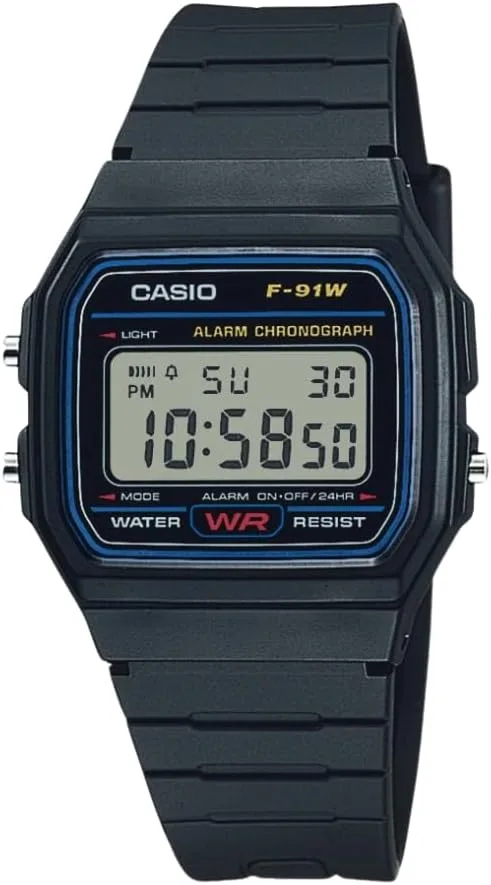
- Movement: digital quartz, about ±30 seconds per month
- Case: resin, roughly 35 x 38 mm and 8.5 mm thick, about 21 g
- Battery: about 7 years
- Functions: alarm, stopwatch, LED light
- Water resistance: splash resistant, not for swimming
The F-91W has been in production since 1989 and still sells in huge numbers because it does the basic job perfectly. It is light enough to forget about, the battery lasts most of a decade, and it is accurate enough that you will rarely adjust it. If you only want something that tells the time reliably, spending more does not buy you better timekeeping.
What owners say: people love the weight and the price. The usual complaints are the faint light, a strap that eventually cracks, and the fact that it is not built for the pool. We cover it alongside other budget options in our guide to the best watches under $100.
- Pros: costs less than lunch, multi-year battery, nearly weightless
- Cons: weak light, not for swimming, looks like what it is
2. Casio Duro MDV107: best cheap dive watch
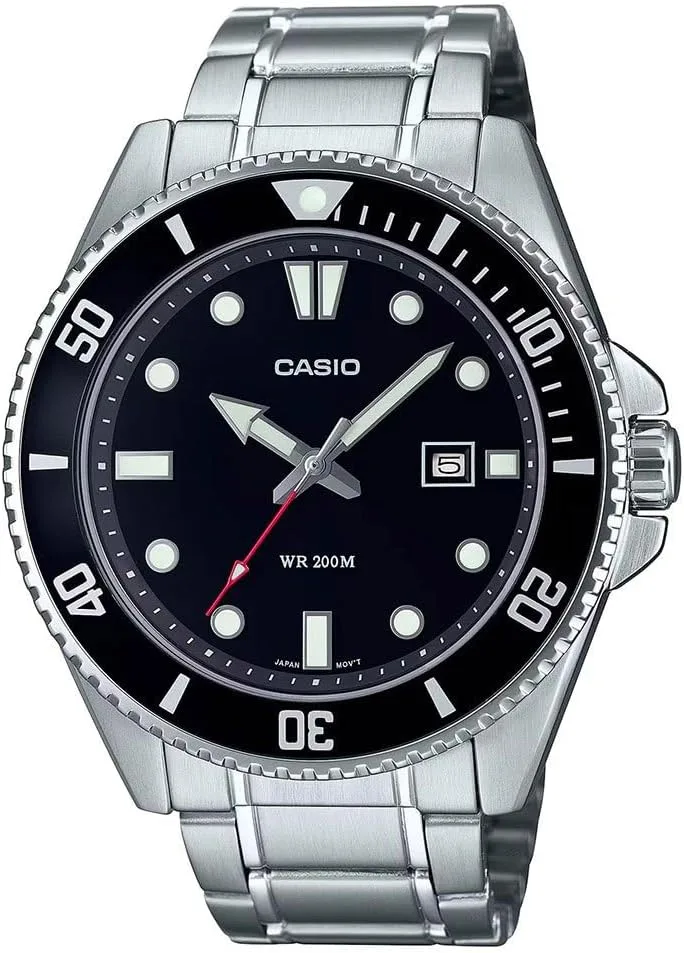
- Movement: quartz with date
- Case: 44 mm stainless steel with a unidirectional bezel
- Crystal: mineral
- Water resistance: 200 m
- Bracelet: stainless steel (MDV107D-1A1)
The Duro gives you a proper dive-watch layout, a steel case and 200 meters of water resistance for the price of a nice dinner. It has a cult following among collectors who own far more expensive watches, mostly because it looks and behaves like a serious tool for very little money.
What owners say: the bezel action and legibility get praise. The common complaints are average lume, a mineral crystal that picks up scratches and a bracelet that feels light next to pricier steel watches. A resin-strap version of the Duro also exists and usually costs a little less.
- Pros: real 200 m rating, steel case, classic diver look
- Cons: 44 mm is big on small wrists, mineral crystal, lightweight bracelet
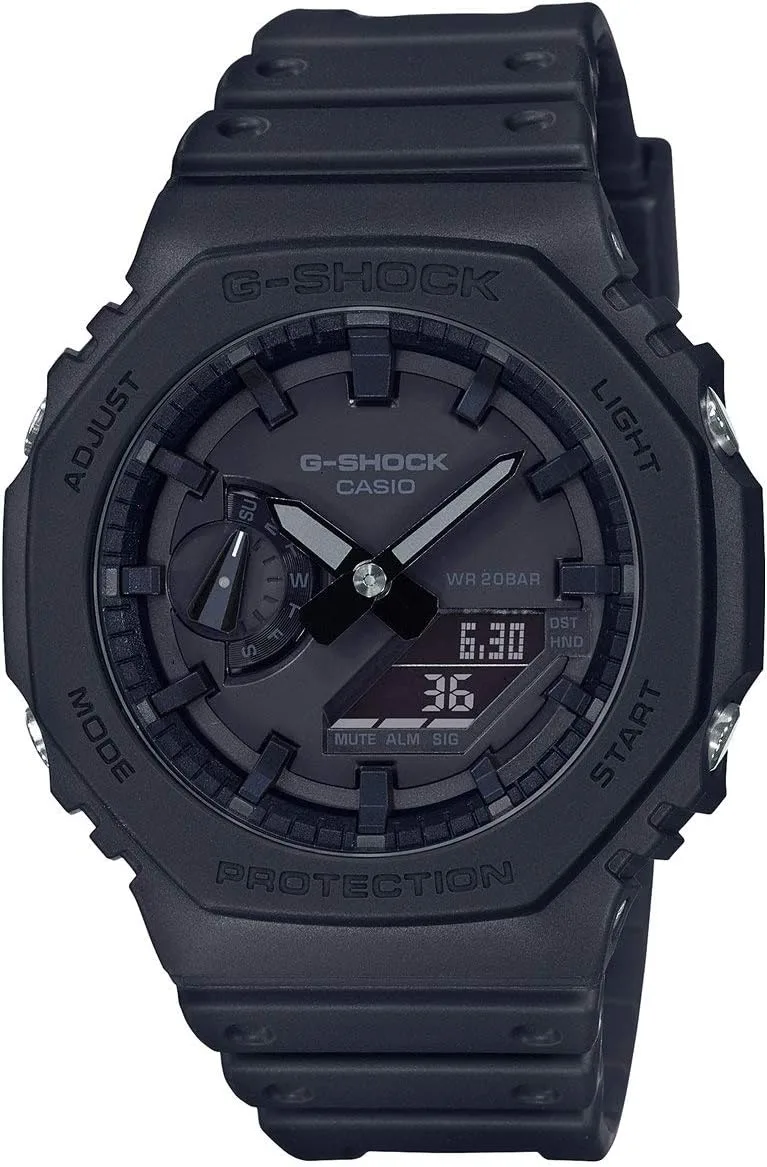
3. Casio G-Shock GA-2100: best tough watch for the money
- Movement: analog-digital quartz, about ±15 seconds per month
- Case: 45.4 mm wide, 11.8 mm thick, carbon core guard, about 51 g
- Water resistance: 200 m
- Functions: world time, alarms, stopwatch, countdown timer, LED light
- Battery: about 3 years
The GA-2100, nicknamed the "CasiOak" for its octagonal bezel, is the slimmest mainstream G-Shock and the one most people can wear every day without feeling like they strapped on a gadget. It is shock resistant, water resistant to 200 m and light, which is a combination no steel watch at this price can match.
What owners say: comfort and the clean look are the highlights. The digital windows are small, and the light is weaker than on square G-Shocks, so reading it in the dark takes a moment.
- Pros: genuinely hard to break, thin for a G-Shock, many colors
- Cons: small digital displays, resin finish looks casual
Best watch for the money from $150 to $450
This is the sweet spot, and where most of the best value watches live. Here you get automatic movements made in-house, solar power, sapphire crystals and real water resistance. Each extra dollar buys something you can feel.
4. Seiko 5 Sports SRPD55: best first automatic
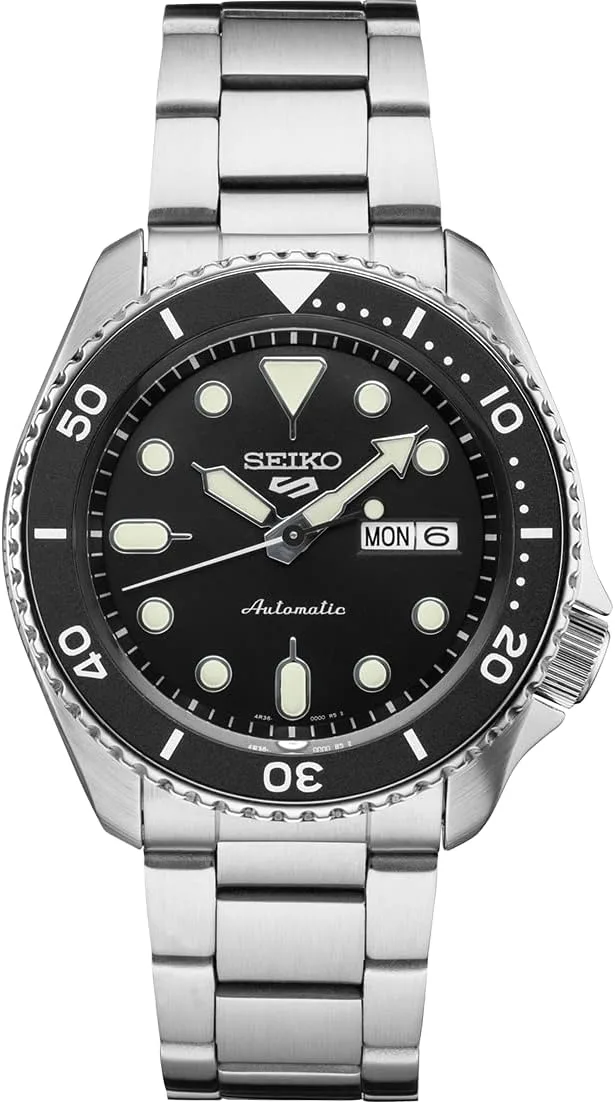
- Movement: Seiko 4R36 automatic, hand-winding and hacking, about 41 hours of power reserve
- Case: 42.5 mm steel, 13.4 mm thick
- Crystal: Hardlex
- Water resistance: 100 m
- Features: day-date, rotating bezel, display caseback
The Seiko 5 Sports is the default answer when someone asks for a first mechanical watch, and for good reason. The 4R36 movement is one of the most widely used and easily serviced automatics in the world, the case is solid, and the range comes in dozens of colors. We covered this model in depth in our Seiko 5 Sports review.
What owners say: owners like the build and the variety. Accuracy out of the box varies from watch to watch, and the Hardlex crystal is not as scratch resistant as sapphire.
- Pros: proven movement, wide choice of styles, easy to service
- Cons: thick case, accuracy varies, no sapphire
5. Orient Bambino Version 2: best dress watch on a budget
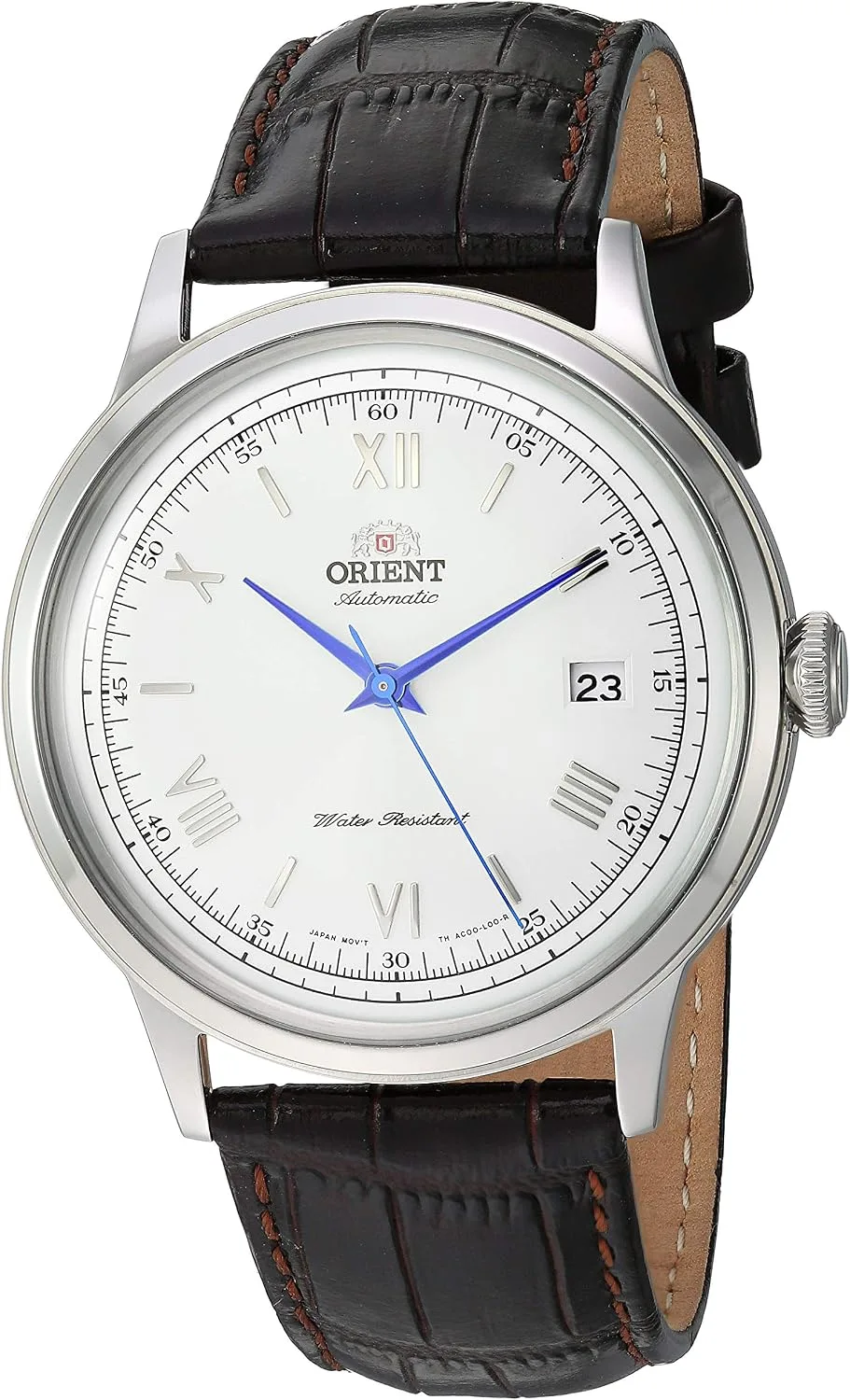
- Movement: Orient F6724 automatic, hand-winding and hacking, about 40 hours
- Case: 40.5 mm steel, 11.8 mm thick, 46.8 mm lug to lug
- Crystal: domed mineral
- Water resistance: 30 m
- Strap: leather, 21 mm
The Bambino looks like a vintage dress watch that should cost several times more. The domed crystal, the Roman numerals and the slim case work with a suit, and the in-house automatic movement now hacks and hand-winds, which older versions did not.
What owners say: the look gets near-universal praise. The domed crystal reflects light at some angles, the stock strap is basic, and 30 m means no swimming.
- Pros: classic proportions, in-house automatic, very low price for the style
- Cons: 30 m water resistance, mineral crystal, average strap
6. Citizen Promaster Diver BN0150: best for never changing a battery
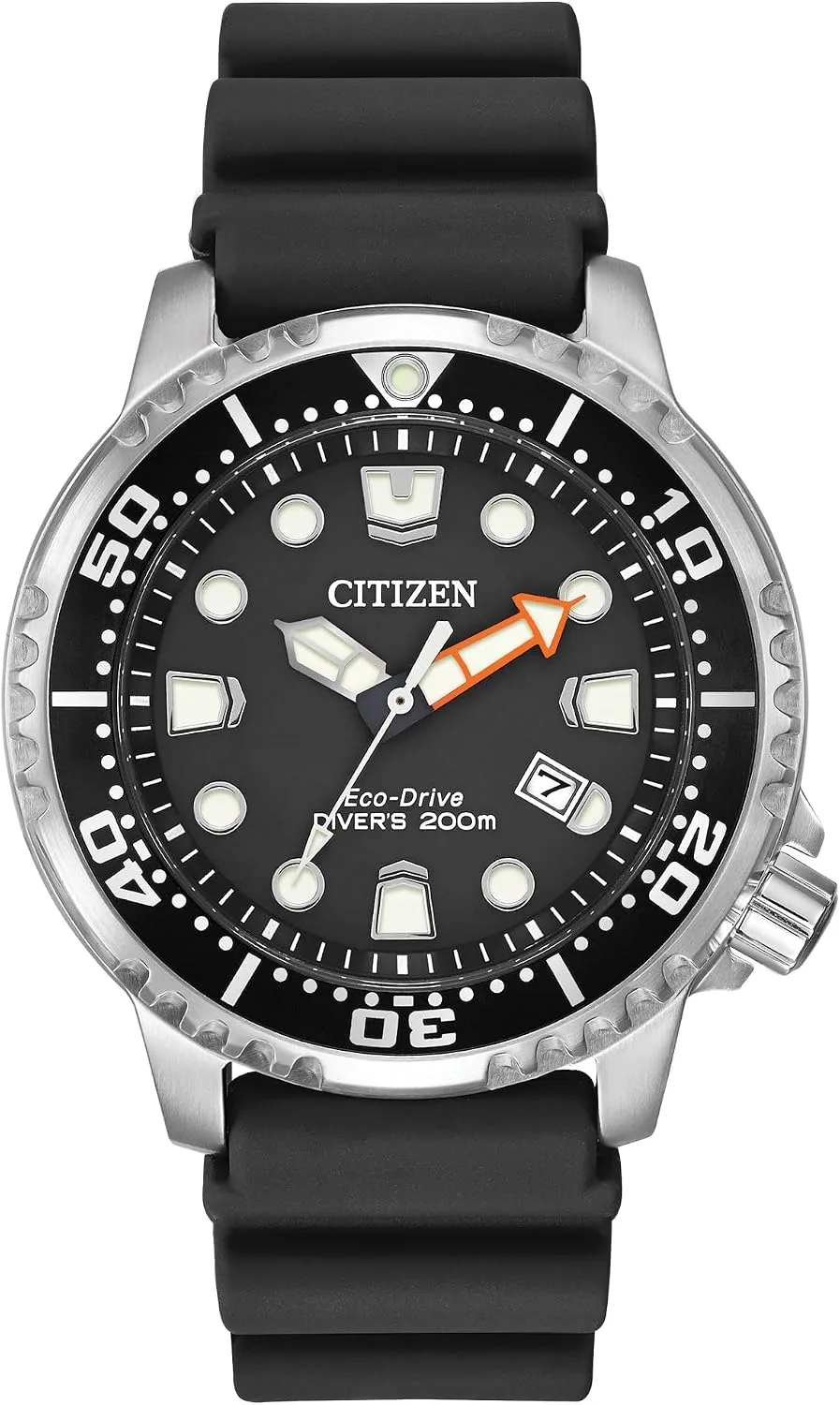
- Movement: Eco-Drive solar quartz, runs for months in the dark on a full charge
- Case: 44 mm steel with a unidirectional bezel
- Water resistance: 200 m, ISO 6425 certified dive watch
- Crystal: mineral
- Strap: polyurethane
Eco-Drive is the reason this watch is on the list. Light charges the movement, so there is no battery to replace every few years and no winding. Add a certified dive rating and you get a watch you can wear for a decade with almost no maintenance.
What owners say: reliability and lume get the most praise. Owners mention the mineral crystal and the stiff strap as the weak points, and 44 mm wears large on slim wrists.
- Pros: solar power, ISO dive certification, very low running cost
- Cons: mineral crystal, large case, plain strap
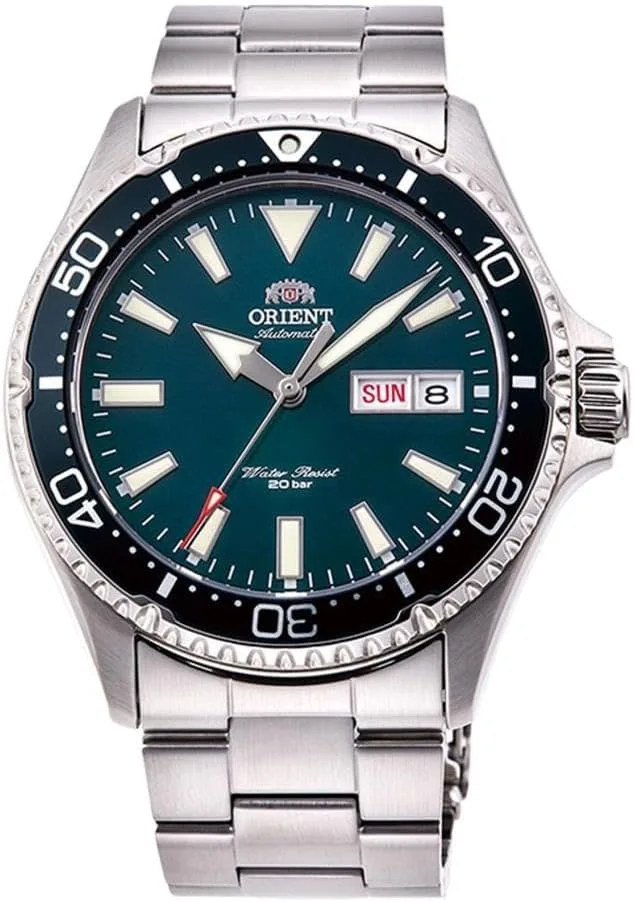
7. Orient Kamasu: best overall value
- Movement: Orient F6922 automatic, hand-winding and hacking, about 40 hours
- Case: 41.8 mm steel, 12.8 mm thick, 46.8 mm lug to lug
- Crystal: sapphire
- Water resistance: 200 m, screw-down crown
- Features: 120-click unidirectional bezel, day-date, steel bracelet, 22 mm lugs
The Kamasu is our overall pick because nothing else at its price combines all three of the things that usually separate cheap watches from good ones: an in-house automatic movement, a sapphire crystal and a 200 m rating with a screw-down crown. The sunburst dials, especially the green, look far richer than the price suggests.
What owners say: owners consistently call it one of the best deals in watches. The bracelet is the weak spot, with hollow end links and a basic clasp, and accuracy varies from piece to piece.
- Pros: sapphire crystal, 200 m, in-house movement, great dials
- Cons: basic bracelet, accuracy varies, 40-hour reserve
8. Tissot PRX quartz 40mm: best Swiss watch under $500
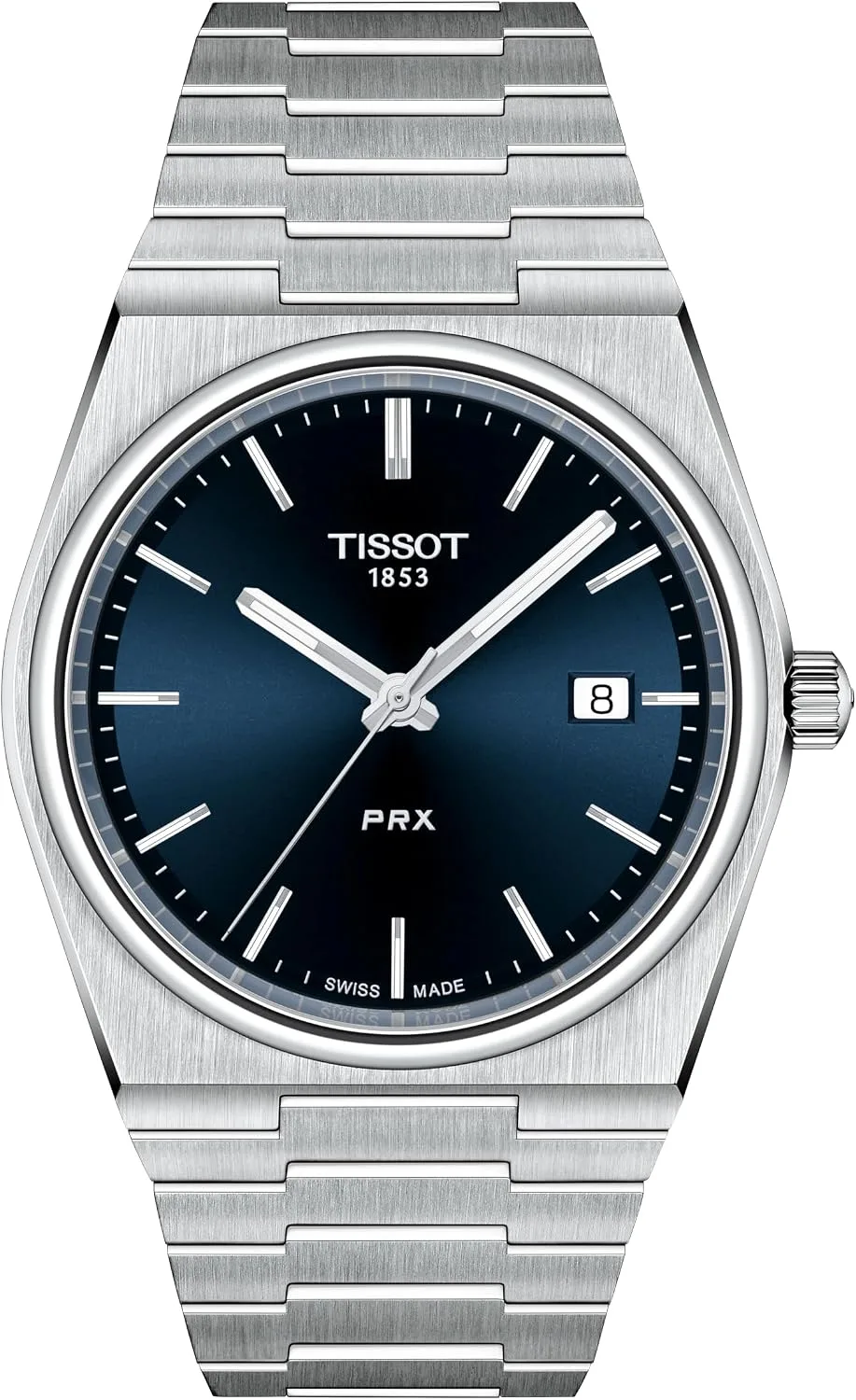
- Movement: Swiss quartz with a battery end-of-life indicator
- Case: 40 mm steel, 10.4 mm thick, integrated bracelet
- Crystal: sapphire
- Water resistance: 100 m
- Features: quick-release bracelet, date
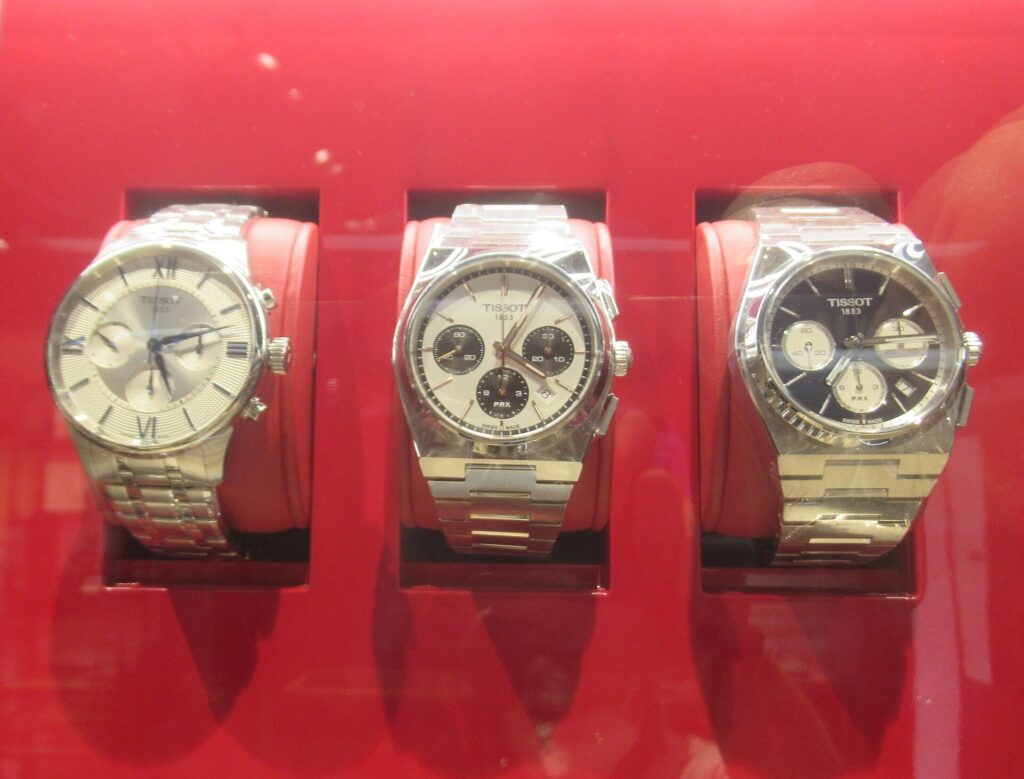
The PRX brought the integrated-bracelet look of much more expensive luxury sports watches down to a few hundred dollars, and the quartz version is the value play. It is thin, uses sapphire and is Swiss made, so you get a high-end shape and finish with a movement that never needs servicing beyond a battery.
What owners say: the finishing of the case and bracelet is the main reason people buy it. Sizing the integrated bracelet takes some care, and the lume is minimal.
- Pros: thin, sapphire, high-end design for the price
- Cons: bracelet sizing, little lume, quartz will disappoint some enthusiasts
Best watch for the money up to $850
Above $400 the gains get smaller, but they are still real: better finishing, more accurate movements, longer power reserves and brands with deep histories. These four are the ones where the extra money is easy to justify.
9. Seiko Presage Cocktail Time SRPB41: best for looking expensive
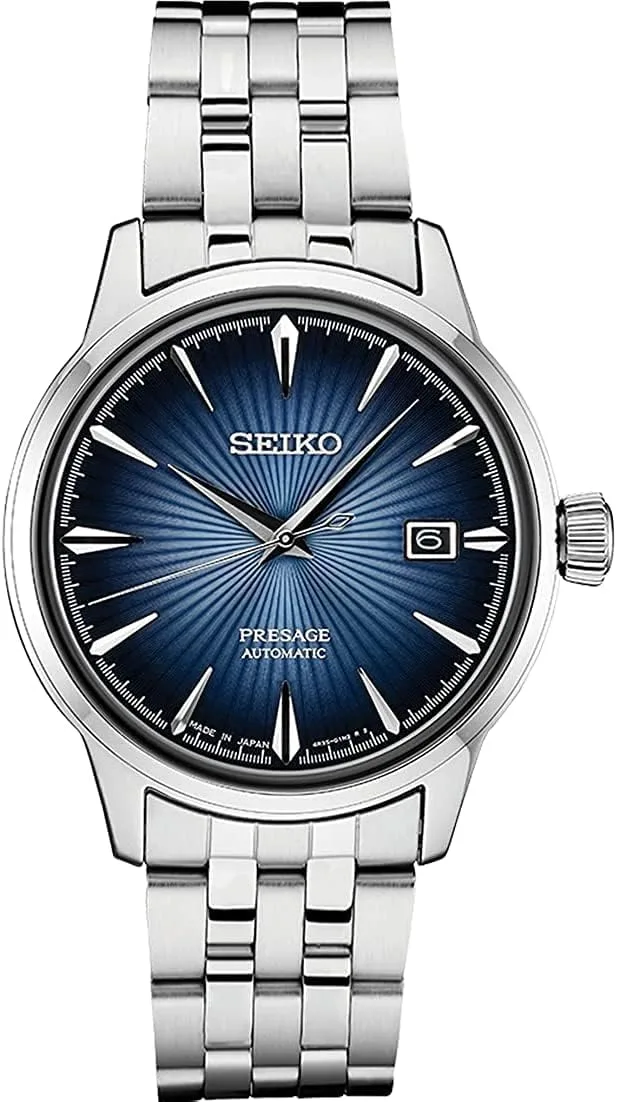
- Movement: Seiko 4R35 automatic, hand-winding and hacking, about 41 hours
- Case: 40.5 mm steel, 11.8 mm thick, 47.5 mm lug to lug
- Crystal: box-shaped Hardlex
- Water resistance: 50 m
- Features: display caseback, date, 20 mm lugs
The Cocktail Time dial is the reason this watch exists. The textured blue surface changes with the light in a way that people usually associate with watches costing thousands. If your goal is a watch that looks expensive without being expensive, this is the one to beat.
What owners say: the dial gets the attention it deserves. Owners point out that the movement is the same family as much cheaper Seikos, accuracy is average, and the crystal is Hardlex rather than sapphire.
- Pros: stunning dial, dressy proportions, display caseback
- Cons: basic movement for the price, Hardlex crystal, 50 m
10. Bulova Lunar Pilot 96B251: best for accuracy and history
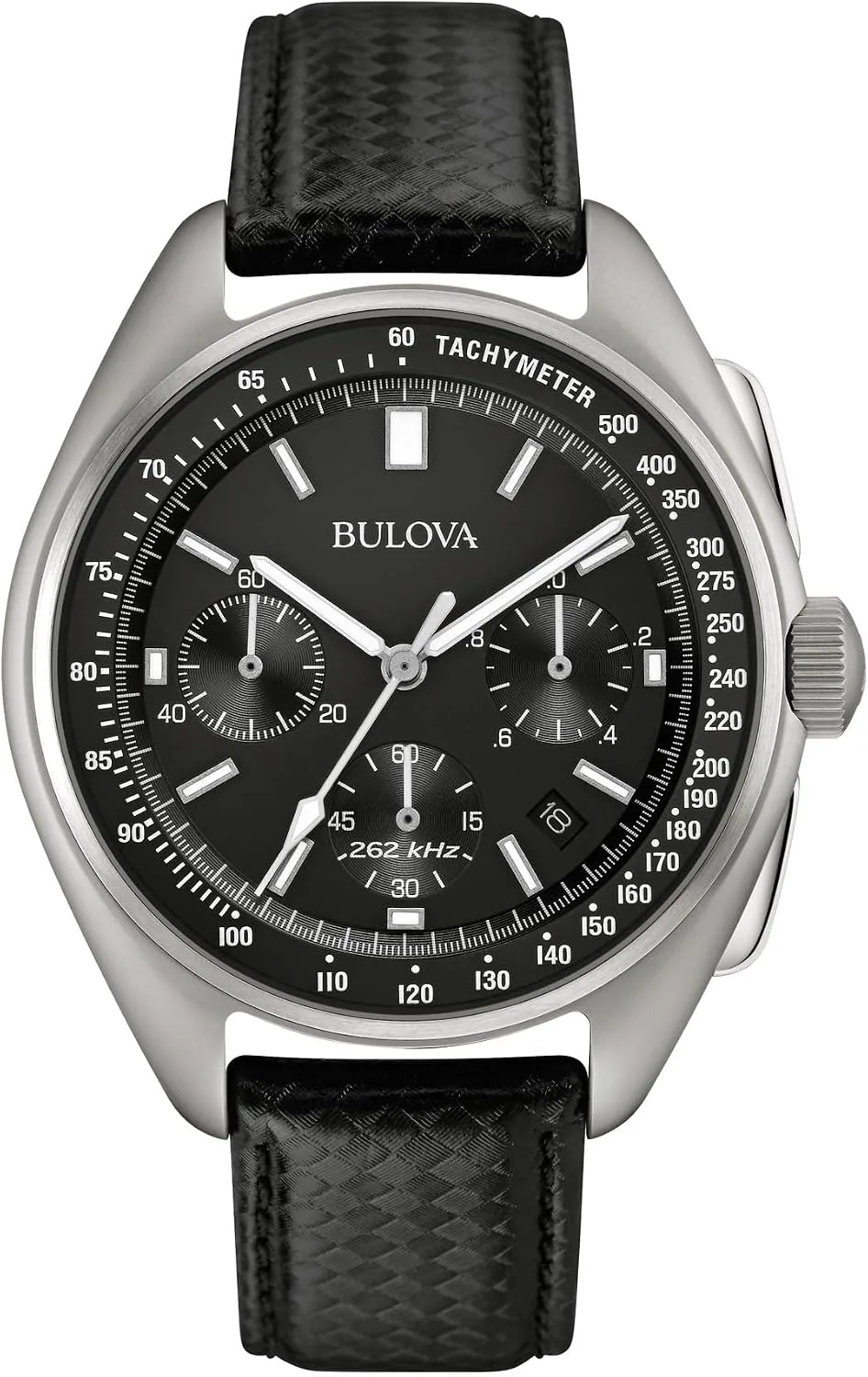
- Movement: high-performance quartz at 262 kHz, accurate to within seconds per year
- Functions: chronograph with tachymeter
- Case: 45 mm steel, about 13.5 mm thick
- Crystal: sapphire
- Water resistance: 50 m
This is a modern version of the Bulova chronograph worn on the Moon during Apollo 15. The movement runs at eight times the frequency of standard quartz, which makes it far more accurate than any mechanical watch on this list, and the sweeping seconds hand moves almost as smoothly as an automatic.
What owners say: the story and the accuracy are the selling points. The 45 mm case is the main drawback, since it wears big on wrists under about 7 inches.
- Pros: exceptional accuracy, sapphire, real space history
- Cons: large case, chronograph pushers add bulk
11. Hamilton Khaki Field Mechanical 38mm: best mechanical watch for life
- Movement: Hamilton H-50 hand-wound, about 80 hours of power reserve
- Case: 38 mm steel, 9.5 mm thick
- Crystal: sapphire
- Water resistance: 50 m
- Strap: NATO, 20 mm lugs
The Khaki Field Mechanical is a direct descendant of the watches Hamilton supplied to the US military, and it is the most honest mechanical watch you can buy at this price. It has no date, no rotor and nothing extra, just a well-finished hand-wound Swiss movement that runs for more than three days on a full wind, under sapphire, in a 38 mm case that suits almost any wrist.
What owners say: owners describe it as the watch they keep after selling others. Winding it every couple of days is part of the deal, and 50 m is modest for a field watch.
- Pros: 80-hour reserve, sapphire, thin and comfortable, timeless design
- Cons: must be wound by hand, 50 m, no date
12. Tissot PRX Powermatic 80: best Swiss automatic value
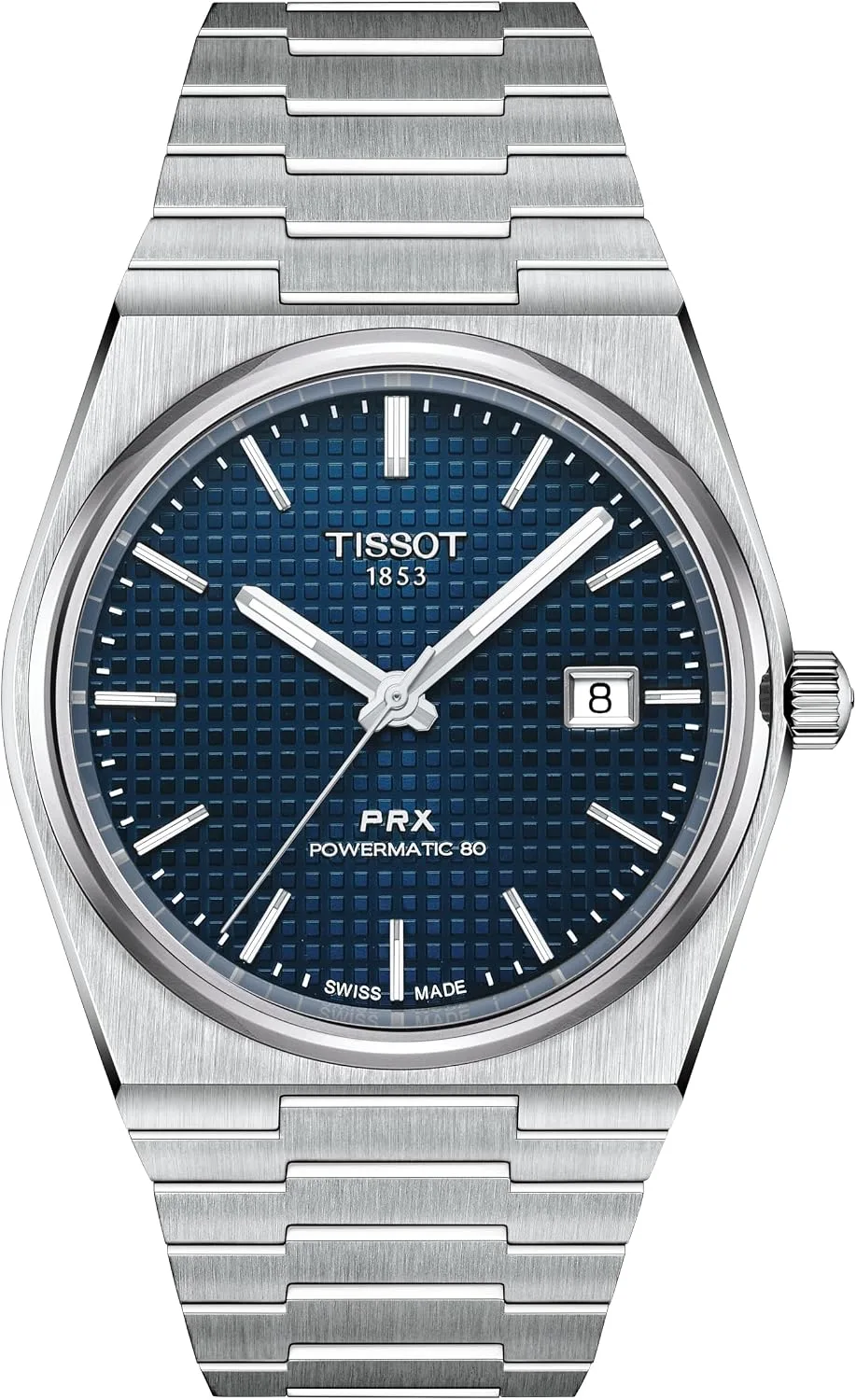
- Movement: Powermatic 80 automatic, about 80 hours of power reserve
- Case: 40 mm steel, integrated bracelet
- Crystal: sapphire
- Water resistance: 100 m
- Features: display caseback, quick-release bracelet
The automatic PRX takes everything good about the quartz version and adds a Swiss automatic movement that can sit on a dresser from Friday evening to Monday morning and still be running. Integrated-bracelet steel sports watches from luxury brands cost many times more, which is why this one became one of the most talked-about watches of the decade.
What owners say: the bracelet, the dial texture and the 80-hour reserve all get praise. The case is a little thicker than the quartz model, and the bracelet takes care to size.
- Pros: Swiss automatic, 80-hour reserve, sapphire, 100 m
- Cons: bracelet sizing, priced at the top of this guide
Cheap watches that look expensive
A watch looks expensive because of a few specific details, not because of the logo. If that is your goal, look for these and ignore the rest:
- A textured or sunburst dial that plays with light, like the Presage SRPB41 or the Kamasu
- Sapphire crystal, which stays clear and scratch free for years, so the watch keeps looking new
- Sensible size, roughly 36 to 41 mm for most wrists. Oversized cases read as cheap
- Solid bracelet links and a good finish, with brushed and polished surfaces separated cleanly, like on the PRX
- Simple design. Fewer complications and less text on the dial usually look more upmarket
On that test the Presage, the PRX, the Bambino and the Kamasu all punch well above their price. Watches that try to imitate luxury models with fake subdials or copied logos have the opposite effect.
What you actually pay for
Understanding where the money goes is the fastest way to avoid overpaying.
Movement. Quartz is the most accurate and cheapest to own. Solar quartz like Eco-Drive removes battery changes. Automatics and hand-wound watches are less accurate but appeal to people who like mechanical engineering, and they need servicing every several years. Higher-frequency quartz such as Bulova's 262 kHz movement is more accurate still.
Crystal. Mineral glass scratches easily. Seiko's Hardlex is tougher. Sapphire is the best of the three and is now common from about $250 upward, which is why we favor watches that have it.
Water resistance. 30 m means splashes only. 100 m is fine for swimming. 200 m with a screw-down crown is a true dive rating. Do not pay for 200 m if you never go near water, but do not swim with a 30 m dress watch either.
Brand. Seiko, Orient, Citizen and Casio make their own movements, which is a big part of why they offer so much for the money. Swiss brands such as Tissot and Hamilton cost more but give you Swiss movements, deeper finishing and stronger resale. Fashion brands are where value disappears: you pay mostly for the name.
How much to spend. For most people, $150 to $400 is the point of best value. Below that, quartz is the smart choice. Above roughly $800 you start paying more for the brand and finishing than for anything you will notice day to day.
Who should skip these picks
If you want fitness tracking, notifications or GPS, none of these watches will help, and a smartwatch is the better buy. If you want a watch mainly as a store of value, nothing in this price range is an investment. Buy these to wear them, not to sell them later.
FAQ
For most people it is the Orient Kamasu, which combines an automatic movement, sapphire crystal and 200 m water resistance for roughly $250 to $380. Under $150, the Casio G-Shock GA-2100 offers the most for the price, and under $25 nothing beats the Casio F-91W.
Between $150 and $400 is where good watches give you the most per dollar: in-house automatic or solar movements, steel cases and often sapphire crystals. Spending more mainly buys finishing, Swiss movements and brand heritage.
Not in pure timekeeping. A quartz watch is more accurate and cheaper to own. Automatics offer value in craftsmanship and longevity, and a good one such as the Seiko 5 Sports or Orient Kamasu costs only slightly more than a comparable quartz watch.
Most do not. Watches under $1,000 usually sell second hand for well below their retail price. Hamilton and Tissot hold value better than most, but buy any watch in this range to wear it, not as an investment.
A textured or sunburst dial, a sapphire crystal, a case between about 36 and 41 mm, solid bracelet links and a clean dial without fake subdials. The Seiko Presage Cocktail Time and Tissot PRX are good examples.
It can be, if you value finishing, movement quality and resale. The Tissot PRX and Hamilton Khaki Field Mechanical are good entry points. If you only care about accuracy and durability, Japanese brands give you more for the same money.
Our verdict
The best watch for the money depends on your budget, but the pattern is clear. Under $150, buy a Casio and do not overthink it. Between $150 and $450, Japanese brands give you the most, and the Orient Kamasu is the standout with sapphire, 200 m and an in-house automatic. If you can spend up to $700 or so, the Hamilton Khaki Field Mechanical and the Tissot PRX Powermatic 80 are the two Swiss watches that justify their prices.
Check the Orient Kamasu on AmazonImage credits: Giordano Tonelli via Wikimedia Commons (CC BY-SA 4.0); Valenzuela400 via Wikimedia Commons (CC BY-SA 4.0).