
As an Amazon Associate, AddWatch earns from qualifying purchases. This does not affect our reviews.
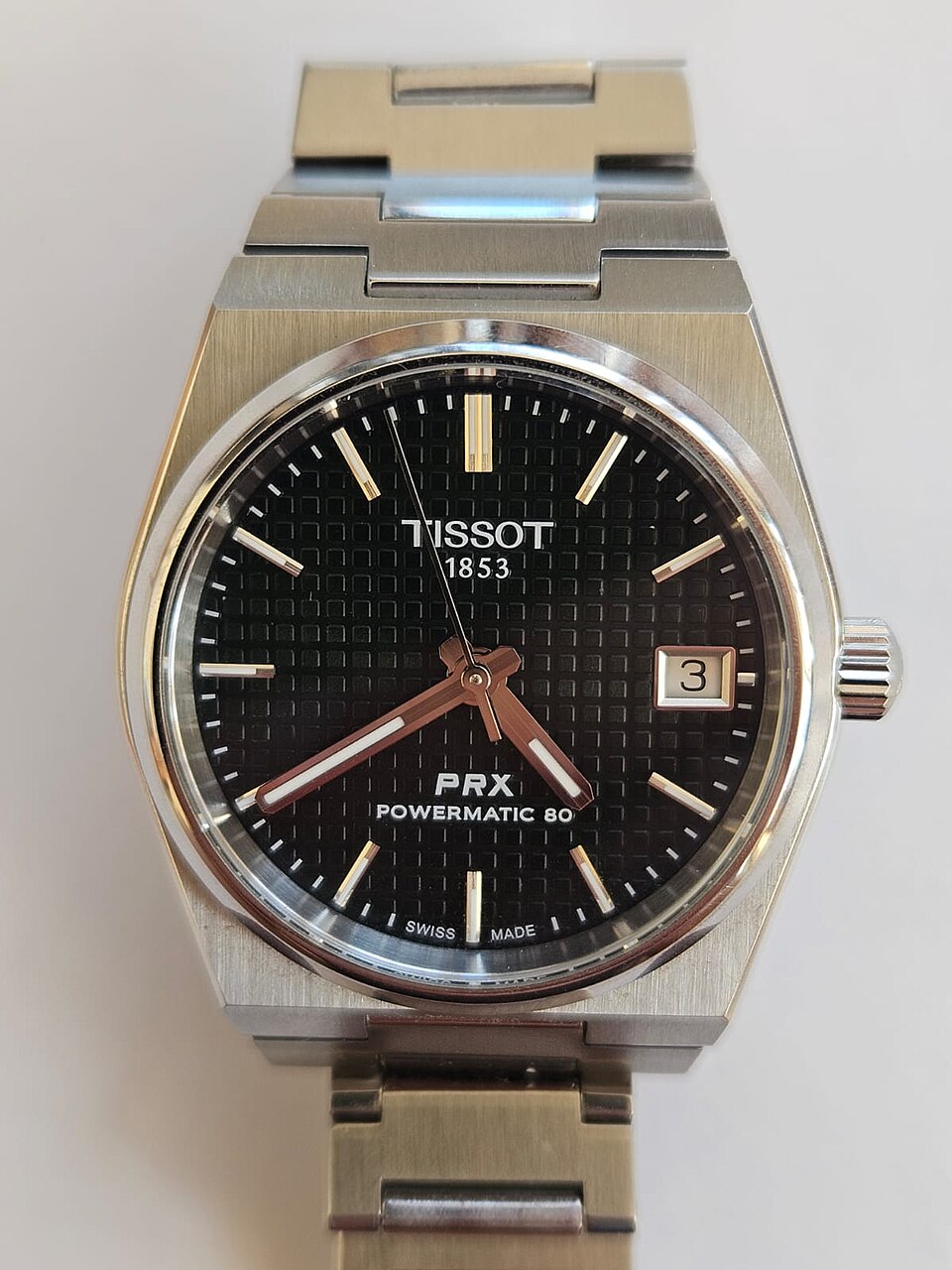
The Tissot PRX automatic, sold as the PRX Powermatic 80, is the watch that brought the integrated-bracelet sports watch look down to a few hundred dollars. It pairs a slim 40 mm steel case with a Swiss automatic movement, an 80-hour power reserve, sapphire and 100 m of water resistance, usually for $650 to $850. In this review we cover the specs, every size from 35 to 40 mm, the titanium and carbon versions, the quartz alternative and the watches worth comparing it with.
Short answer: it is the best-value Swiss automatic sports watch for most people. Buy it if you like the 1970s integrated-bracelet style; skip it if you want easy strap swaps or a true tool watch.
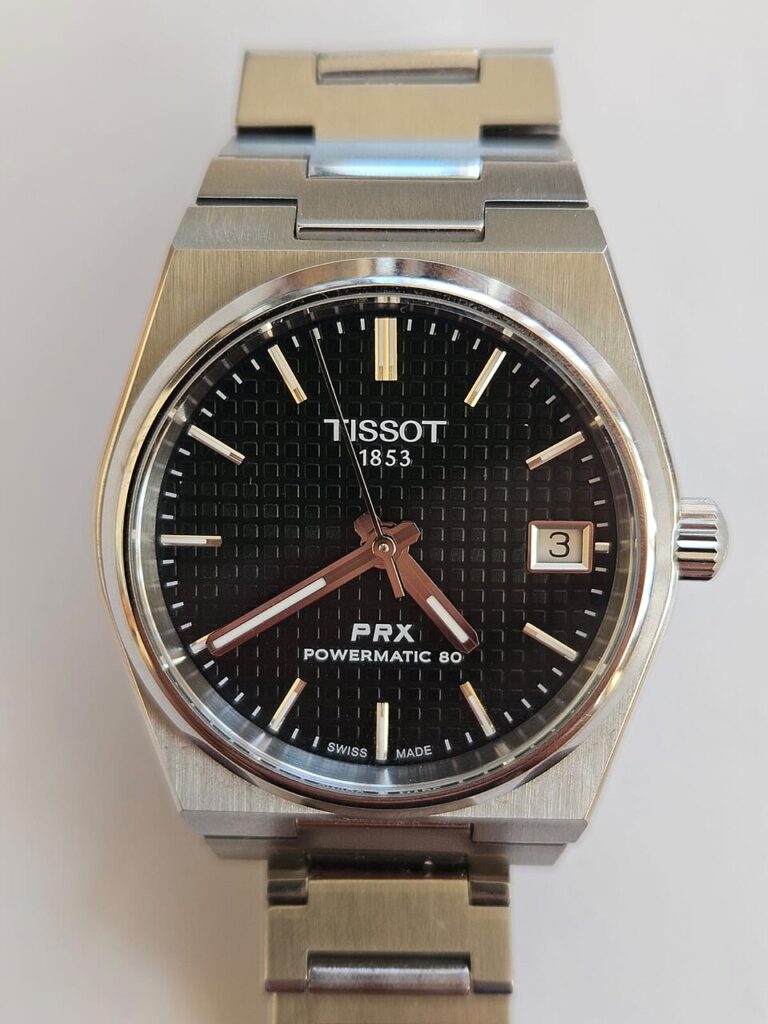
Tissot PRX Powermatic 80 at a glance
- Movement: Powermatic 80.111 automatic, about 80 hours of power reserve
- Case: 40 mm stainless steel, about 10.9 mm thick
- Crystal: sapphire with anti-reflective coating, see-through caseback
- Water resistance: 100 m (330 ft)
- Bracelet: integrated steel with quick-release system and butterfly clasp
- Usual price: $650 to $850
- Best for: a dressy everyday sports watch with Swiss automatic credentials
Tissot PRX automatic specs
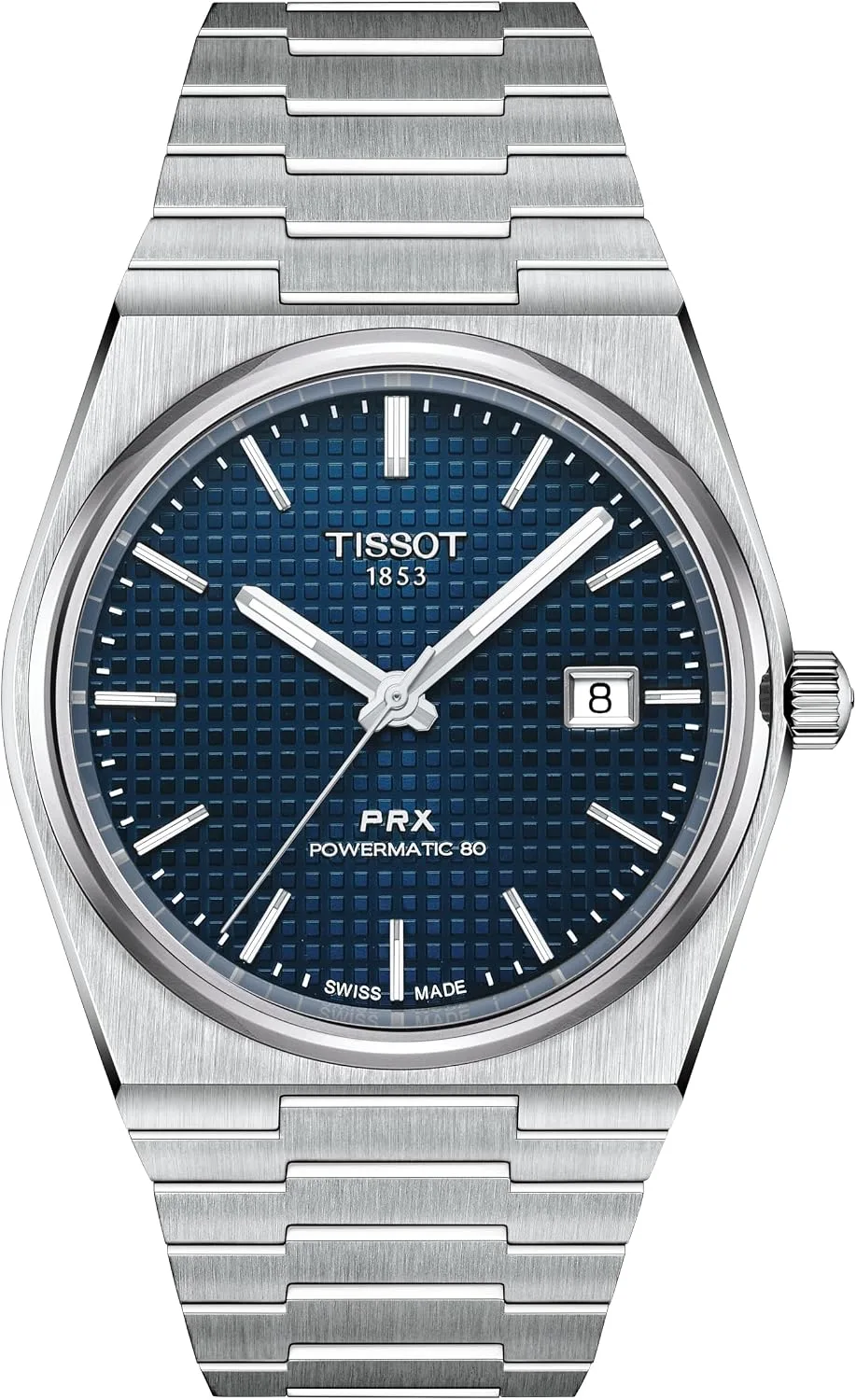
The core Tissot PRX automatic is the 40 mm steel model, reference T137.407.11.041.00 in blue. These are its official specs.
| Spec | Tissot PRX Powermatic 80 40mm |
|---|---|
| Reference | T137.407.11.041.00 (blue) |
| Movement | Powermatic 80.111, Swiss automatic |
| Jewels and beat rate | 23 jewels, 21,600 vph |
| Power reserve | Up to 80 hours |
| Balance spring | Nivachron (anti-magnetic) |
| Case diameter | 40 mm (1.57 in) |
| Thickness | About 10.9 mm (0.43 in) |
| Crystal | Sapphire, anti-reflective coating |
| Caseback | See-through |
| Water resistance | 100 m (330 ft) |
| Bracelet | Integrated 316L steel, quick release, butterfly clasp with push buttons |
| US list price | $850 |
The name comes from the original model's promise: Precise, Robust and X, the Roman numeral for 10, a nod to its 10 bar water resistance.
Tissot PRX history
The PRX started as a 1978 quartz sports watch with a tonneau-shaped case flowing straight into its bracelet, the design language of that era's luxury sports watches. Tissot, founded in Switzerland in 1853 and now part of the Swatch Group, brought the design back in 2021, first as a quartz watch and then as the Powermatic 80 automatic. The automatic version, with its waffle-textured dial, quickly became one of the most talked-about watches under $1,000.
The appeal is simple: the PRX gives you the look of watches costing many times more, in a slim case with a Swiss movement, at an accessible price. That is why searches for terms such as Tissot Royal Oak lead here, even though the PRX is its own 1970s design rather than a copy.
Tissot PRX sizes and versions
The PRX automatic now comes in three main sizes plus special materials. Here is how they compare.
| Version | Case | Thickness | Material | US list price |
|---|---|---|---|---|
| PRX Powermatic 80 35mm | 35 mm | About 10.9 mm | Steel | $795 |
| PRX Titanium 38mm | 38 mm | About 11 mm | Titanium | $975 |
| PRX Powermatic 80 40mm | 40 mm | About 10.9 mm | Steel | $850 |
| PRX Powermatic 80 Carbon | 40.5 mm | Thicker | Forged carbon, rubber strap | Higher |
Tissot PRX 40mm
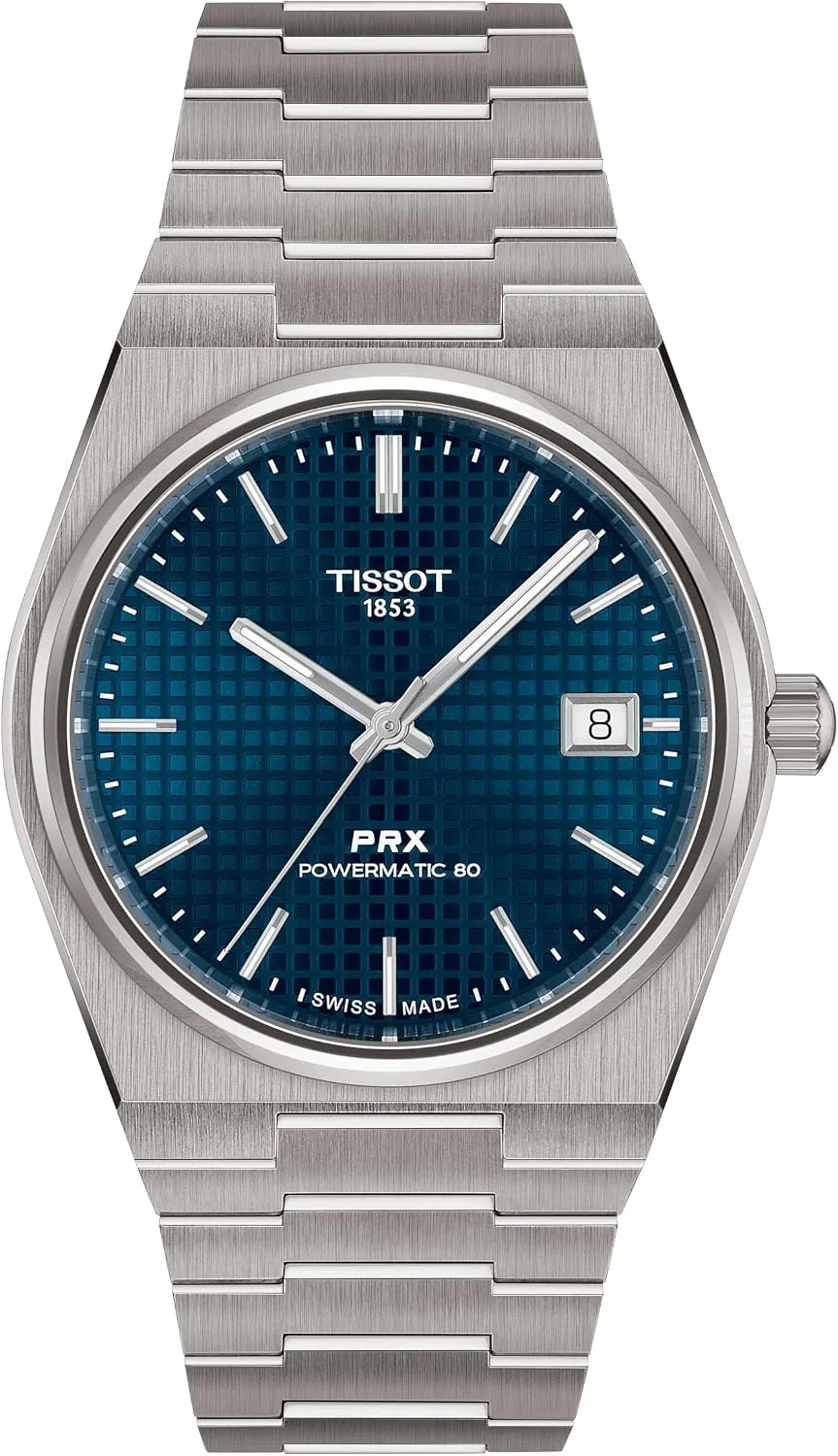
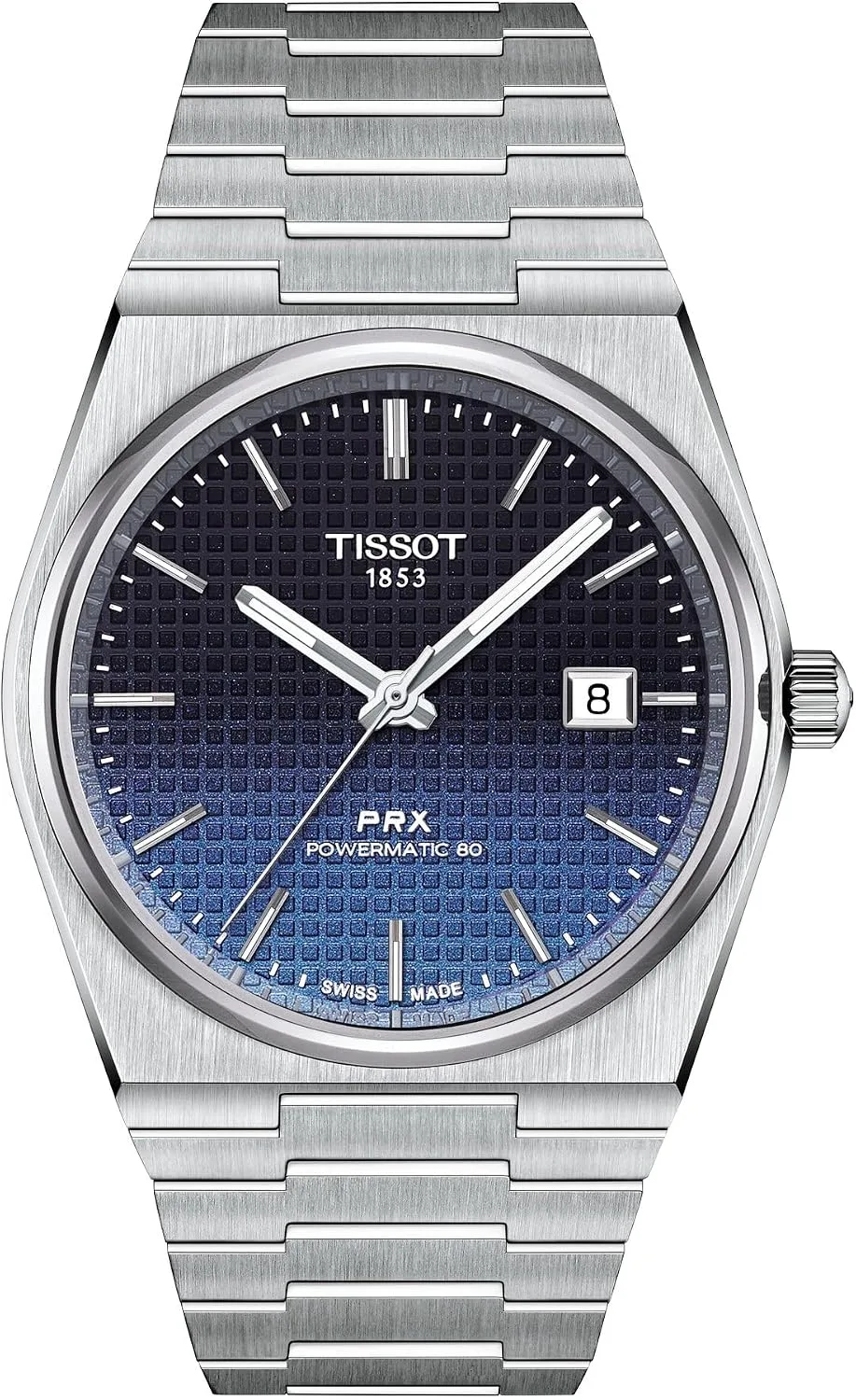
The Tissot PRX 40mm is the original automatic size and the best choice for most men. The integrated bracelet makes it wear larger than the number suggests, so it suits wrists from about 6.5 to 7.75 inches. It comes in the widest range of dials, including blue, black, ice blue, green and gradient versions.
Tissot PRX 35mm
The 35 mm launched in 2023 for smaller wrists and anyone who likes a vintage-sized watch. It keeps the same movement, sapphire and 100 m rating in a case of about 10.9 mm. It is unisex and works well on wrists under about 6.5 inches.
Tissot PRX Titanium 38mm
The 38 mm titanium version arrived in 2025 as a middle size in a lighter, hypoallergenic metal. It is about 11 mm thick with a lug to lug of around 43 mm, and it uses the same Powermatic 80. Tissot also made a 38 mm Damascus steel edition at a higher price. Choose the titanium if you want a lighter watch that splits the difference between 35 and 40 mm.
PRX Carbon and gold-tone versions
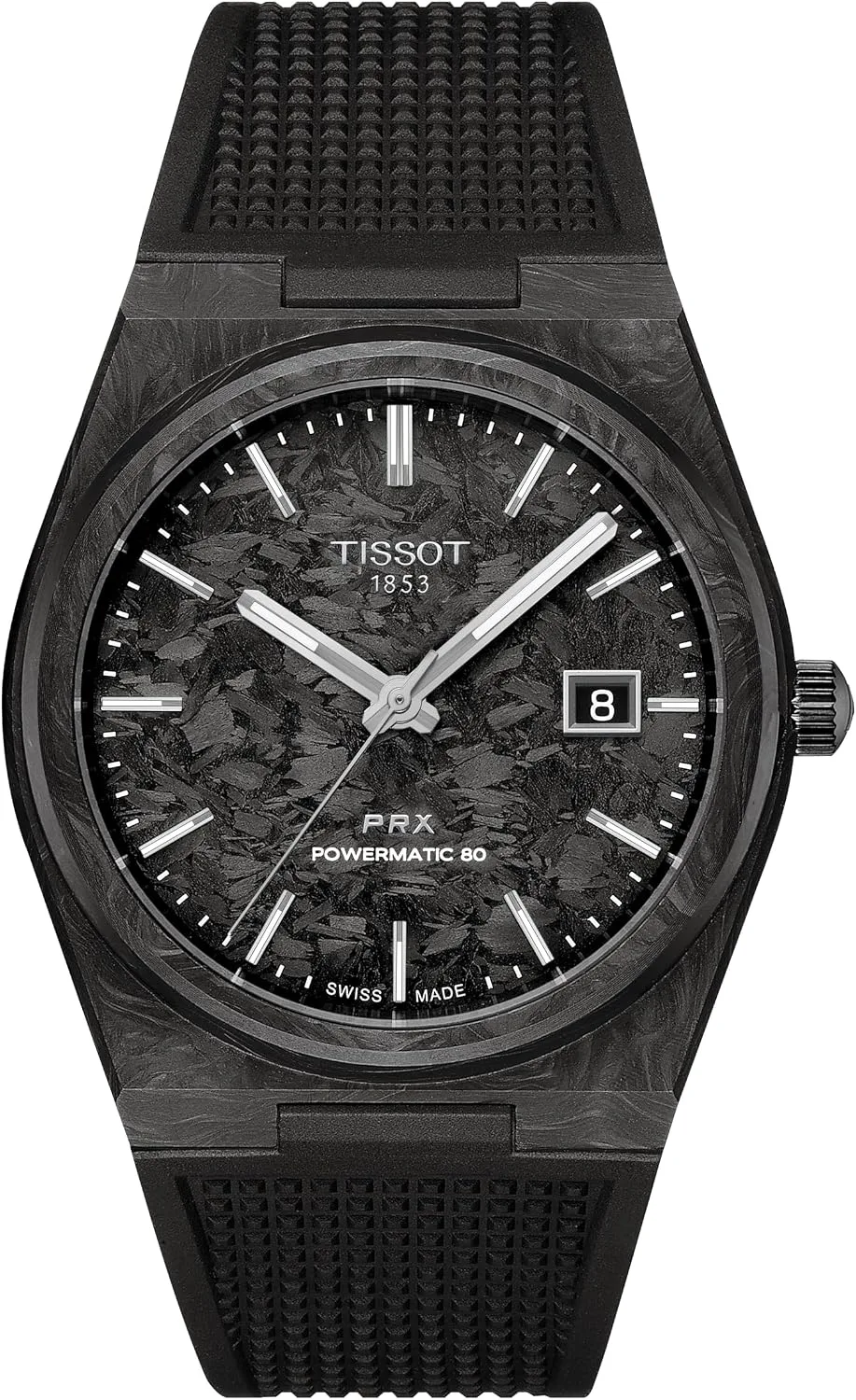
The forged-carbon PRX comes on a rubber strap and suits buyers who want a sportier, lighter watch. Gold-tone PVD versions add a dressier look on the same platform. Both cost more than the steel models.
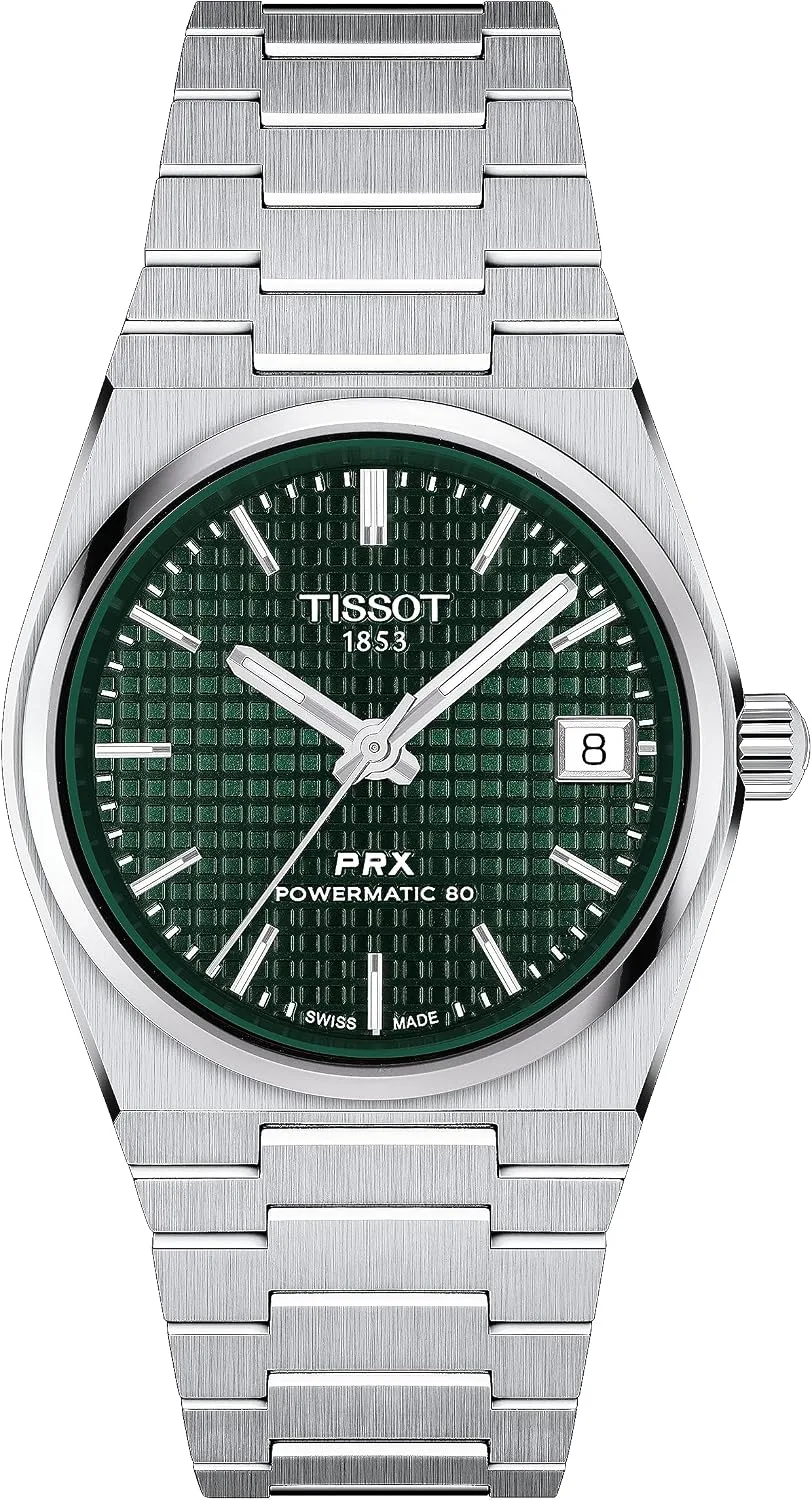
Tissot PRX colors: blue, ice blue and more
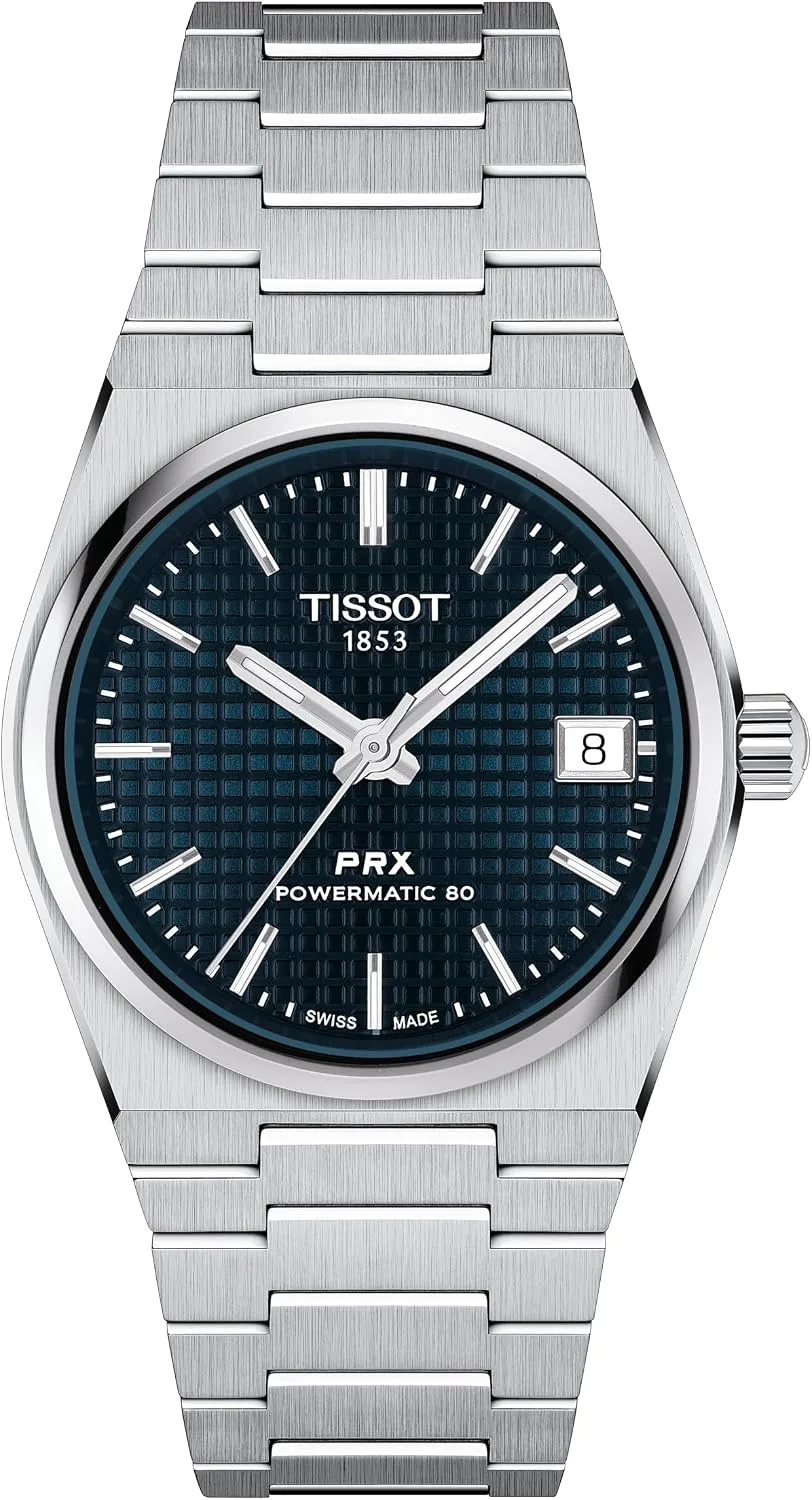
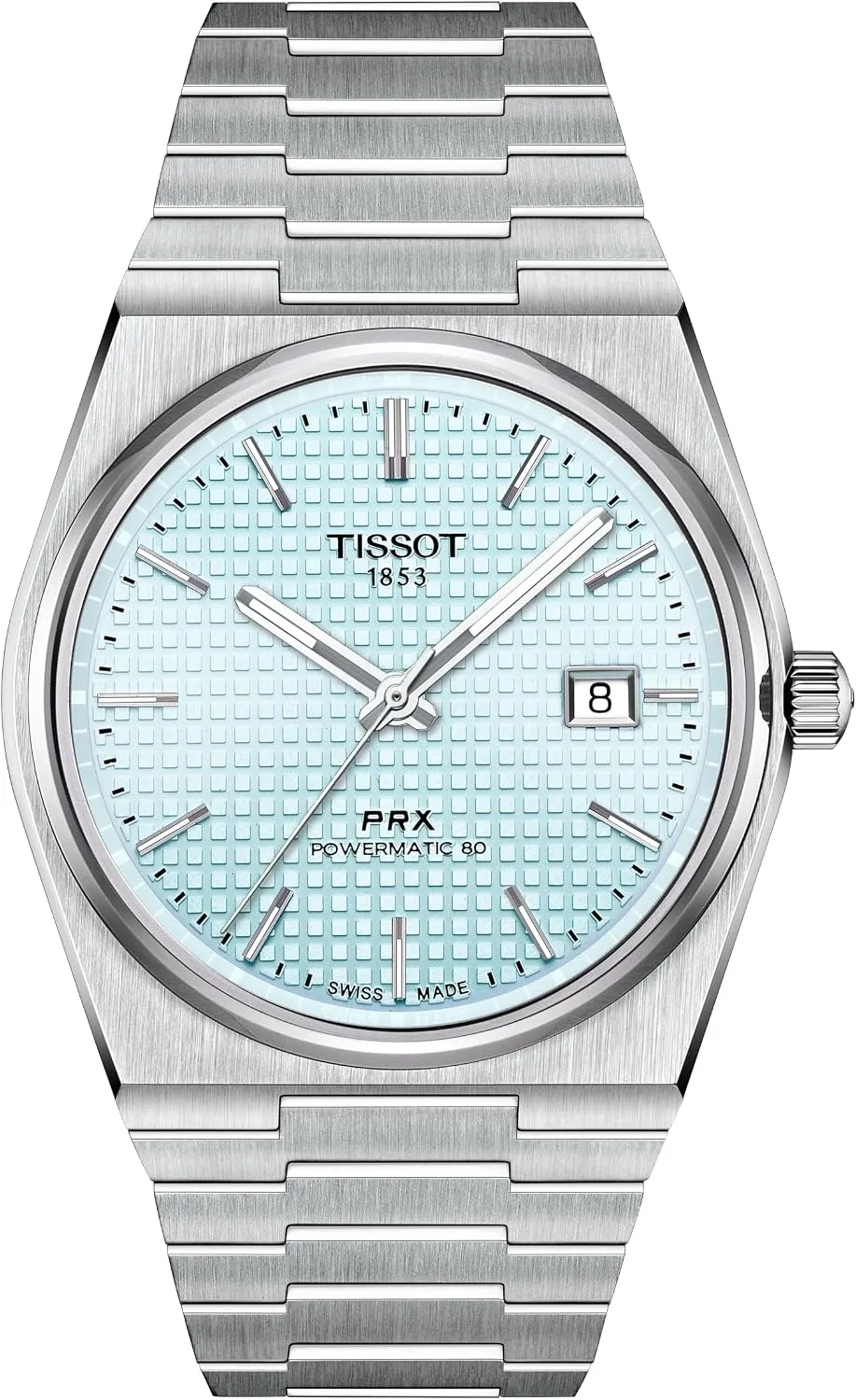
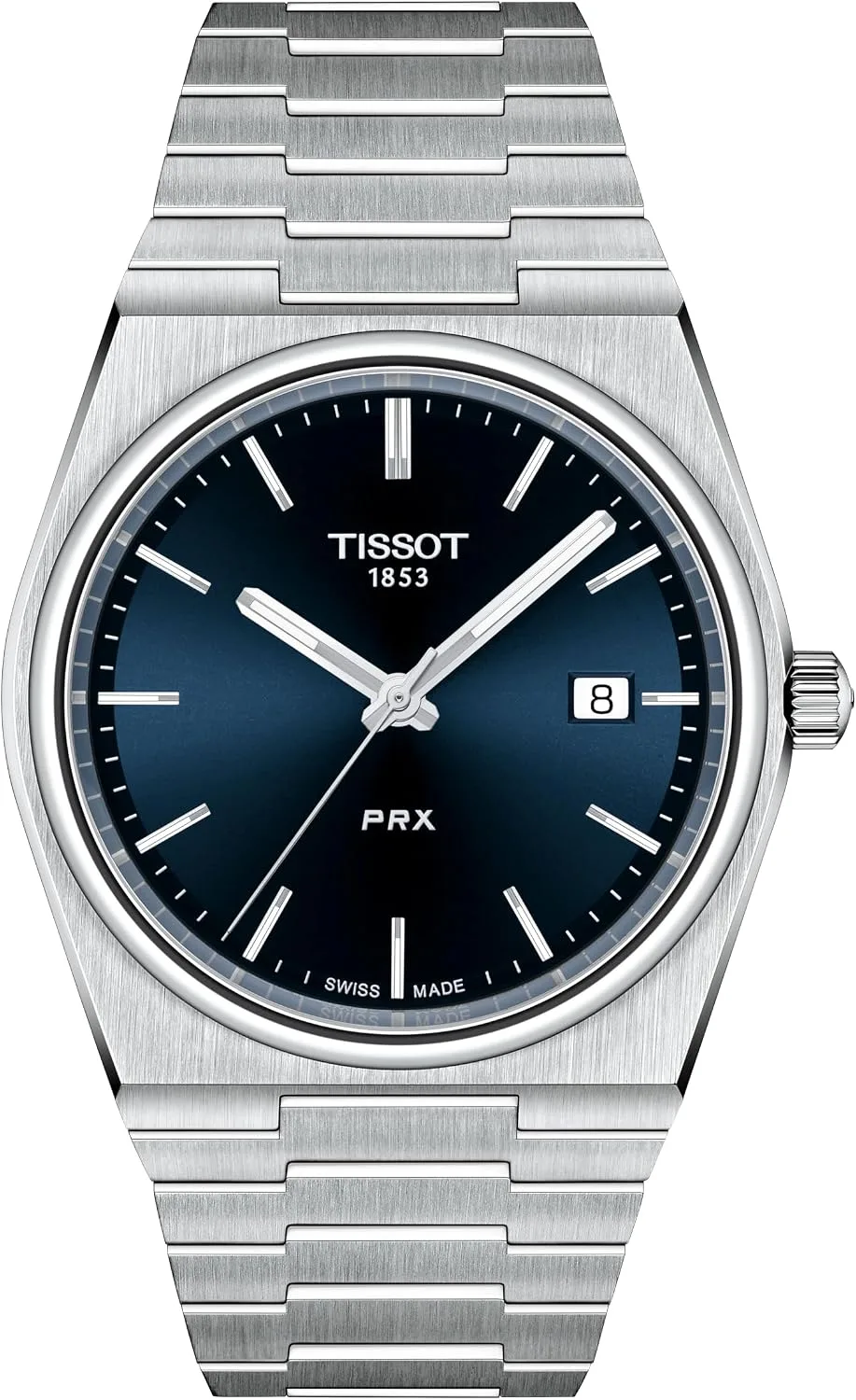
The Tissot PRX Powermatic 80 blue dial is the classic and most popular choice: a deep blue waffle texture that shifts with the light. The ice blue version is the most eye-catching and plays on luxury-watch colors, while black is the most understated and the green and gradient dials offer something less common.
All of them use the same textured waffle pattern, which catches light and gives the dial depth. If this is your only watch, blue or black are the safest choices; if you already own a classic watch, ice blue or green add more personality.
Tissot PRX on the wrist: size and fit
The Tissot PRX on the wrist wears larger than its diameter because the bracelet flows straight out of the case with no visible lugs. A 40 mm PRX looks closer to a 41 or 42 mm watch with traditional lugs, while the 35 mm looks more like a 37 mm.
| Wrist size | Best PRX size |
|---|---|
| Under 6.25 in (16 cm) | 35 mm |
| 6.25 to 6.75 in (16 to 17 cm) | 35 mm or 38 mm titanium |
| 6.75 to 7.5 in (17 to 19 cm) | 40 mm |
| Over 7.5 in (19 cm) | 40 mm |
The slim case is the PRX's best feature on the wrist: at about 10.9 mm it slides under shirt cuffs easily. The first link of the bracelet is fixed in a straight line, so on very small wrists the 40 mm can overhang the edges. That is the main reason Tissot added the 35 mm and 38 mm sizes.
Bracelet sizing matters more than usual. The PRX bracelet has no quick micro-adjustment in the clasp, so getting the link count right is important, and many owners have a jeweler size it. Once sized, owners describe it as one of the most comfortable bracelets at this price.
Design and build quality
The PRX feels more expensive than it is because of its finishing and its integrated design. The case alternates brushed surfaces with polished bevels, and the bracelet's short links taper from the case for a comfortable fit.
The crystal is sapphire with an anti-reflective coating, and the caseback is see-through so you can watch the movement. The bracelet uses a quick-release system, so you can swap it for one of Tissot's own leather or rubber straps without tools, and closes with a butterfly clasp with push buttons.
The main drawback is the integrated design itself. Because the bracelet attaches through a proprietary fitting rather than standard lugs, ordinary straps do not fit, and you are limited to Tissot's straps or third-party ones made specifically for the PRX. The polished surfaces also show scratches quickly.
Movement: the Powermatic 80
The Tissot Powermatic 80 is the reason the PRX automatic is so good for the money. It is a Swatch Group automatic based on ETA architecture, tuned for a long power reserve: up to 80 hours, about double that of many automatics at this price.
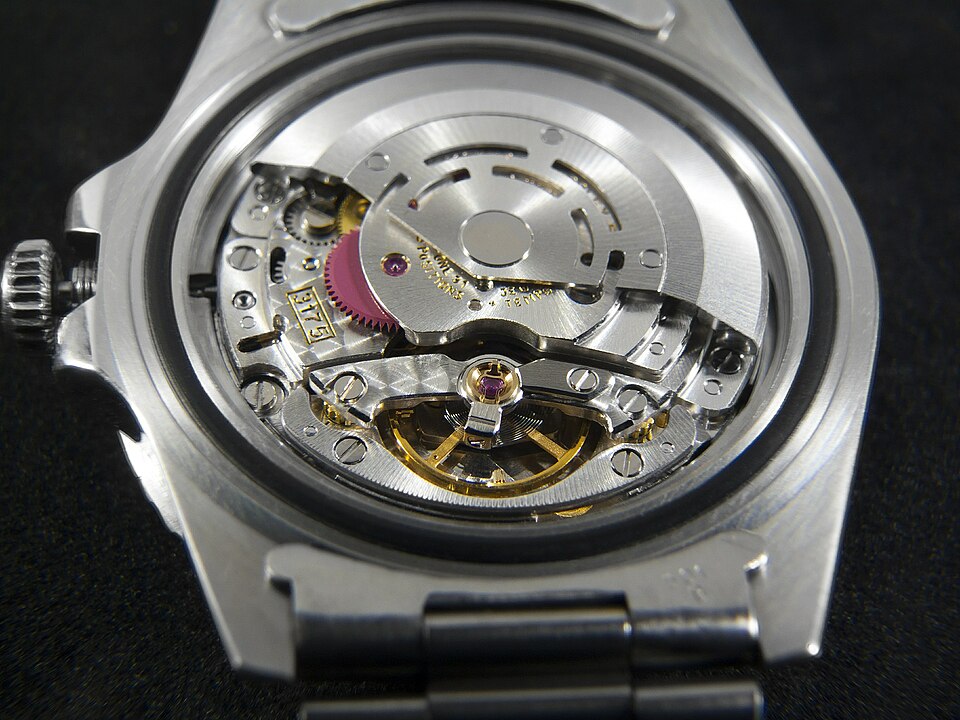
To reach that reserve, the Powermatic 80 runs at 21,600 vibrations per hour rather than the 28,800 of many Swiss movements, so the seconds hand sweeps a little less smoothly. The Nivachron balance spring makes it much less sensitive to magnetism, shocks and temperature changes, which helps accuracy in daily life. In practice you can take the watch off on Friday and it will still be running on Monday.
If you are deciding between automatic and quartz in general, our guide to the mechanical watch explains the trade-offs.
Tissot PRX quartz vs Powermatic 80
The Tissot PRX quartz is the cheaper way into the same design. It shares the 40 mm look, the integrated bracelet, sapphire and 100 m rating, but uses a Swiss quartz movement and usually costs $375 to $450.
| Feature | PRX quartz | PRX Powermatic 80 |
|---|---|---|
| Movement | Swiss quartz | Swiss automatic, 80 h |
| Accuracy | Seconds per month | Seconds per day |
| Dial | Smooth sunburst | Waffle texture |
| Caseback | Solid | See-through |
| Usual price | $375 to $450 | $650 to $850 |
Choose the quartz if you want the look, accuracy and a lower price. Choose the Powermatic 80 for the textured dial, the see-through caseback and a mechanical movement. The quartz is our pick for the best Swiss watch in our best watches under $500 guide.
What owners say about the Tissot PRX
Owner feedback on the PRX automatic is very positive, and the praise centers on how much watch you get for the price.
What holds up:
- The waffle dial looks excellent in person
- The 80-hour reserve means it rarely stops between wears
- The slim case and bracelet are comfortable all day
- The finishing feels expensive for the price
Common complaints:
- Polished parts of the case and bracelet scratch easily
- The integrated design limits strap choices
- Bracelet sizing and the clasp take some getting used to
- Accuracy varies between pieces, as with any automatic at this price
- Prices have risen since launch, and street prices vary widely
Price and value
The Tissot PRX Powermatic 80 40mm lists at $850 in the US and usually sells for $650 to $850, depending on dial and dealer. The 35 mm lists at $795, the 38 mm titanium at $975, and special materials cost more.
At that price it remains one of the strongest Swiss values available. Few watches under $1,000 combine a Swiss automatic with an 80-hour reserve, sapphire, a display caseback and a sought-after integrated design. It is our Swiss automatic pick in the best watch for the money guide.
Check the Tissot PRX Powermatic 80 price on AmazonTissot PRX alternatives
If the PRX is not quite right, these watches cover similar ground in different ways.
| Watch | Movement | Case | Water resistance | Usual price |
|---|---|---|---|---|
| Tissot PRX Powermatic 80 | Swiss automatic, 80 h | 40 mm | 100 m | $650 to $850 |
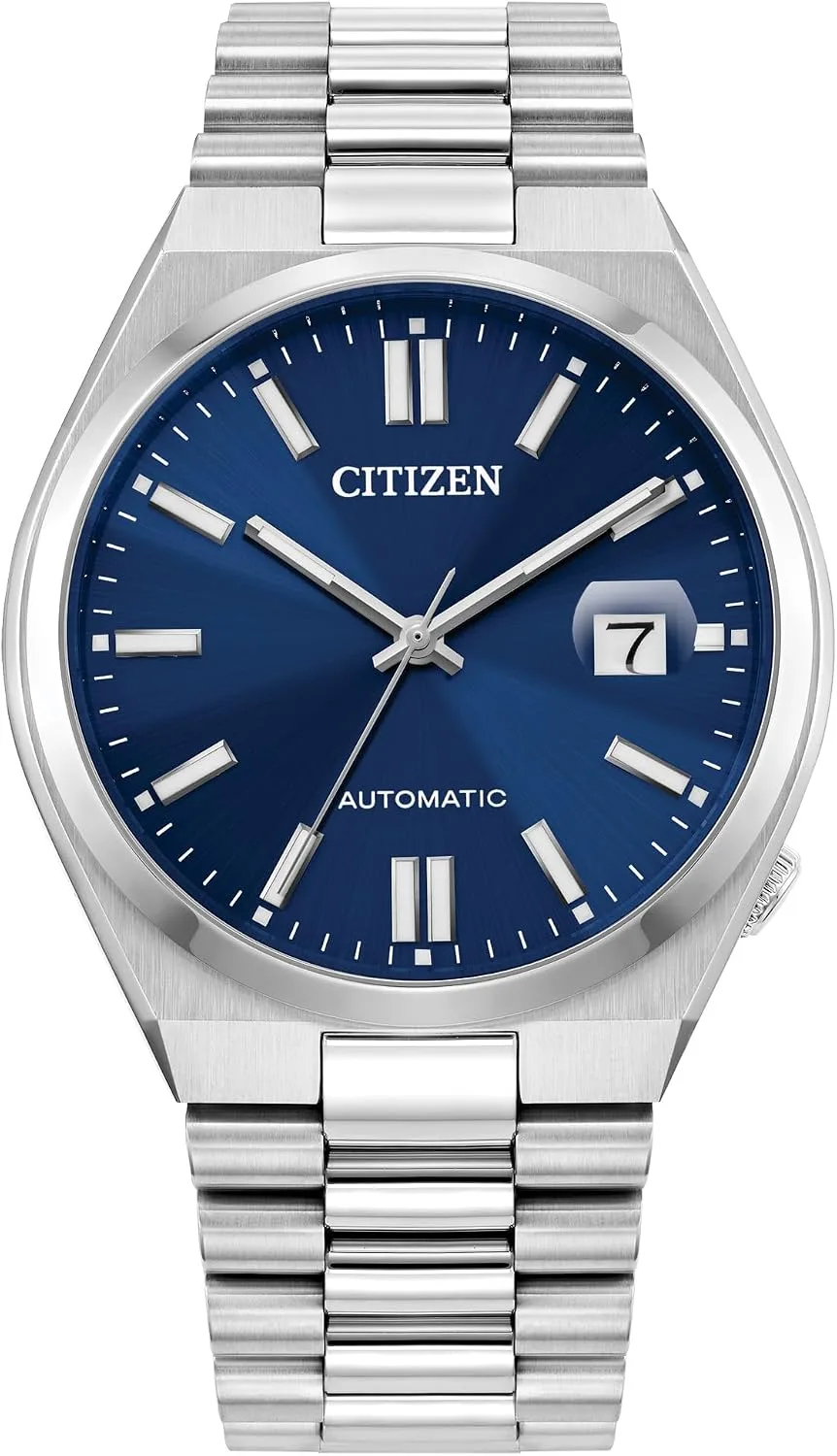
| Citizen Tsuyosa NJ0150 | Automatic | 40 mm | 50 m | $300 to $475 |
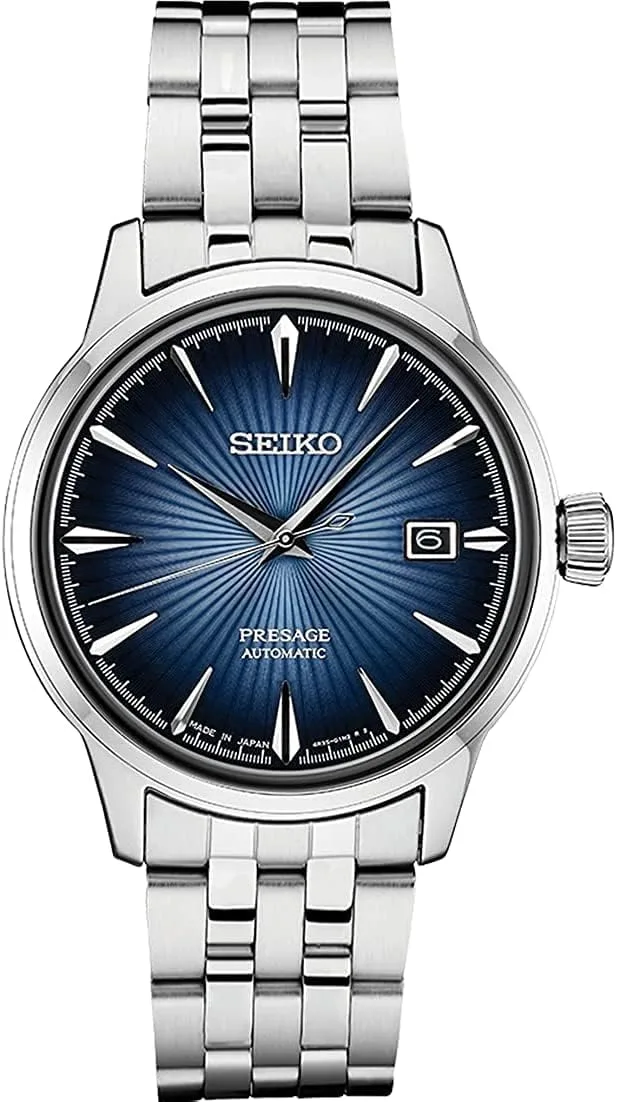
| Seiko Presage SRPB41 | Automatic 4R35 | 40.5 mm | 50 m | $380 to $475 |
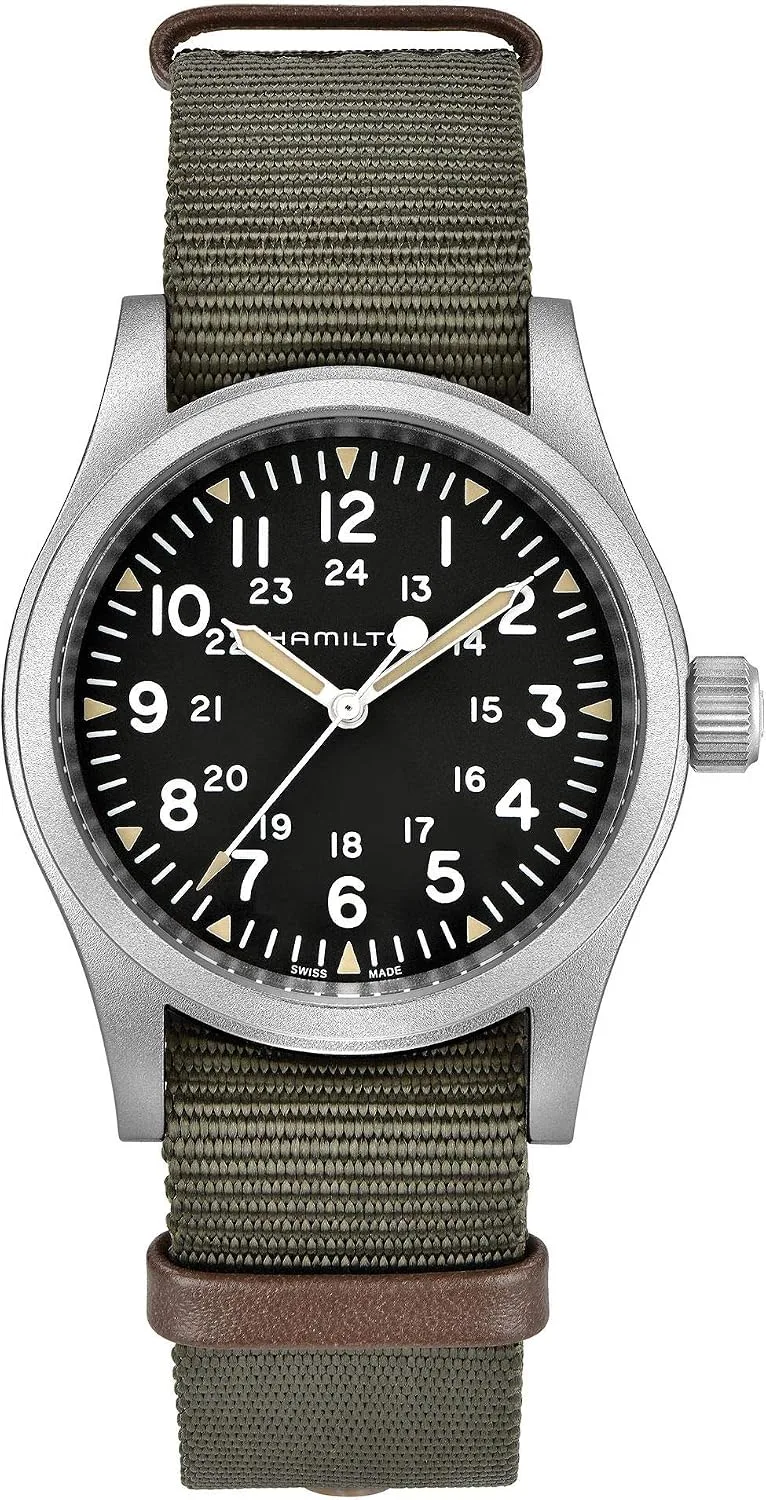
| Hamilton Khaki Field Mechanical | Hand-wound H-50, 80 h | 38 mm | 50 m | $550 to $675 |
The Citizen Tsuyosa is the closest budget alternative: an integrated-bracelet automatic with bright dials at around half the price, though without the Swiss movement or long reserve. The Seiko Presage Cocktail Time offers a more dressy, textured dial for less; read whether Seiko watches are good. The Hamilton Khaki Field Mechanical shares the 80-hour reserve in a rugged field-watch style; see our Hamilton Khaki review.
Pros and cons
Pros:
- Swiss automatic with up to 80 hours of power reserve
- Slim, comfortable integrated design
- Sapphire crystal and see-through caseback
- 100 m water resistance
- Three sizes and many dial colors
Cons:
- Proprietary bracelet fitting limits strap choices
- Polished surfaces scratch easily
- 21,600 vph gives a less smooth sweep than higher-beat movements
- Prices have climbed since launch
Who should buy the Tissot PRX automatic
The PRX automatic is for buyers who want one stylish everyday watch with Swiss credentials, a long power reserve and a design that works with a suit or a T-shirt.
Skip it if:
- You like to change straps often; a watch with standard lugs is easier
- You want a rugged tool or dive watch; choose a dedicated diver
- Your budget is under $500; the PRX quartz or Citizen Tsuyosa give a similar look for less
How we evaluated the Tissot PRX
We have not worn the PRX for this review. We compared Tissot's official specifications for the 35, 38 and 40 mm references, checked US list prices with Tissot and authorized dealers, read a broad sample of owner reviews and compared the watch with automatics at similar prices.
FAQ
Yes for most buyers. For $650 to $850 it combines a Swiss automatic with an 80-hour reserve, sapphire, a see-through caseback and 100 m of water resistance in a slim integrated-bracelet design.
The quartz uses a battery-powered Swiss movement, has a smooth dial and costs about $375 to $450. The Powermatic 80 is automatic, has the waffle-textured dial and a see-through caseback, and costs more.
The 40 mm Powermatic 80 is about 10.9 mm thick. The 35 mm is about the same, and the 38 mm titanium is about 11 mm.
It is water resistant to 100 m, enough for swimming. It is not a dive watch.
Precise, Robust and X, the Roman numeral for 10, referring to the original's 10 bar water resistance.
Yes, with its quick-release system, but only with straps made for the PRX's integrated fitting, such as Tissot's own leather and rubber straps.
Our verdict
The Tissot PRX automatic is the easiest Swiss automatic to recommend under $1,000. The Powermatic 80 gives it an 80-hour reserve, the case is slim and well finished, and the design still turns heads. Pick the 40 mm for most wrists, the 35 mm for small ones and the titanium if you want something lighter.
Check the Tissot PRX Powermatic 80 on AmazonImage credits: Tissot PRX 35mm by Soulreaper, CC BY-SA 4.0; automatic movement via pxhere, CC0.