
As an Amazon Associate, AddWatch earns from qualifying purchases. This does not affect our reviews.
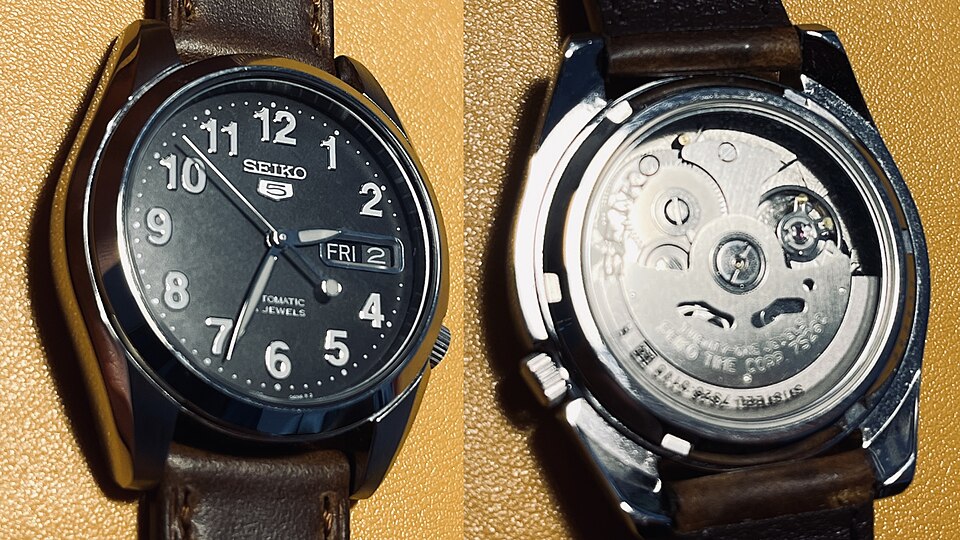
A mechanical watch keeps time with springs and gears instead of a battery. A coiled mainspring stores energy, a train of gears releases it, and a balance wheel swinging back and forth several times a second keeps the pace. You wind it by hand or, in an automatic watch, simply by wearing it. This guide explains how a mechanical watch works, how automatic and hand-wound watches differ from quartz, and which affordable mechanical watches are the best place to start.
Short answer: for a first mechanical watch, the Seiko 5 Sports is the classic choice and the Orient Kamasu is the best value. If you want a hand-wound watch, the Hamilton Khaki Field Mechanical is the one to get. If you want a Swiss automatic, choose the Tissot PRX Powermatic 80.
Quick picks
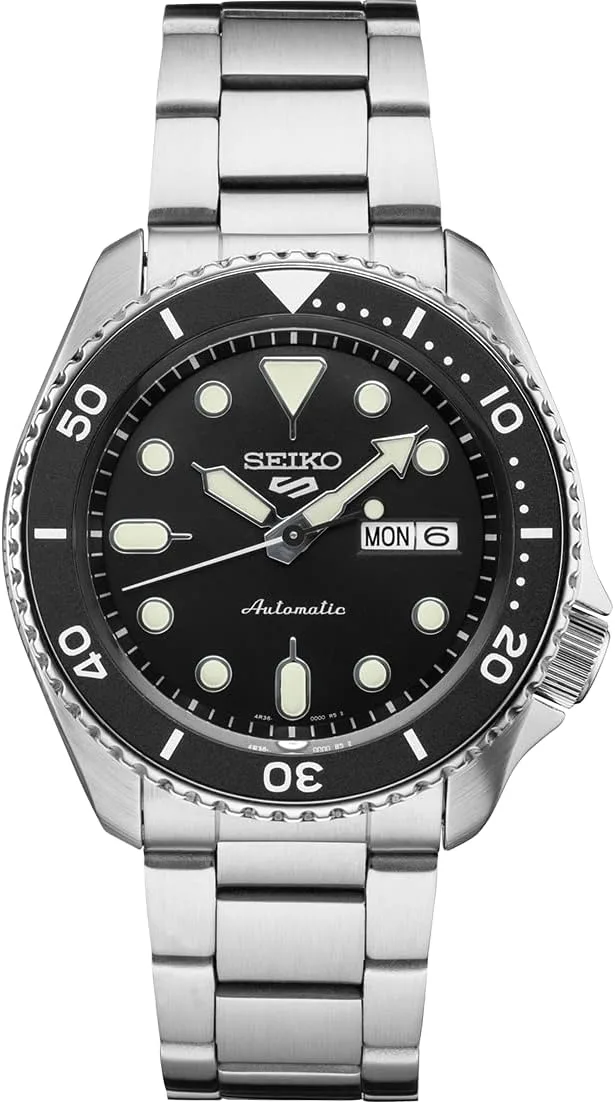
- Best first automatic: Seiko 5 Sports SRPD55
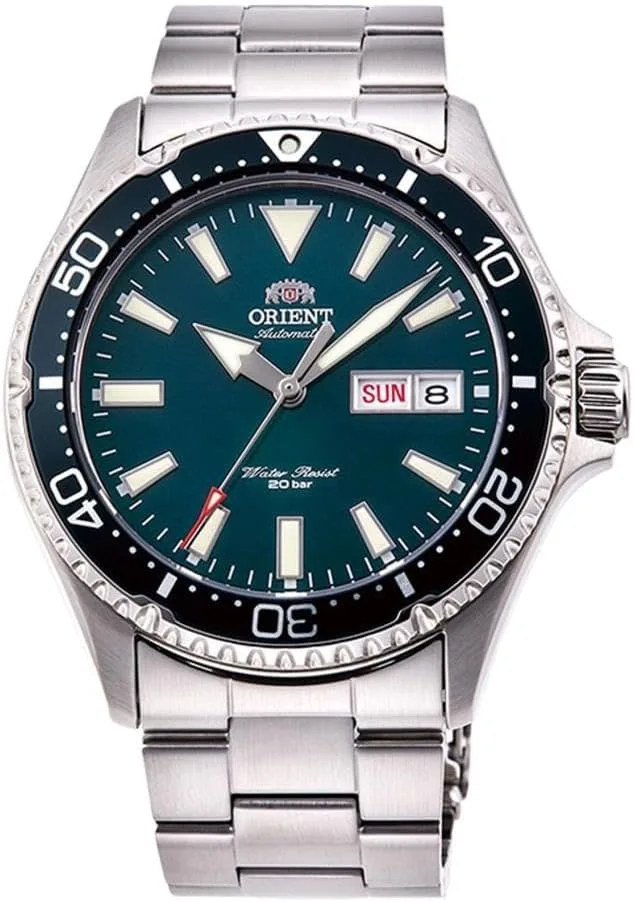
- Best value automatic: Orient Kamasu
- Best automatic diver under $250: Orient Mako II
- Best automatic dress watch: Orient Bambino Version 2
- Best dial for the money: Seiko Presage Cocktail Time SRPB41
- Best integrated bracelet automatic: Citizen Tsuyosa
- Best automatic dive watch with character: Seiko Prospex Turtle
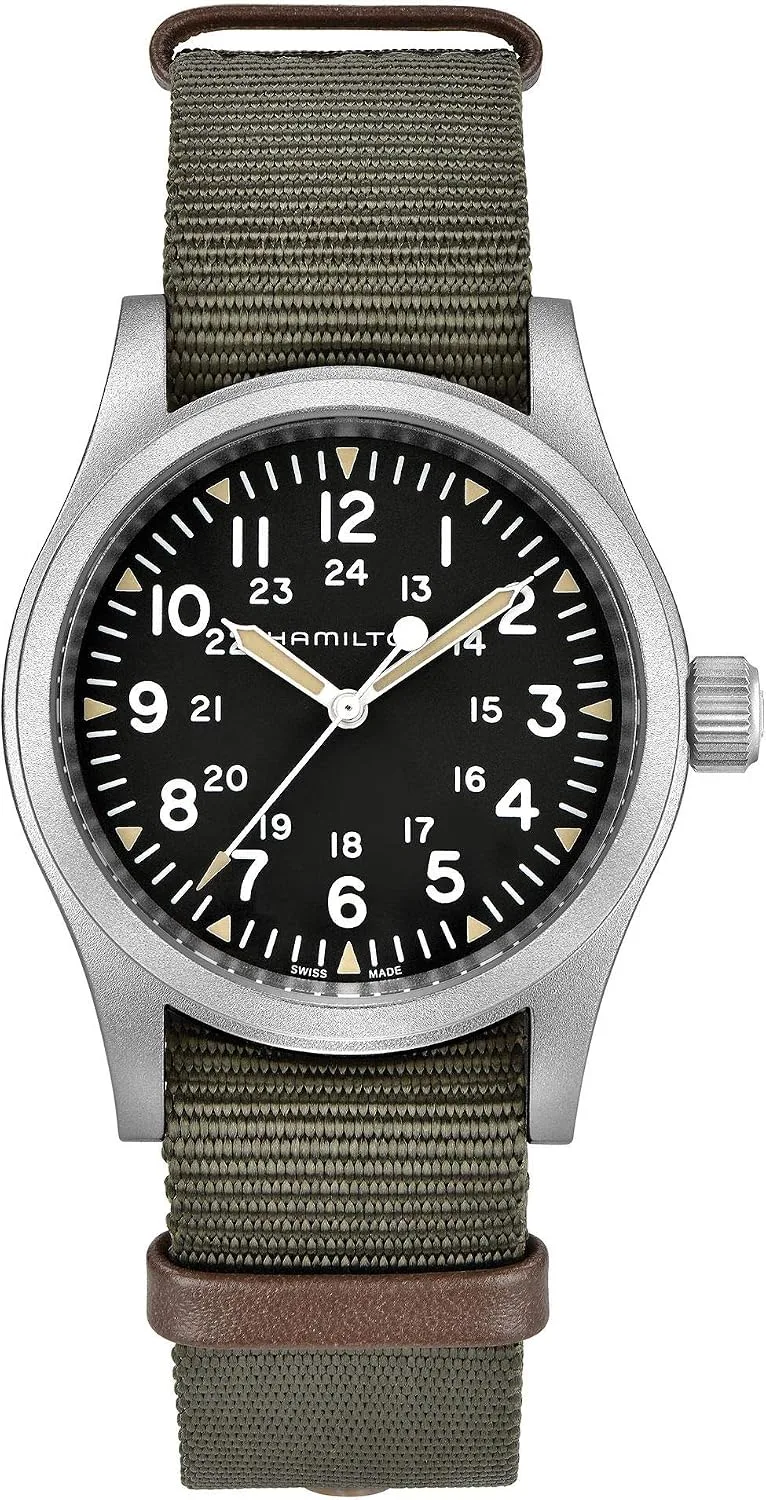
- Best hand-wound watch: Hamilton Khaki Field Mechanical
- Best Swiss automatic: Tissot PRX Powermatic 80
How a mechanical watch works
Every mechanical watch has the same basic parts, whether it costs $200 or $20,000:
- Mainspring: a coiled spring inside a drum called the barrel. Winding tightens it and stores energy
- Gear train: a series of gears that carries energy from the mainspring to the hands
- Escapement: releases that energy in tiny, regular steps. It is what makes the ticking sound
- Balance wheel: a weighted wheel with a fine hairspring that swings back and forth at a steady rate, usually 21,600 or 28,800 times an hour in modern watches. It is the part that actually keeps time
- Winding system: the crown in a hand-wound watch, plus a rotating weight called a rotor in an automatic
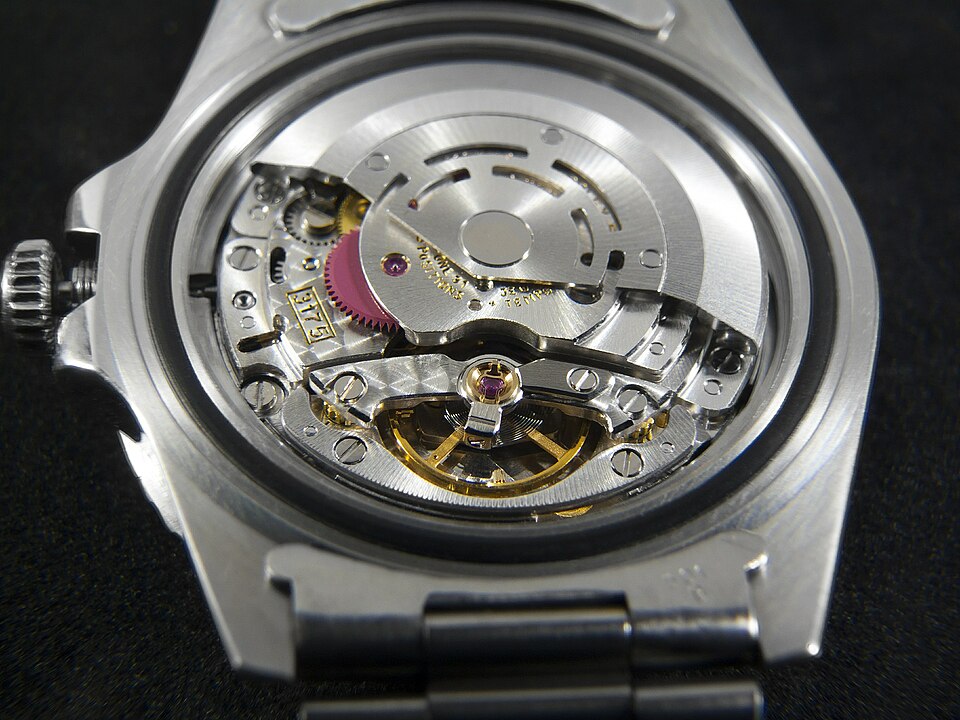
Because the balance wheel swings several times a second, the seconds hand on a mechanical watch moves in a smooth sweep rather than the one-second jumps of most quartz watches. That sweep is one of the details people love most.
Automatic vs hand-wound vs quartz
| Type | How it is powered | Typical accuracy | Maintenance | Best for |
|---|---|---|---|---|
| Automatic (self-winding) | A rotor winds the mainspring as you move | About 5 to 20 seconds a day at this price | Service every several years | Daily wear without winding |
| Hand-wound (manual) | You turn the crown every day or two | Similar to automatic | Service every several years | Thinner cases, a daily ritual |
| Quartz | A battery and a vibrating quartz crystal | About 15 to 30 seconds a month | Battery every few years | Accuracy and convenience |
An automatic watch is a mechanical watch with a rotor that winds the mainspring as your wrist moves. Most affordable automatics can also be wound by hand through the crown. A hand-wound watch has no rotor, so you wind it yourself, usually once a day or every few days. Without a rotor, the case can be thinner and the movement easier to see.
Quartz is more accurate and cheaper to own. People choose mechanical watches for the craftsmanship, the sweeping seconds hand and the fact that the watch runs on nothing but energy you give it.
The best mechanical watches compared
| Watch | Type | Movement | Power reserve | Case | Usual price |
|---|---|---|---|---|---|
| Seiko 5 Sports SRPD55 | Automatic | Seiko 4R36 | About 41 h | 42.5 mm | $220 to $300 |
| Orient Mako II | Automatic | Orient F6922 | About 40 h | 41.5 mm | $180 to $280 |
| Orient Bambino Version 2 | Automatic | Orient F6724 | About 40 h | 40.5 mm | $180 to $260 |
| Orient Kamasu | Automatic | Orient F6922 | About 40 h | 41.8 mm | $250 to $380 |
| Seiko Presage SRPB41 | Automatic | Seiko 4R35 | About 41 h | 40.5 mm | $380 to $475 |
| Citizen Tsuyosa NJ0150 | Automatic | Citizen 8210 | About 42 h | 40 mm | $300 to $475 |
| Seiko Prospex Turtle SRPE93 | Automatic | Seiko 4R36 | About 41 h | 45 mm | $300 to $450 |
| Hamilton Khaki Field Mechanical | Hand-wound | Hamilton H-50 | About 80 h | 38 mm | $550 to $675 |
| Tissot PRX Powermatic 80 | Automatic | Powermatic 80 | About 80 h | 40 mm | $650 to $850 |
How we chose
We did not wear-test these watches for this article. We picked them for proven in-house or well-established movements, hand-winding and hacking (stopping the seconds hand to set the time), honest specs for the money and long-term owner feedback. Every pick runs on a movement that watchmakers know well and can service easily. We checked specs against each manufacturer's listing, and prices are typical street prices.
The 9 best affordable mechanical watches
1. Seiko 5 Sports SRPD55: best first automatic
- Movement: Seiko 4R36 automatic, hand-winding and hacking, about 41 hours
- Case: 42.5 mm steel, 13.4 mm thick
- Crystal: Hardlex
- Water resistance: 100 m
- Features: day-date, rotating bezel, display caseback
The Seiko 5 Sports is the watch most enthusiasts recommend as a first automatic. The 4R36 is one of the most widely used affordable movements in the world, the display caseback lets you watch the rotor spin, and there are dozens of dial and bezel colors. Read our full Seiko 5 Sports review.
What owners say: owners like the build and variety. Accuracy varies between examples, and the case is on the thick side.
- Pros: proven movement, display caseback, huge choice of styles
- Cons: thick case, Hardlex crystal, accuracy varies
2. Orient Mako II: best automatic diver under $250
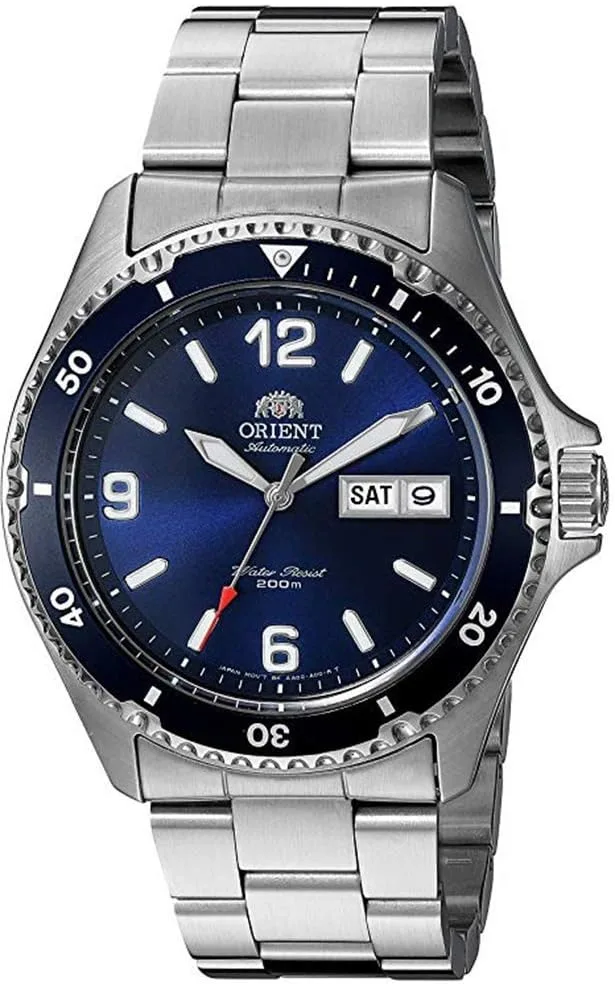
- Movement: Orient F6922 automatic, hand-winding and hacking, about 40 hours
- Case: 41.5 mm steel, 13 mm thick, 47 mm lug to lug
- Crystal: mineral
- Water resistance: 200 m, screw-down crown
- Features: day-date, unidirectional bezel, 22 mm lugs
The Mako II is one of the cheapest true automatic dive watches you can buy. It pairs an in-house movement with 200 m of water resistance and a screw-down crown in a well-proportioned 41.5 mm case. It is a great choice if you want a mechanical watch you can swim with without spending much.
What owners say: owners praise the comfort and legibility. The mineral crystal and the basic clasp are the usual complaints.
- Pros: in-house automatic, 200 m, comfortable size, low price
- Cons: mineral crystal, stamped clasp, average lume
3. Orient Bambino Version 2: best automatic dress watch
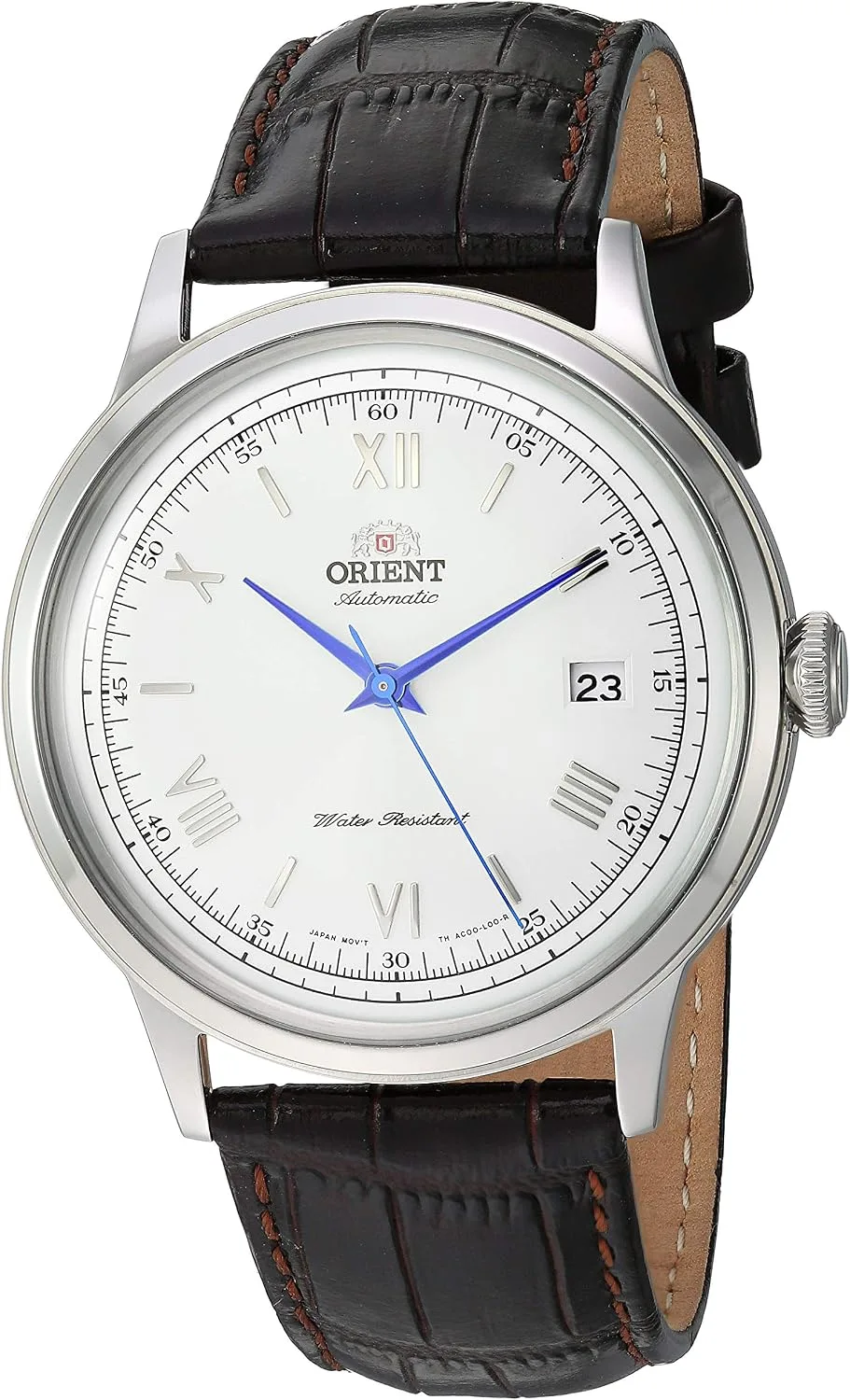
- Movement: Orient F6724 automatic, hand-winding and hacking, about 40 hours
- Case: 40.5 mm steel, 11.8 mm thick
- Crystal: domed mineral
- Water resistance: 30 m
- Strap: leather, 21 mm
The Bambino is the cheapest way into a mechanical dress watch. Its domed crystal and vintage dial look like a much more expensive watch, and the in-house movement now hand-winds and hacks. Read our Orient Bambino review for every version.
What owners say: the look wins people over. The 30 m rating and lack of lume are the trade-offs.
- Pros: classic design, in-house automatic, very affordable
- Cons: 30 m, mineral crystal, no lume
4. Orient Kamasu: best value automatic
- Movement: Orient F6922 automatic, hand-winding and hacking, about 40 hours
- Case: 41.8 mm steel, 12.8 mm thick
- Crystal: sapphire
- Water resistance: 200 m, screw-down crown
- Features: day-date, 120-click bezel, steel bracelet
The Kamasu takes the Mako's proven movement and adds a sapphire crystal, which makes it one of the best value mechanical watches available. It is the pick if you want an automatic that will still look new after years of daily wear.
What owners say: owners call it one of the best deals in watches. The bracelet is the weak point.
- Pros: sapphire, 200 m, in-house automatic, great dials
- Cons: basic bracelet, 40-hour reserve
5. Seiko Presage Cocktail Time SRPB41: best dial for the money
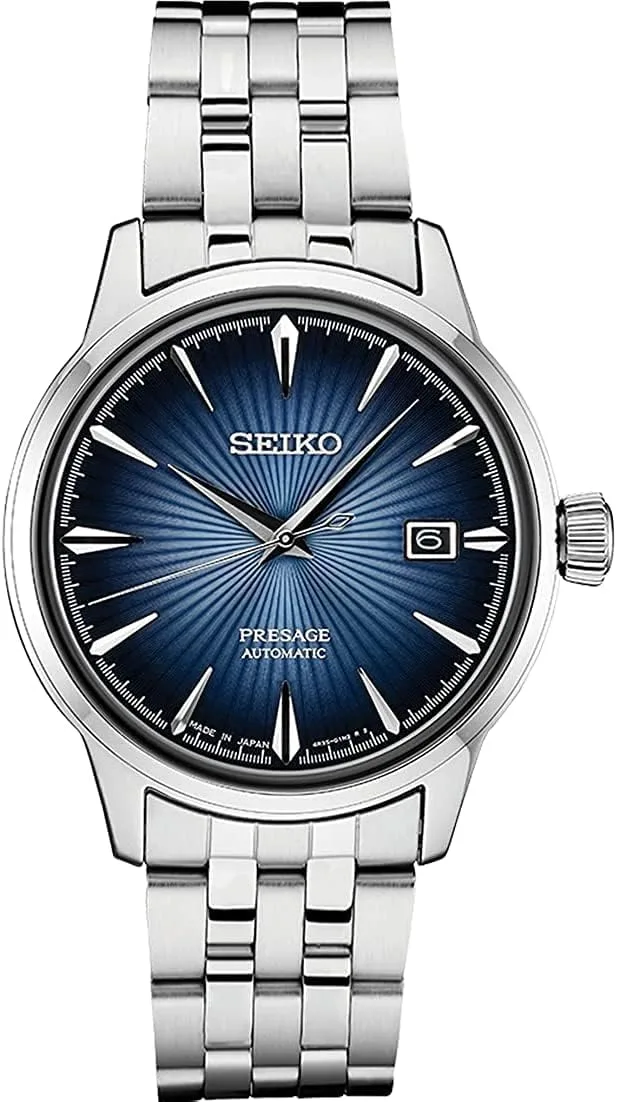
- Movement: Seiko 4R35 automatic, hand-winding and hacking, about 41 hours
- Case: 40.5 mm steel, 11.8 mm thick
- Crystal: box-shaped Hardlex
- Water resistance: 50 m
- Features: display caseback, date
The Cocktail Time is the mechanical watch to buy if you want a dial that looks far more expensive than it is. The textured blue surface catches the light beautifully, and the display caseback shows off the movement.
What owners say: the dial gets constant compliments. The Hardlex crystal and average accuracy are the compromises.
- Pros: stunning dial, dressy, display caseback
- Cons: Hardlex, 50 m, basic movement for the price
6. Citizen Tsuyosa NJ0150: best integrated bracelet automatic
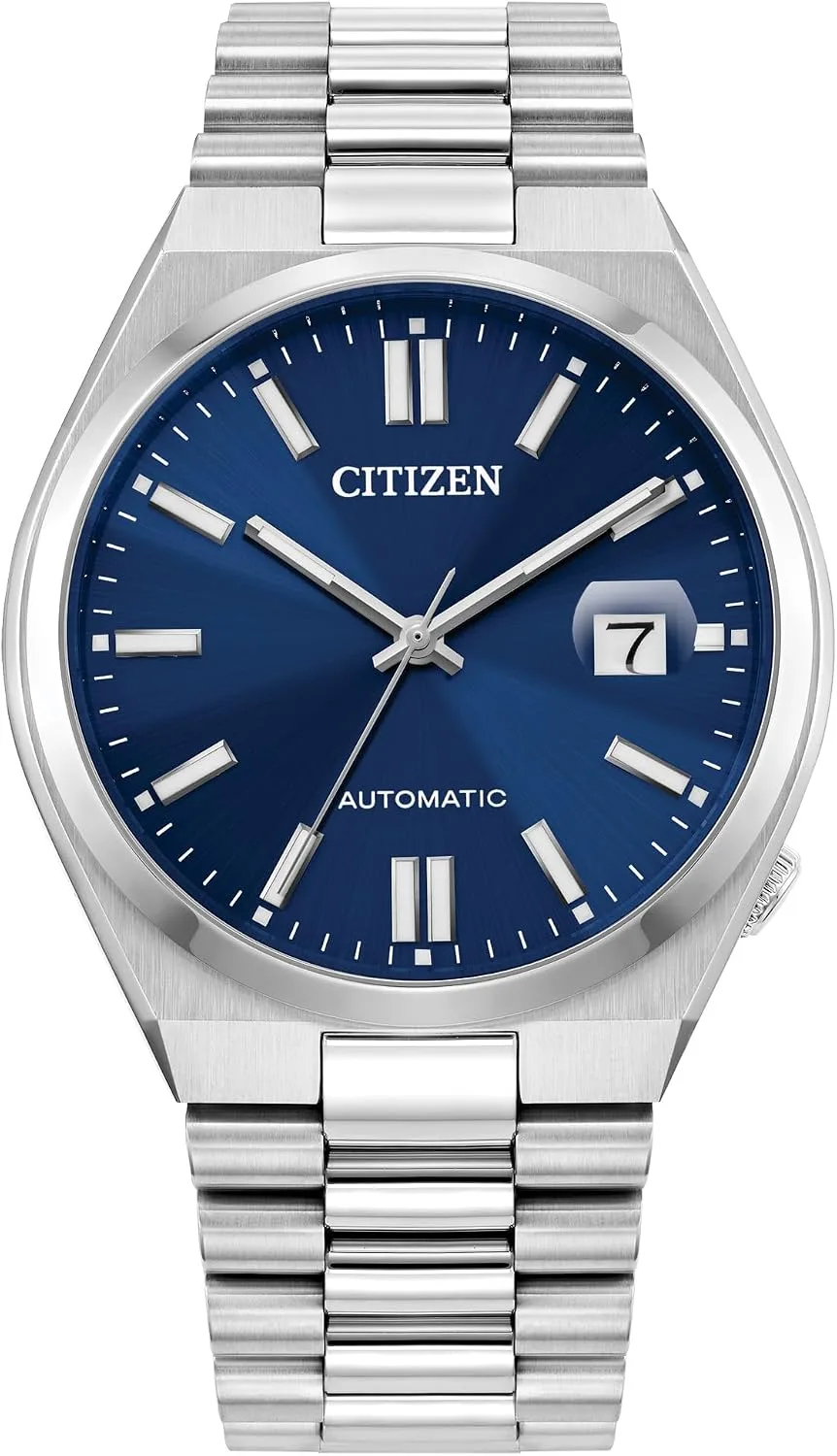
- Movement: Citizen 8210 automatic, about 42 hours
- Case: 40 mm steel, about 11 mm thick
- Crystal: sapphire
- Water resistance: 50 m
- Features: integrated bracelet, date magnifier
The Tsuyosa is Citizen's affordable automatic with an integrated bracelet and bright sunray dials. It adds sapphire at a price where many rivals use mineral glass, and it works as both a sporty and a dressy watch.
What owners say: owners love the colors and comfort. The date magnifier divides opinion.
- Pros: sapphire, comfortable bracelet, bold dials
- Cons: 50 m, date magnifier is a matter of taste
7. Seiko Prospex Turtle SRPE93: best automatic dive watch with character
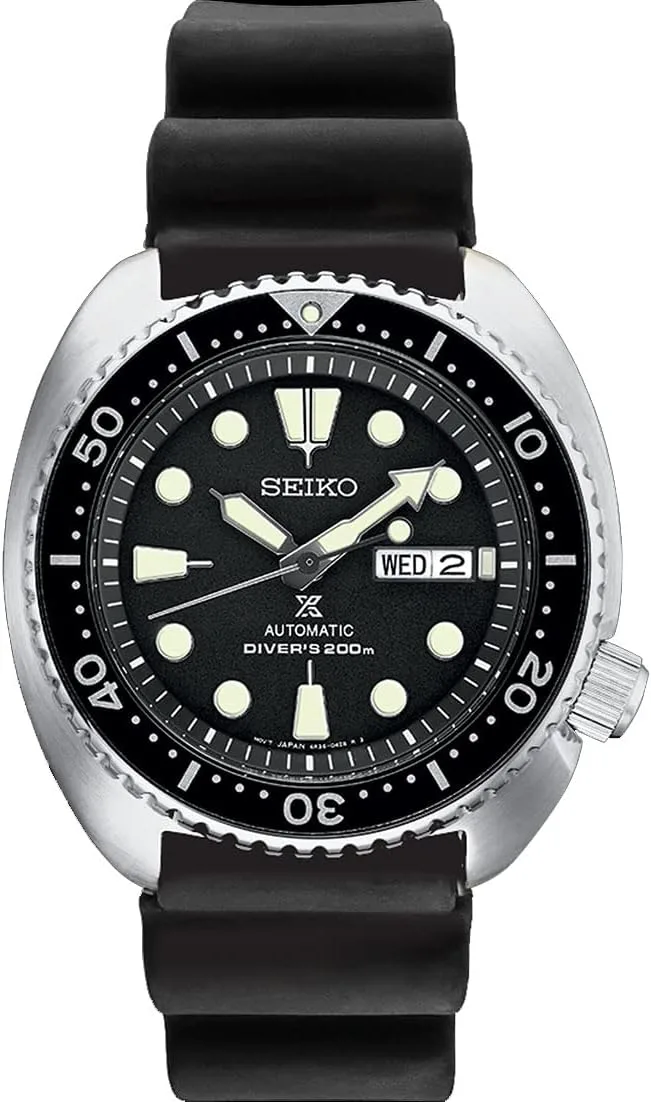
- Movement: Seiko 4R36 automatic, hand-winding and hacking, about 41 hours
- Case: 45 mm steel cushion case, 47.7 mm lug to lug
- Crystal: Hardlex
- Water resistance: 200 m, ISO-rated diver
- Strap: silicone, 22 mm lugs
The Turtle is a modern version of a classic 1970s Seiko diver, with a cushion case that wears much smaller than its 45 mm width. It is a proper ISO-rated dive watch with a mechanical heart and plenty of personality.
What owners say: comfort and lume stand out. The thick case and Hardlex crystal are the downsides.
- Pros: iconic design, ISO diver, excellent lume
- Cons: thick case, Hardlex crystal
8. Hamilton Khaki Field Mechanical 38mm: best hand-wound watch
- Movement: Hamilton H-50 hand-wound, about 80 hours
- Case: 38 mm steel, 9.5 mm thick
- Crystal: sapphire
- Water resistance: 50 m
- Strap: NATO, 20 mm lugs
If you want the full mechanical experience, wind it yourself. The Khaki Field Mechanical is a Swiss hand-wound field watch with an 80-hour power reserve, so a full wind lasts more than three days. Without a rotor, the case stays thin at 9.5 mm, and the 38 mm size suits almost any wrist.
What owners say: owners describe it as the watch they keep. Winding it is part of the appeal, and 50 m is modest.
- Pros: 80-hour reserve, sapphire, thin, timeless design
- Cons: must be wound, 50 m, no date
9. Tissot PRX Powermatic 80: best Swiss automatic
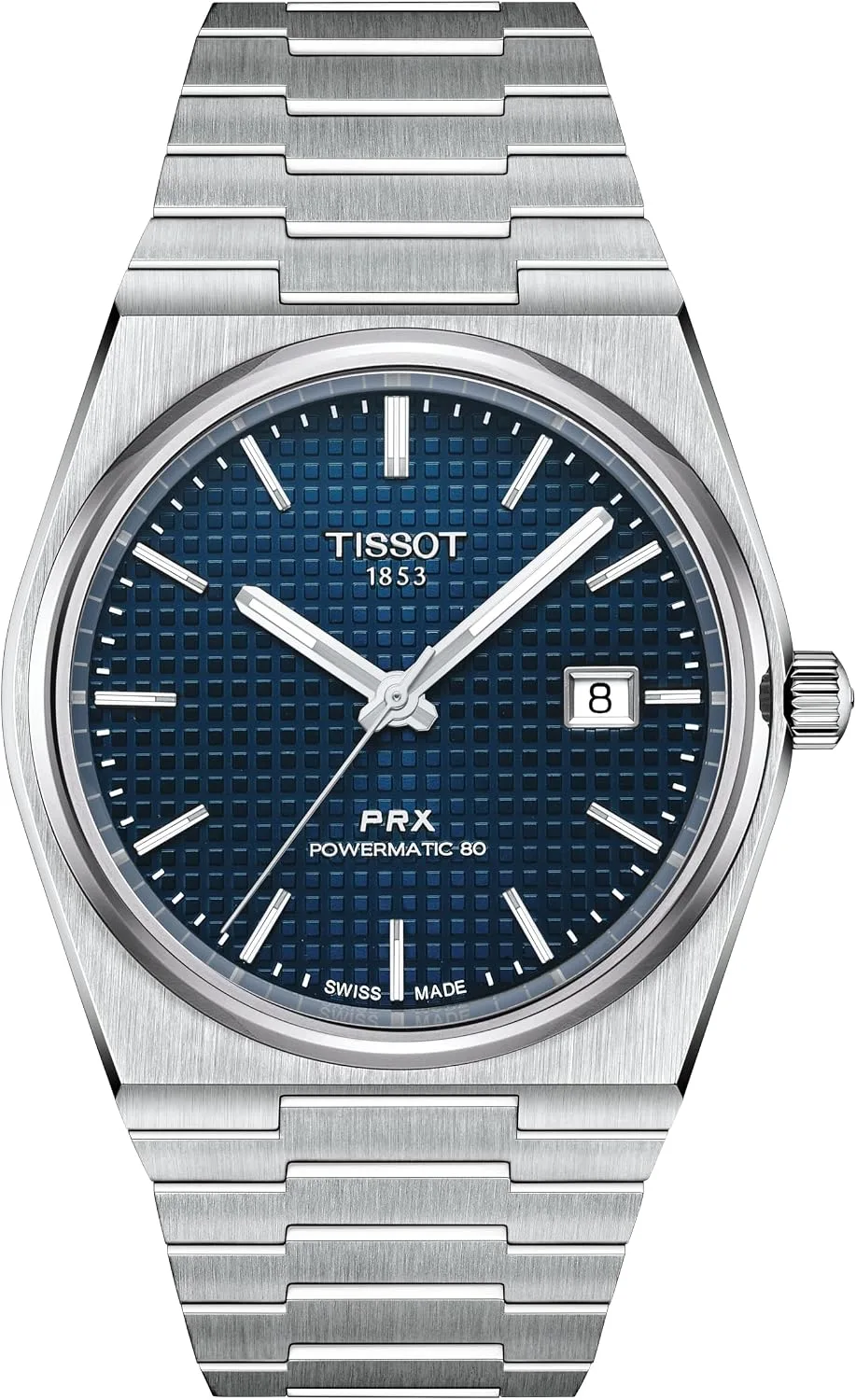
- Movement: Powermatic 80 automatic, about 80 hours, Nivachron hairspring
- Case: 40 mm steel, about 10.9 mm thick, integrated bracelet
- Crystal: sapphire
- Water resistance: 100 m
- Features: display caseback, quick-release bracelet
The PRX Powermatic 80 is the most accessible Swiss automatic with a long power reserve. You can take it off on Friday and it will still be running on Monday, and Tissot's Nivachron hairspring makes it less sensitive to magnetism than many affordable automatics.
What owners say: the bracelet, dial texture and power reserve get the praise. Sizing the integrated bracelet takes care.
- Pros: Swiss automatic, 80-hour reserve, sapphire, 100 m
- Cons: highest price here, bracelet sizing
Best brands for a first mechanical watch
- Seiko: the widest range of affordable automatics, from the Seiko 5 Sports to Presage and Prospex
- Orient: in-house automatics at some of the lowest prices, including the Bambino, Mako and Kamasu
- Citizen: better known for Eco-Drive, but its Tsuyosa and Promaster automatics offer strong specs
- Hamilton: Swiss hand-wound and automatic field and pilot watches with long power reserves
- Tissot: Swiss automatics with the 80-hour Powermatic 80 movement at accessible prices
For a closer look at the two biggest Japanese brands, see our Seiko vs Citizen comparison.
Buying guide: what to expect from an affordable mechanical watch
Accuracy. Affordable automatics typically run within about 5 to 20 seconds a day. Certified chronometers must stay within -4 to +6 seconds a day, which costs much more. A few seconds a day is normal and nothing to worry about.
Power reserve. Most affordable automatics run for about 40 hours off the wrist. If you rotate watches, an 80-hour reserve like the Tissot's or Hamilton's is a real convenience.
Hacking and hand-winding. Both are worth having. Hacking stops the seconds hand so you can set the time precisely, and hand-winding lets you start a stopped watch without shaking it.
Servicing. A mechanical watch needs a service every several years, depending on the movement and use. Affordable Seiko, Orient and Citizen movements are inexpensive to service or even replace.
Magnetism. Strong magnets, such as phone cases, speakers and laptop closures, can make a mechanical watch run fast. Keep it away from them, or choose a movement with an anti-magnetic hairspring.
How to care for a mechanical watch
- Wind it regularly. Give a hand-wound watch a full wind each morning. Give a stopped automatic 20 to 30 turns of the crown before wearing it
- Be careful with the date. On many movements, changing the date between about 9 pm and 3 am can strain the mechanism, so set the time first
- Avoid magnets and shocks. Take it off for heavy impact sports
- Respect the water rating. Make sure a screw-down crown is screwed down before you get it wet
- Service it. Follow the maker's advice, and have it checked if accuracy changes suddenly
FAQ
A watch powered by a wound mainspring instead of a battery. The spring's energy runs through a gear train and is regulated by a balance wheel, which keeps time.
An automatic is a type of mechanical watch. It has a rotor that winds the mainspring as you move. A hand-wound mechanical watch has no rotor and must be wound through the crown.
Not for accuracy or convenience. Quartz is more accurate and cheaper to own. Mechanical watches are valued for craftsmanship, longevity and the sweeping seconds hand.
With regular servicing, a mechanical watch can last for decades and be passed down. Many affordable movements are also easy and inexpensive to repair.
Affordable automatics usually run within about 5 to 20 seconds a day. Certified chronometers stay within -4 to +6 seconds a day.
The Seiko 5 Sports is the classic first automatic. The Orient Kamasu offers more for the money, and the Hamilton Khaki Field Mechanical is the best hand-wound watch to start with.
Our verdict
A mechanical watch is about more than telling the time. It is a small machine that runs on your own energy, and the best affordable ones are reliable enough to wear every day. Start with a Seiko 5 Sports if you want the classic first automatic, choose the Orient Kamasu for the best value, wind a Hamilton Khaki Field Mechanical if you want the purest experience, and step up to the Tissot PRX Powermatic 80 for a Swiss automatic.
Check the Seiko 5 Sports on AmazonImage credits: Racomi via Wikimedia Commons (CC BY-SA 4.0); pxhere via Wikimedia Commons (CC0).