
As an Amazon Associate, AddWatch earns from qualifying purchases. This does not affect our reviews.
The Orient Mako is Orient's long-running automatic dive watch family, and today it comes in four main forms: the Mako II, the smaller Mako 40, the Kamasu (often called the Mako III) and the new Mako GMT. All four use Orient's own automatic movements and a 200 m rating, but they differ in size, crystal and price.
Short verdict: the Mako II is the cheapest way into a real automatic diver, the Mako 40 is the pick for smaller wrists, and the Kamasu is the best all-rounder because it adds sapphire for little extra money. The Mako GMT only makes sense if you need a second time zone.
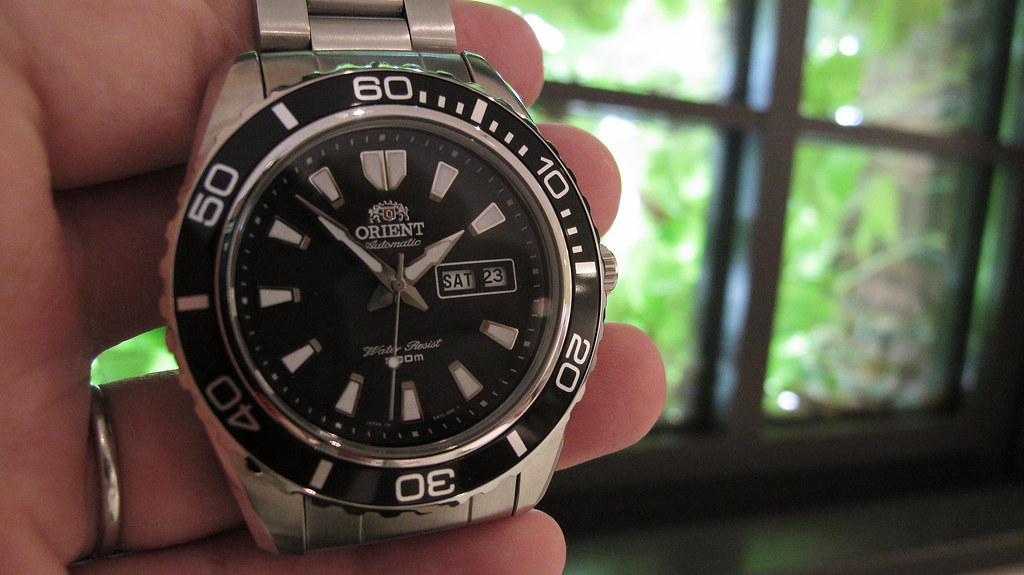
Orient Mako models compared
| Spec | Mako II | Mako 40 | Kamasu (Mako III) | Mako GMT |
|---|---|---|---|---|
| Movement | F6922 automatic | F6722 automatic | F6922 automatic | F6P22 automatic GMT |
| Calendar | Day and date | Date | Day and date | Date and 24-hour hand |
| Case width | 41.5 mm | 39.9 mm | 41.8 mm | 42.8 mm |
| Lug to lug | 47 mm | 46.5 mm | 47 mm | 49.5 mm |
| Thickness | 13 mm | 12.8 mm | 12.8 mm | 13.4 mm |
| Lug width | 22 mm | 20 mm | 22 mm | 22 mm |
| Crystal | Mineral | Sapphire | Sapphire | Sapphire |
| Water resistance | 200 m | 200 m | 200 m | 200 m |
| Usual price | $180 to $280 | About $300 to $400 | $250 to $380 | $495 to $625 |
Every model hacks and hand-winds, stores about 40 hours of power and carries Orient's +25 to -15 seconds per day accuracy rating. The real choices are size, crystal and whether you want the day display.
What is the Orient Mako?
The Mako is the dive watch line that built Orient's reputation for value. The first Mako appeared in 2004, and Orient has refreshed it many times since, adding the Mako USA, the larger Mako XL, the Mako II in 2015, the Kamasu in 2019, the Mako 40 in 2023 and the Mako GMT in 2026.
The name started as an enthusiast nickname, taken from the mako shark, and Orient later adopted it. Orient has been part of Seiko Epson since 2009, but it builds its own movements, which is why even the cheapest Mako has an in-house automatic caliber. The Mako II brought the biggest technical change, replacing the older 46943 caliber with the F6922, which added hacking and hand-winding.
Orient Mako 2: the budget classic
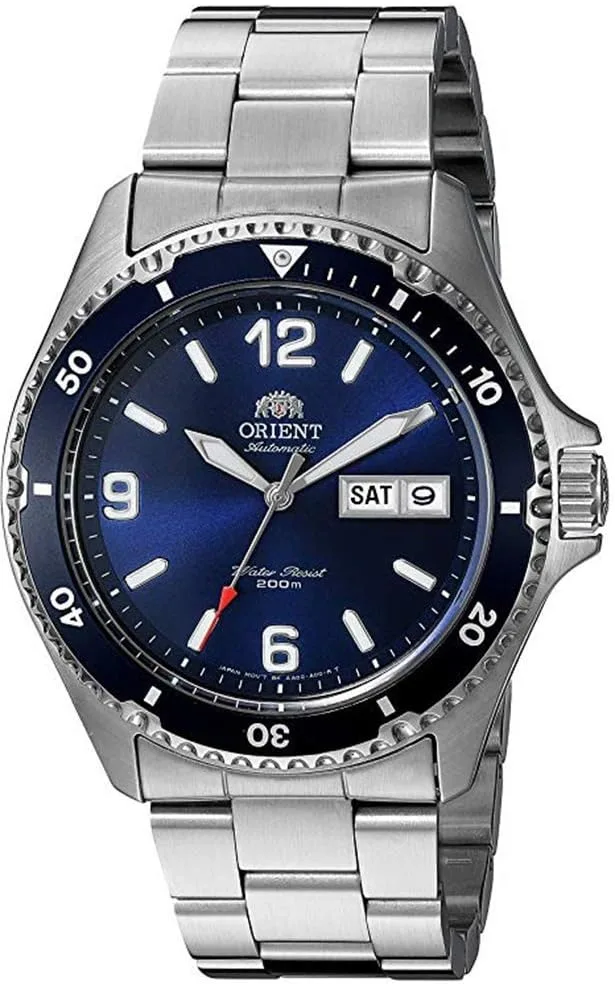
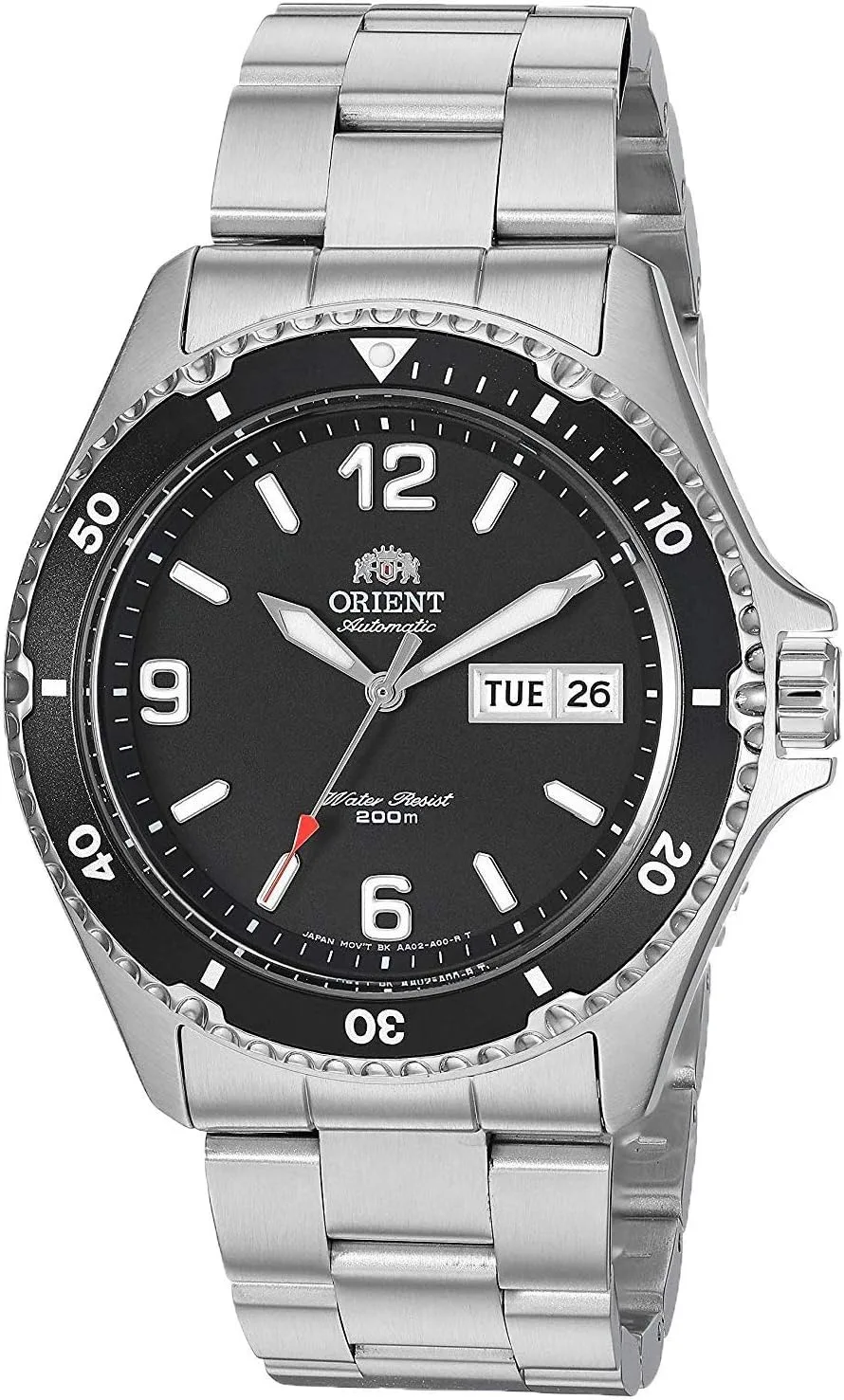
The Orient Mako 2 (Mako II, references such as FAA02001B black and FAA02002D blue) is the entry point to the family and still one of the cheapest real automatic divers on sale. It uses the F6922 movement with day and date, a 120-click unidirectional bezel and a screw-down crown.
The case is 41.5 mm wide, 47 mm lug to lug and 13 mm thick, with 22 mm lugs. The main compromise is the mineral crystal, which scratches more easily than sapphire. The bracelet uses folded end links and a fold-over clasp with double push-button safety, and owners say it feels light and basic. Orient USA notes the 200 m rating is meant for skin diving, which covers swimming and snorkeling.
The Mako II also comes in many colors, including black, blue, orange and a blue and red Pepsi style bezel. If your budget stops below $250 and you can accept a mineral crystal, it is the one to buy.
Orient Mako 40: the smaller Mako
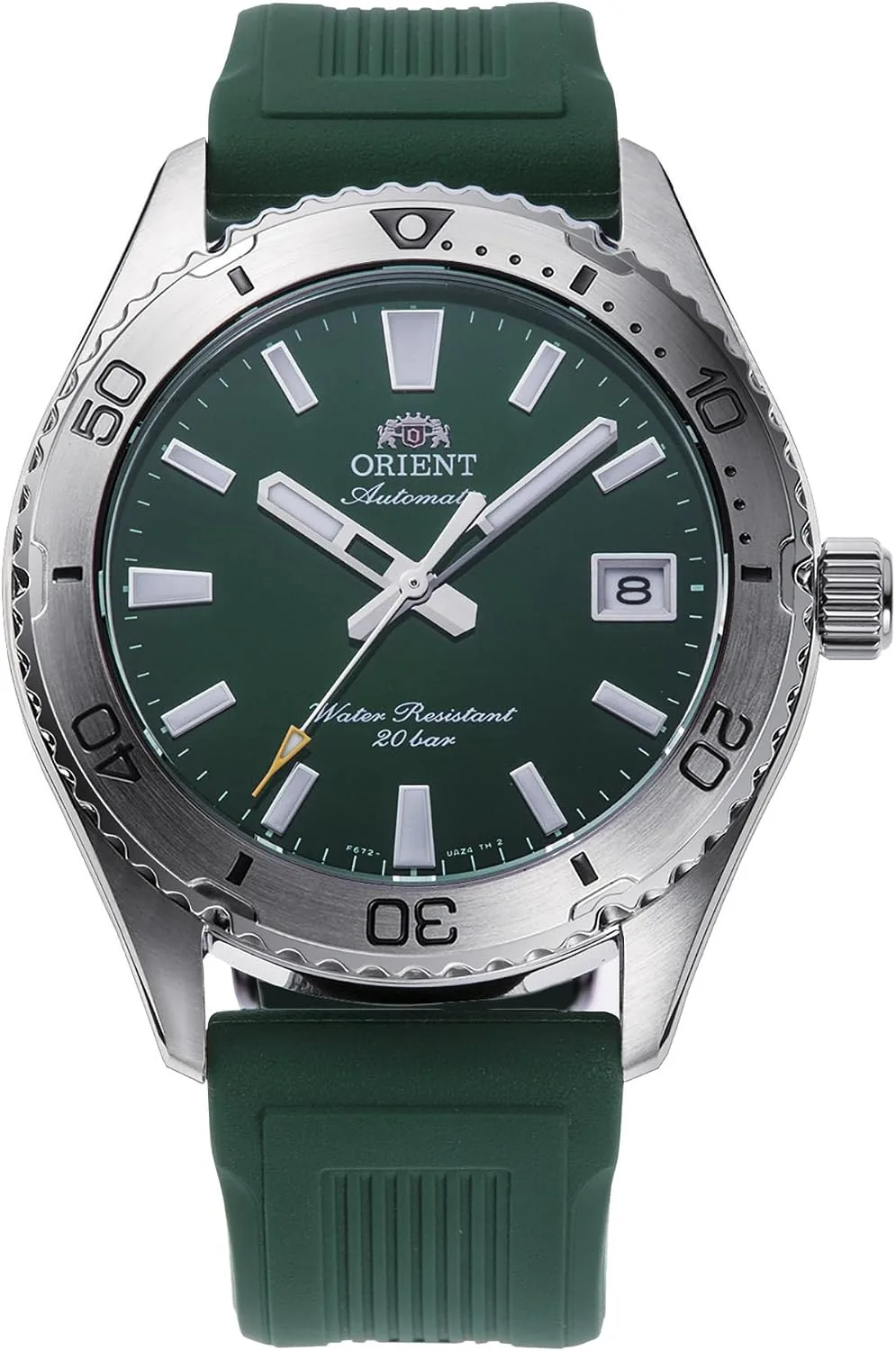
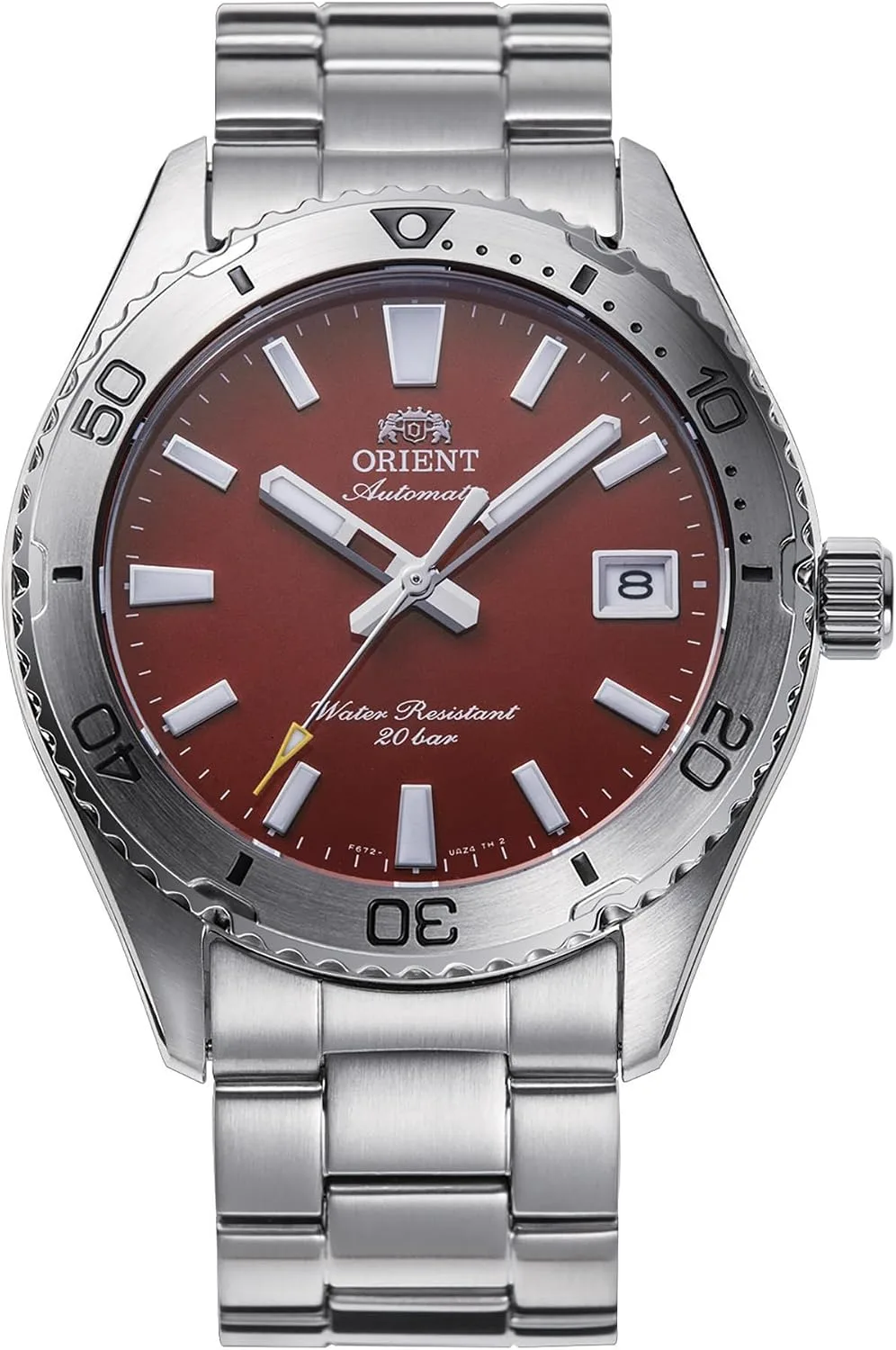
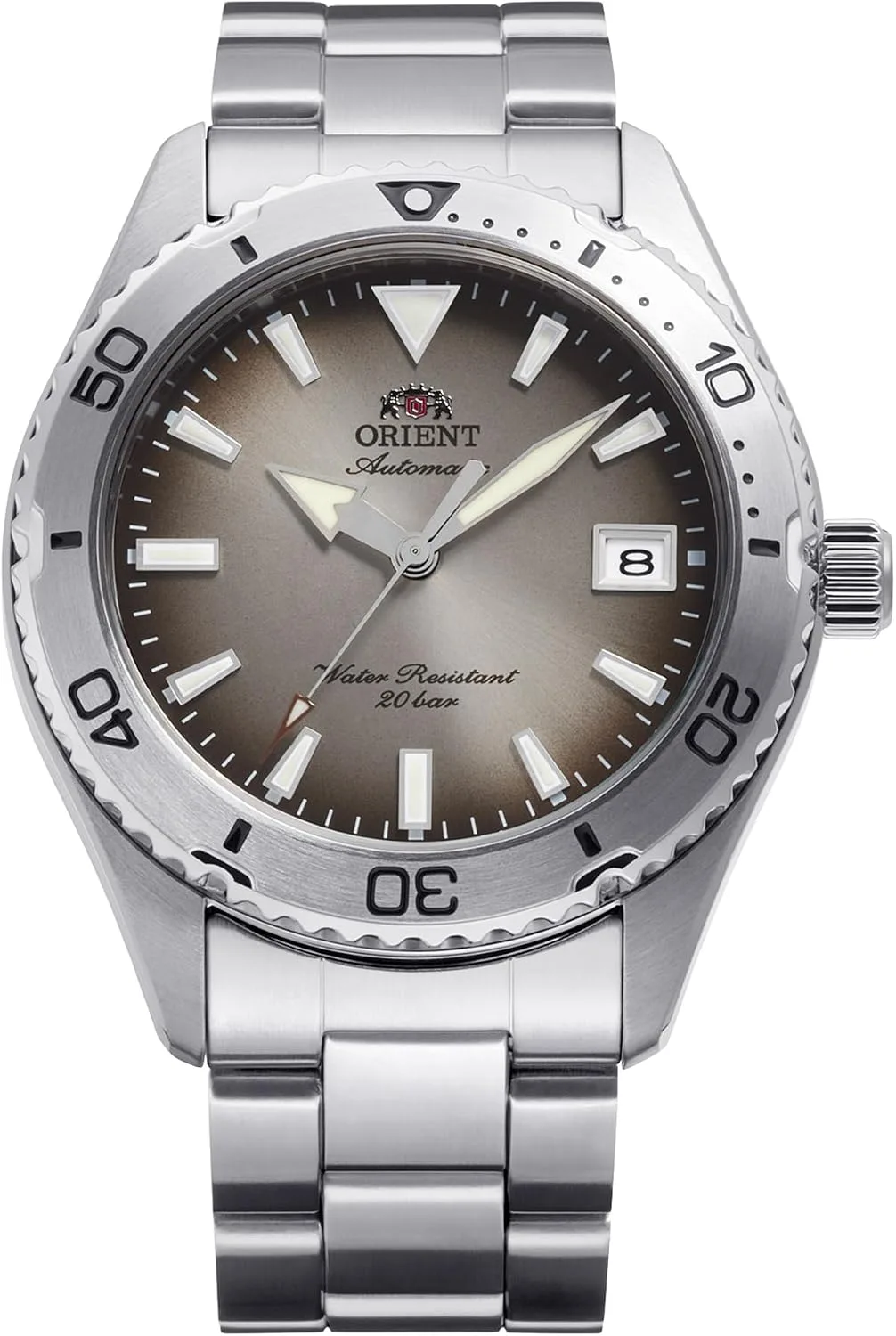
The Mako 40 is the compact version for wrists under about 6.75 inches. Despite the name it measures 39.9 mm across, with a 46.5 mm lug to lug, a 12.8 mm thickness and 20 mm lugs.
It upgrades to a sapphire crystal but switches to the F6722 caliber, which shows the date only. The dials are cleaner, with gradient and sunburst finishes in colors such as green, red, gray, blue and mocha. Orient's UK store lists it at £379.99, so it costs more than the Mako II. Choose it for the size and the sapphire, not for the day display.
Orient Kamasu (Mako III): the best all-rounder
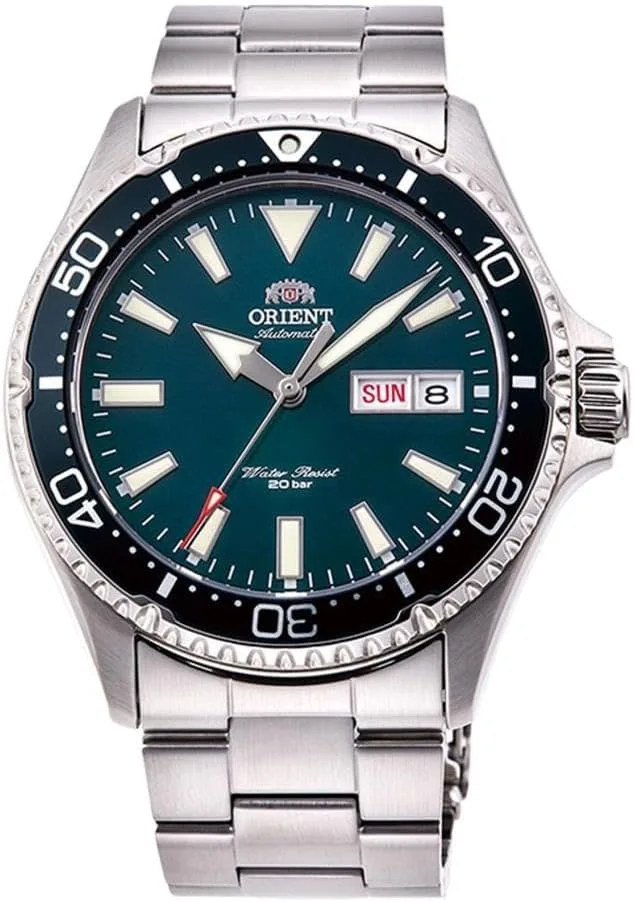
The Kamasu is the Mako most people should buy. Orient files it in the Mako family, which is why it is often called the Mako III, and it keeps the F6922 movement with day and date while adding a sapphire crystal.
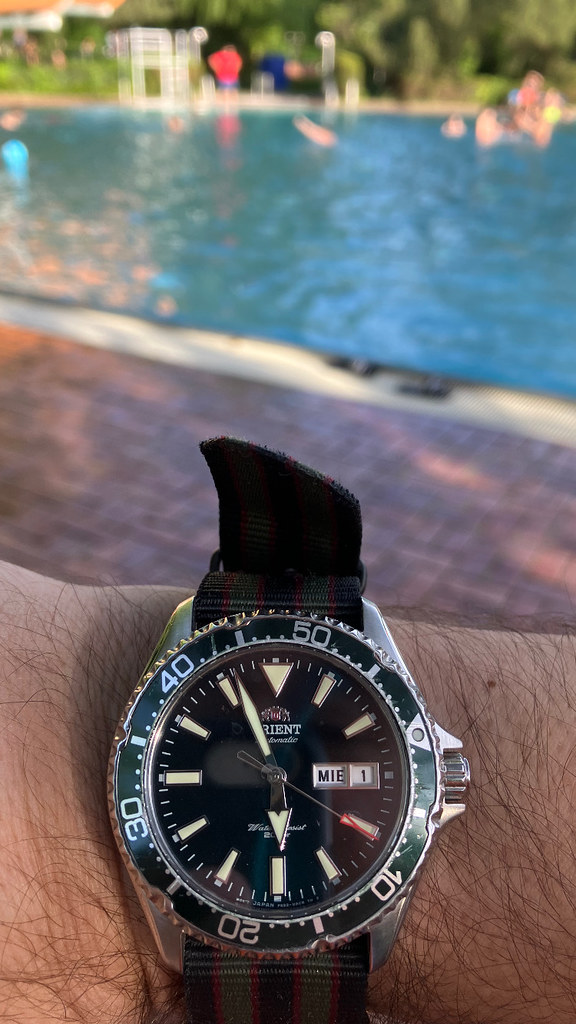
The case is 41.8 mm wide, 47 mm lug to lug and 12.8 mm thick, with 22 mm lugs, so it wears almost the same as a Mako II. It usually sells for $250 to $380, only a little more than the Mako II, and its sunburst dials in green, red, blue and black look more expensive than the price. Our full Orient Kamasu review covers every version, sizing and the common complaints.
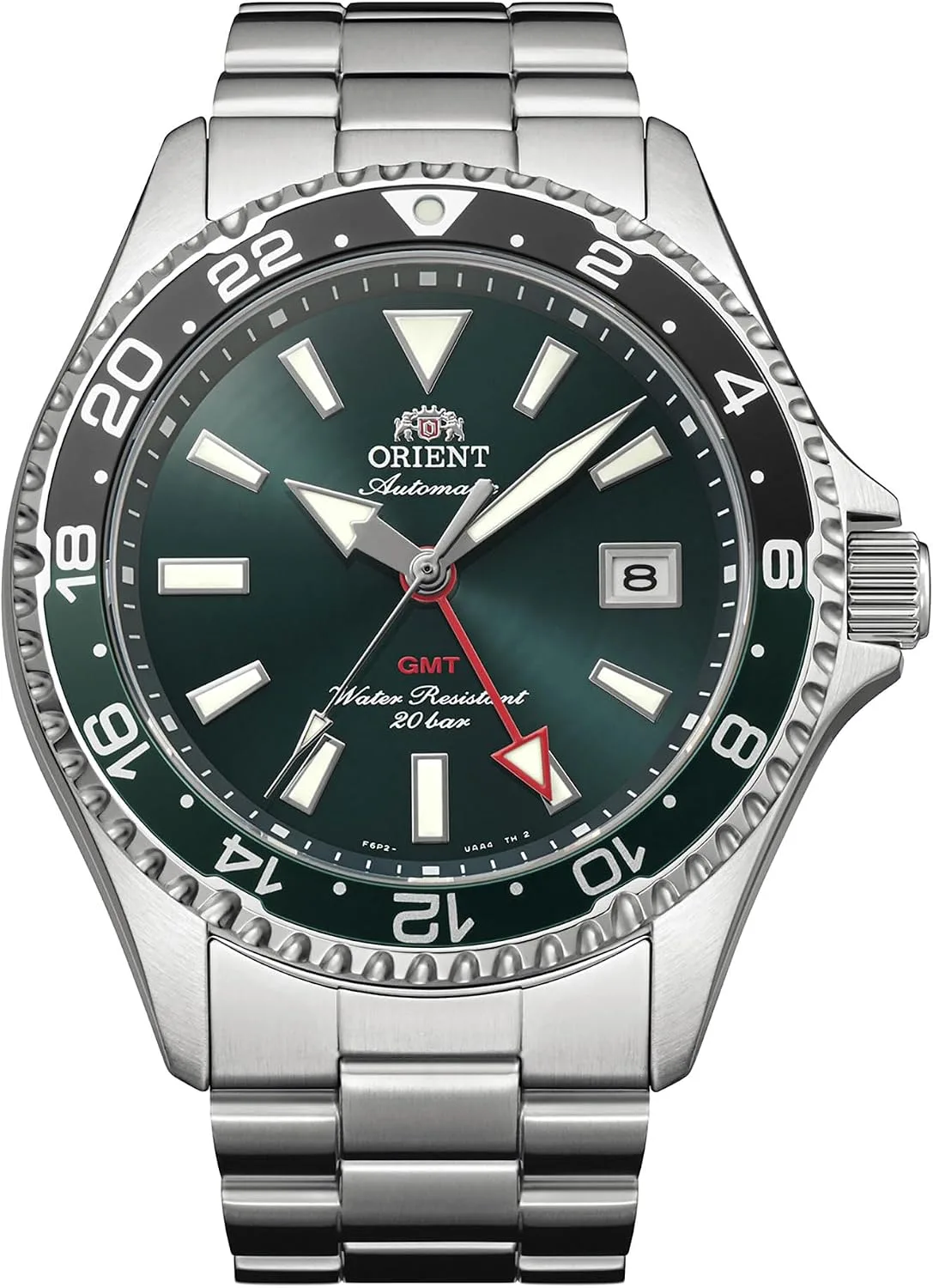
Orient Mako GMT (2026)
The Mako GMT is the newest member of the family and the first Mako with a second time zone. It adds a 24-hour hand and a 24-hour bezel, uses the new F6P22 caliber and drops the day display.
It is also the largest Mako at 42.8 mm wide, 49.5 mm lug to lug and 13.4 mm thick. Orient sells it outside the US as the Mako GMT, while Orient USA sells the same design as the Kamasu GMT, with a $625 regular price and a $495 launch price. It launched in black, blue, green and orange plus a limited blue gradient edition. Buy it if you travel; otherwise the standard Kamasu is better value.
Round 1: Size and fit
The Mako 40 is the most wearable, the Mako II and Kamasu are classic mid-size divers, and the GMT is the biggest.
- Under 6.25 in (16 cm): Mako 40
- 6.25 to 7.5 in (16 to 19 cm): Mako II or Kamasu
- Over 7.5 in (19 cm): Kamasu or Mako GMT
Winner: Mako 40 for small wrists, Kamasu for everyone else.
Round 2: Crystal and build
The Mako 40, Kamasu and GMT all use sapphire, which keeps the watch looking new for years. The Mako II uses mineral glass, which is tougher against cracks but scratches more easily. All four have steel cases, screw-down crowns and steel bracelets.
Winner: Kamasu, for sapphire plus the day-date at a modest price.
Round 3: Movement and features
The F6922 in the Mako II and Kamasu shows the day and date. The F6722 in the Mako 40 shows the date only. The F6P22 in the GMT adds a second time zone. All of them hack, hand-wind and run for about 40 hours. For background on how these calibers work, see our mechanical watch guide.
Winner: Mako GMT if you travel, otherwise a tie between Mako II and Kamasu.
Round 4: Price and value
The Mako II is the cheapest at $180 to $280. The Kamasu costs only a little more, the Mako 40 sits around $300 to $400, and the GMT is $495 to $625. The extra $50 to $100 for the Kamasu buys sapphire, which is the biggest single upgrade in the family.
Winner: Kamasu for value, Mako II for the lowest price.
Round 5: Dial, bezel and water resistance
All four models share the same core diver toolkit: a unidirectional timing bezel, a screw-down crown, luminous hands and markers and a 200 m (660 ft) rating. The differences are in style. The Mako II has the most traditional dial, with Arabic numerals on many versions and a busy, sporty look. The Kamasu uses sharper markers and sunburst dials that catch the light. The Mako 40 has the cleanest dial with gradient finishes, and the GMT adds a colored 24-hour hand and a two-tone 24-hour bezel.
None of them is certified to the ISO 6425 diver standard, but all are fine for swimming, snorkeling and recreational water sports. Screw the crown down before getting wet and rinse the watch after salt water.
Winner: tie; pick the dial you like best.
What owners say about the Orient Mako
Owner feedback across the Mako family is consistent, and the praise centers on value. Buyers like getting an in-house automatic with a screw-down crown and a proper timing bezel for the price of a fashion watch, and many say the Mako was the watch that started their interest in mechanical watches.
The complaints repeat too:
- Accuracy varies from watch to watch, and some run outside the rated range when new
- The Mako II's mineral crystal picks up scratches over time
- Bracelets feel light, with simple clasps and, on the Mako II, folded end links
- Lume is adequate but fades faster than on Seiko divers
- Bezel alignment is occasionally a little off on individual pieces
None of these is unusual at this price, and most owners treat a strap change as an easy upgrade. The 22 mm lugs on the Mako II and Kamasu make that simple, and our NATO watch strap guide explains how to size one.
Orient Mako vs Seiko alternatives
The Mako's natural rivals come from Seiko. The Seiko 5 Sports costs about the same as a Kamasu but has 100 m of water resistance and a Hardlex crystal, while offering a display caseback; see our Seiko 5 Sports review. The Seiko Prospex Turtle is a bigger 45 mm cushion-case diver that costs more. For a broader brand comparison, read Seiko vs Citizen. If you want a quartz diver for much less, the Casio Duro covered in our Casio Duro review is the budget option.
Which Orient Mako should you buy?
- Choose the Mako II if you want the cheapest automatic diver and can live with mineral glass
- Choose the Mako 40 if your wrist is small or you prefer a date-only dial
- Choose the Kamasu if you want the best overall Mako with sapphire and day-date
- Choose the Mako GMT if you travel and need a second time zone
How we compared the Mako models
We have not worn these watches for this guide. We compared Orient's official specifications for each model, checked them against authorized dealers, read owner reviews and compared typical US prices.
FAQ
Yes. Every Mako uses an in-house automatic movement with hacking and hand-winding and has 200 m of water resistance, which is rare at its price. The Mako II's mineral crystal is its main weakness.
Both use the F6922 movement with day and date and have 200 m of water resistance. The Kamasu adds a sapphire crystal and a slightly different case and dial, for a little more money.
It measures 39.9 mm wide, 46.5 mm lug to lug and 12.8 mm thick, with 20 mm lugs. It shows the date only.
Yes. Orient launched the Mako GMT in 2026 with the F6P22 caliber and a 42.8 mm case. In the US the same design is sold as the Kamasu GMT.
It has a 200 m rating, screw-down crown and unidirectional bezel, so it handles swimming and snorkeling with ease. It is not ISO 6425 certified, and Orient USA describes the rating as suitable for skin diving.
Our verdict
The Orient Mako family covers almost every budget diver need. The Mako II remains the cheapest real automatic diver, the Mako 40 fixes the size problem, and the Kamasu is the best balance of specs and price. Unless you need a GMT, start with the Kamasu.
Check the Orient Kamasu (Mako III) on AmazonImage credits: Orient Mako by MIKI Yoshihito, CC BY 2.0; Orient Kamasu at the pool by illustir, CC BY 2.0.