
As an Amazon Associate, AddWatch earns from qualifying purchases. This does not affect our reviews.
The Casio Duro is the cheapest real dive watch most people will ever need. For roughly the price of a nice dinner you get a stainless steel case, a screw-down crown, a ratcheting dive bezel and 200 meters of water resistance, and the watch has been doing this job since 2011 with very few changes. In this Casio Duro review we look at what you actually get, which version to buy, how big it wears and where the low price shows.
Short answer: the Casio Duro is worth buying if you want a tough, accurate, good-looking diver for everyday wear and do not mind a large 44 mm case and a mineral crystal. Buy the current MDV-107D on the steel bracelet if your wrist is about 6.75 inches or larger. If your wrist is smaller, look at the 38.5 mm "Baby Duro" MDV-10, but know that it is only rated to 50 m.
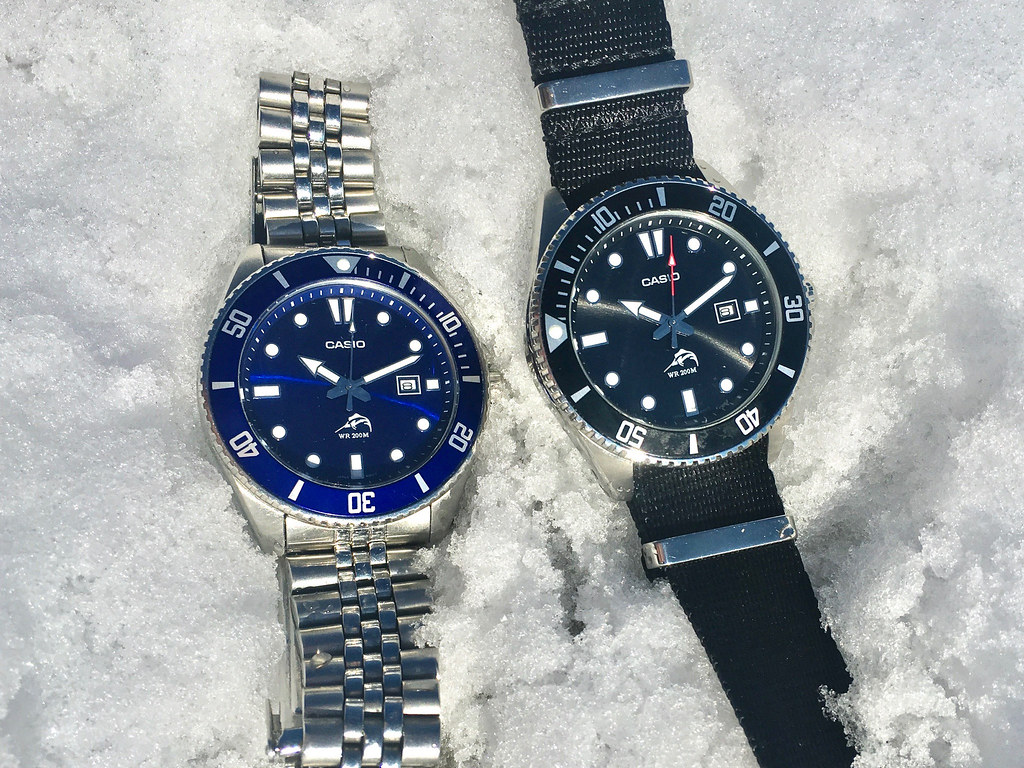
Casio Duro at a glance
- What it is: a quartz dive watch with a steel case, screw-down crown and 200 m water resistance
- Best for: a first dive watch, a beach and travel watch, a beater that still looks smart
- Size: 44.2 mm wide, 49.5 mm lug to lug, 12.1 mm thick
- Usual price: about $60 to $90 on the steel bracelet, a little less on a resin strap
- Skip it if: your wrist is under about 6.5 inches, or you want sapphire and an automatic movement
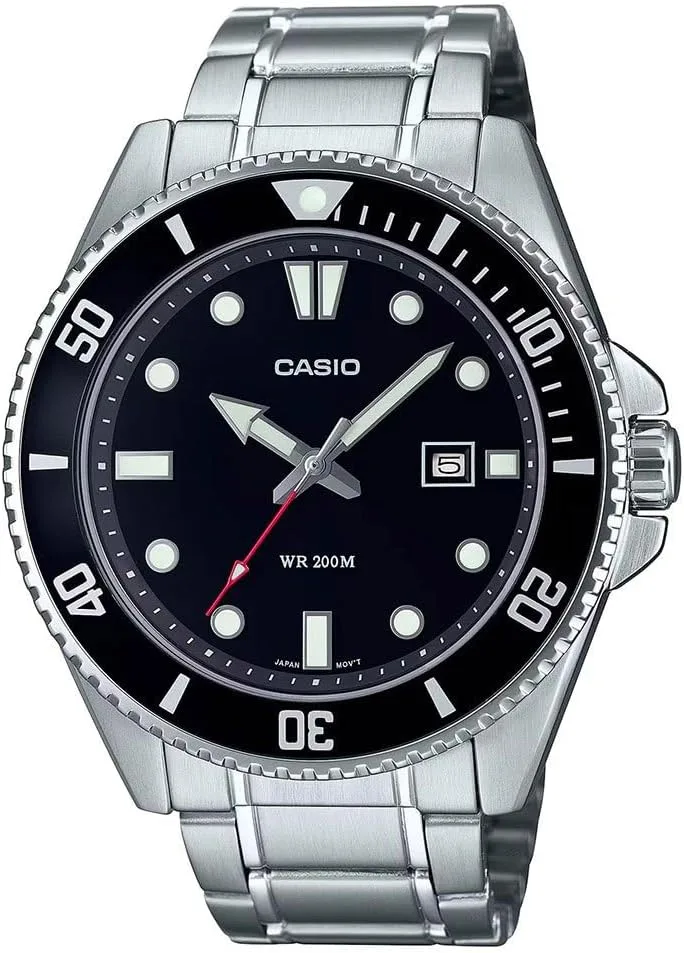
Casio Duro specs
| Spec | Casio Duro MDV-107D-1A1 |
|---|---|
| Movement | Casio quartz module 2784 |
| Accuracy | ±20 seconds per month |
| Battery | SR626SW, about 3 years |
| Case | Stainless steel, 44.2 mm wide |
| Lug to lug | 49.5 mm |
| Thickness | 12.1 mm |
| Weight | about 144 g on the bracelet |
| Crystal | Mineral |
| Water resistance | 200 m, screw-down crown, screw-lock caseback |
| Bezel | Unidirectional 60-minute dive bezel |
| Lume | Hands and hour markers |
| Lug width | 22 mm (bracelet tapers to 20 mm at the clasp) |
| Functions | Hours, minutes, seconds, date |
MDV-106 vs MDV-107: Duro versions and the Marlin name
The watch everyone calls the Duro grew out of Casio's DURO200 line from the mid-2000s, and the model that made it famous, the MDV-106, arrived in 2011. Casio does not really use the Duro name in its marketing, but collectors never stopped using it.
The other nickname, Marlin, comes from the small fish logo printed above 6 o'clock on the MDV-106 dial and the swordfish design on its caseback. Reports from Casio dealers and enthusiast sites say Casio stopped using the logo because its license ran out, and the replacement MDV-107 arrived without the fish. Apart from the logo, the two are essentially the same watch: same case, same 2784 quartz module, same 200 m rating and same screw-down crown.
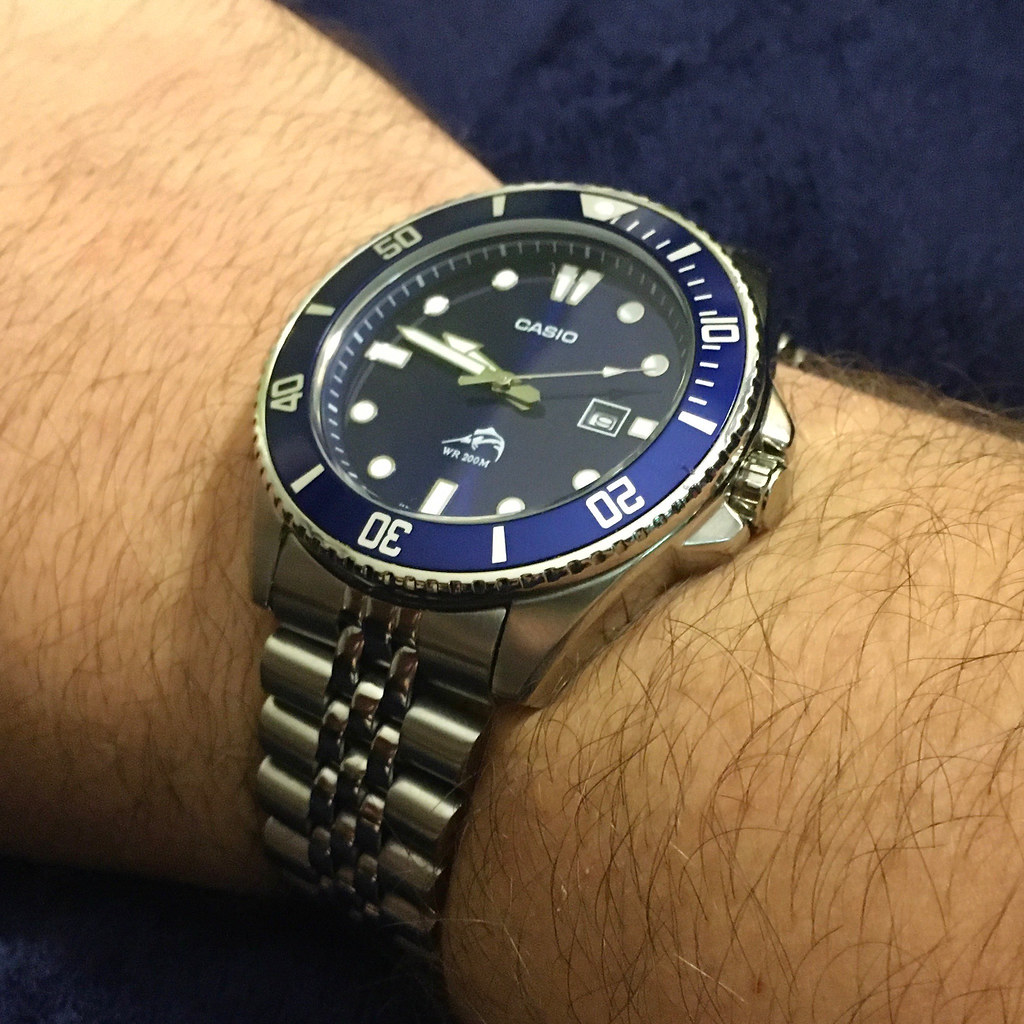
Here is how the main references break down:
- MDV-106-1A: the original black Duro with the Marlin logo, on a resin strap. Still sold while stock lasts
- MDV-106B-2A: the blue dial and blue bezel version, also with the logo
- MDV-106DD: the bracelet version sold in some markets, effectively the same as the MDV-107D
- MDV-107-1A: the current black Duro on a resin strap, no fish
- MDV-107D-1A1: the current black Duro on a steel bracelet, and the version we link to here
- Color variants of the MDV-107: blue and red "Pepsi" and blue and black "Batman" style bezels, a green "Kermit" style, brown, white and blue dials. Newer releases are also offered on fabric straps
If the fish matters to you, buy an MDV-106 while you still can. If it does not, the MDV-107 is the same watch with a cleaner dial, and the bracelet version is the better buy because the stock resin strap is the Duro's weakest part.
Casio Duro size: how it fits
Size is the question we see most often about the Duro, and with good reason. At 44.2 mm wide and 49.5 mm from lug to lug it is a large watch. The case is fairly flat at 12.1 mm and the lugs curve down, so it wears a little smaller than the numbers suggest, but it still needs a reasonably sized wrist.
| Wrist size | How the 44 mm Duro wears |
|---|---|
| Under 6.5 in (165 mm) | Too big for most people. Lugs overhang. Look at the 38.5 mm MDV-10 |
| 6.5 to 7 in (165 to 178 mm) | Wearable, sits large but balanced on the bracelet |
| 7 to 7.5 in (178 to 190 mm) | The sweet spot. Looks like a normal modern diver |
| Over 7.5 in (190 mm) | Fits easily |
Lug width is 22 mm, which makes strap changes easy. NATO straps, rubber straps and aftermarket curved-end bracelets in 22 mm are widely available, and swapping the stock resin strap is the most common upgrade owners make.
The Baby Duro (MDV-10). In 2023 Casio released a smaller version with a 38.5 mm case. Many listings call it the Duro 38mm or even 36mm, but the case measures about 38.5 mm across. It keeps the look, but the water resistance drops to 50 m and the raised chapter ring becomes a printed one. It is a good choice for small wrists that want the style. It is not a direct replacement for the full-size diver.
Design and build quality
The Duro's design borrows from classic dive watches without copying any one of them: a black sunburst dial, large round and baton markers, arrow-tipped hands, a date at 3 o'clock and a coin-edge bezel. The dial is clean and easy to read, and the sunburst finish makes it look more expensive than it is.
The case is stainless steel with a mix of brushed and polished surfaces. For a watch at this price, the finishing is better than it needs to be, and this is the part that surprises most people when they first see one in person. The crown is protected by crown guards and screws down, which is unusual at this price.
The bezel is a ratcheting unidirectional design with an aluminum insert. Owners consistently praise how crisp it feels and how well it lines up with the markers. The crystal is flat mineral glass. It resists everyday knocks but scratches more easily than sapphire, and it is the main thing you give up at this price.
The bracelet on the MDV-107D is functional but light. It tapers from 22 mm to 20 mm and closes with a fold-over clasp with push buttons. It is a clear step up from the stock resin strap, which owners often describe as stiff and uncomfortable.
Movement and accuracy
Inside is Casio's 2784 quartz module, rated at ±20 seconds per month. In practice owners commonly report results well inside that, often around 10 seconds a month. The battery is an SR626SW, a common cell that any watch shop can replace, and Casio rates it at about 3 years.
There is no automatic Duro. Casio makes the Duro only as a quartz watch, which is part of why it is so cheap, accurate and reliable. If you want an automatic diver at a similar price, the Orient Mako and Kamasu below are the obvious alternatives.
One thing to know: because the case is water resistant to 200 m, a battery change should be done by a shop that can pressure test the case afterward, or at least replace the caseback gasket. Opening it at home and closing it carelessly is the most common way a Duro loses its water resistance.
Water resistance: can you dive with the Casio Duro?
With a screw-down crown, a screw-lock caseback and a 200 m rating, the Duro is safe for swimming, snorkeling, surfing and recreational diving. That is a real dive-watch specification, not a decorative "water resist" label. The unidirectional bezel can only turn one way, so if it gets knocked it shows more elapsed time rather than less, which is the safe failure for a diver.
That said, modern divers rely on dive computers for depth and decompression. A watch like the Duro is a backup timer and a reliable everyday diver, not a primary dive instrument. Two practical tips: always make sure the crown is screwed down before you get wet, and rinse the watch with fresh water after salt water or a chlorinated pool.
What owners say about the Casio Duro
We did not test the Duro ourselves for this review, so this section summarizes what owners report after months and years of wear.
What holds up:
- The bezel action and alignment, which many owners compare favorably with watches costing several times more
- Legibility in daylight, thanks to the high-contrast dial and big markers
- Toughness. The Duro has a reputation as a watch that survives years of beach trips, swimming and work
- Accuracy, usually well inside the official ±20 seconds per month
- The finishing on the case, which looks better than the price suggests
Common complaints:
- The stock resin strap, often called stiff and uncomfortable, which is why many owners replace it right away
- The lume, which is bright when charged but fades faster than on more expensive divers
- The mineral crystal, which picks up scratches over time
- The size, which is too big for many wrists
- The bracelet on the MDV-107D, which works but feels light compared with pricier steel watches
Price and value
The Duro usually sells for about $60 to $90 on the steel bracelet and a bit less on a resin strap. For that money, the combination of a steel case, a screw-down crown, a ratcheting bezel and 200 m water resistance is very hard to match. Most watches at this price are either resin dive-style watches with 100 m ratings or fashion watches with no real water resistance at all.
That value is why the Duro shows up in almost every guide to affordable watches, including our list of the best watches under $100 and our broader guide to the best watch for the money. If you want a cheap watch that you can wear in the ocean without thinking about it, this is the default answer.
Check the Casio Duro price on AmazonHow the Duro compares with other Casio dive watches
Casio makes several dive watches, and the Duro sits in the middle of the range. Knowing the others helps you decide whether it is the right Casio dive watch for you.
- Casio MRW-200H: a resin-cased dive-style watch rated to 100 m, usually around $20 to $30. It is lighter and cheaper, but it has no steel case, no screw-down crown and only half the water rating. Good for a pool watch, not a real diver.
- Casio Duro (MDV-107 and MDV106): steel case, screw-down crown and 200 m. The cheapest Casio that meets a proper dive-watch specification, and the best value in the range.
- Baby Duro (MDV-10): the 38.5 mm version with the same look but only 50 m of water resistance. A style choice for smaller wrists rather than a diver.
- G-Shock Frogman: Casio's professional diver, ISO certified, shock resistant and packed with features, but it costs many times more than a Duro.
For most people who want one Casio for swimming and everyday wear, the Duro is the sweet spot: it is the first model where you get steel, a screw-down crown and 200 m together, and nothing above it in Casio's range gives you that much more for the extra money unless you need the Frogman's tool-watch features.
Casio Duro alternatives
If the Duro is not quite right, these three cost more but fix its main weaknesses: the quartz movement, the mineral crystal or the battery.
| Watch | Movement | Case | Crystal | Water resistance | Usual price |
|---|---|---|---|---|---|
| Casio Duro MDV-107D | Quartz | 44.2 mm | Mineral | 200 m | $60 to $90 |
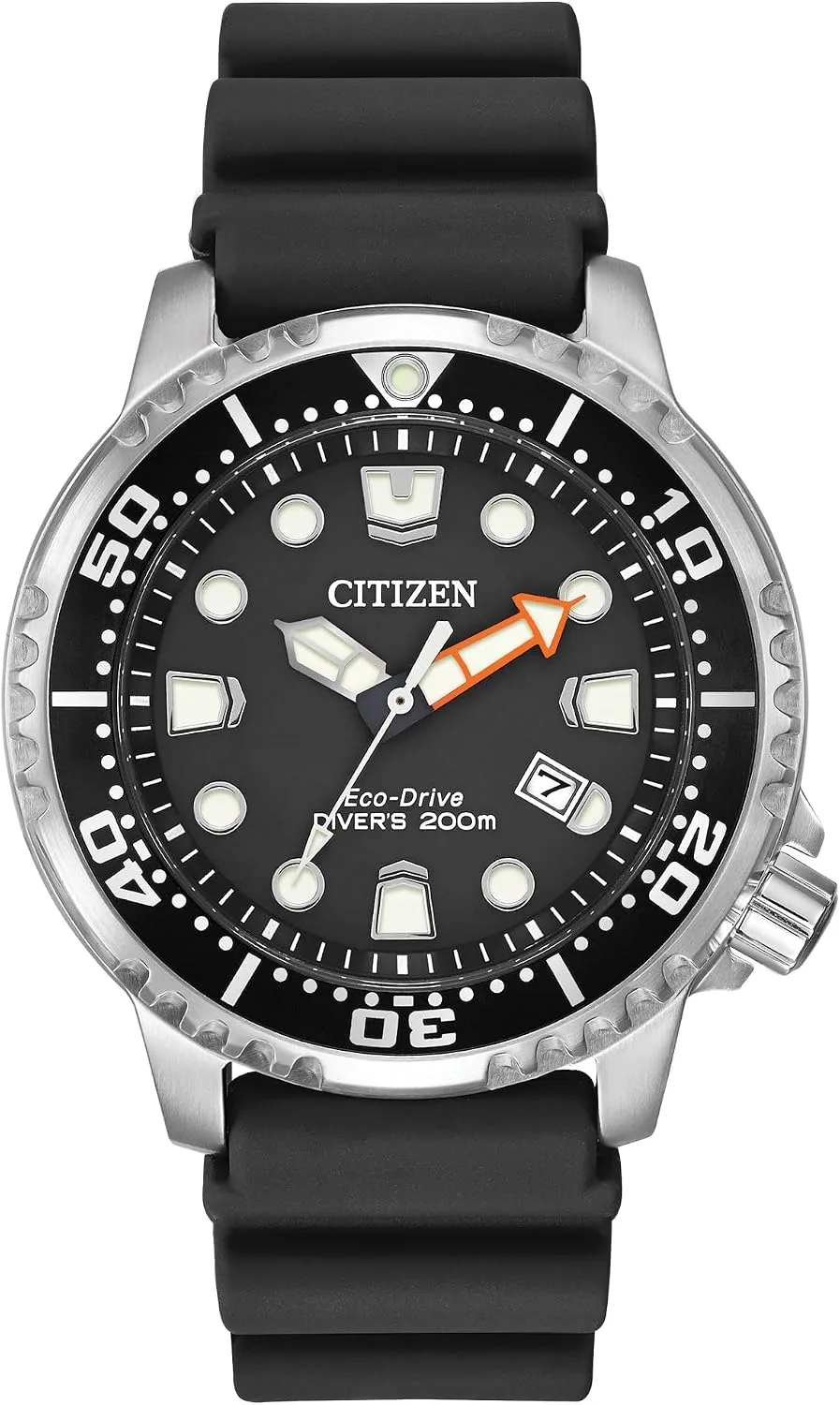
| Citizen Promaster Diver BN0150 | Solar quartz (Eco-Drive) | 44 mm | Mineral | 200 m, ISO diver | $180 to $300 |
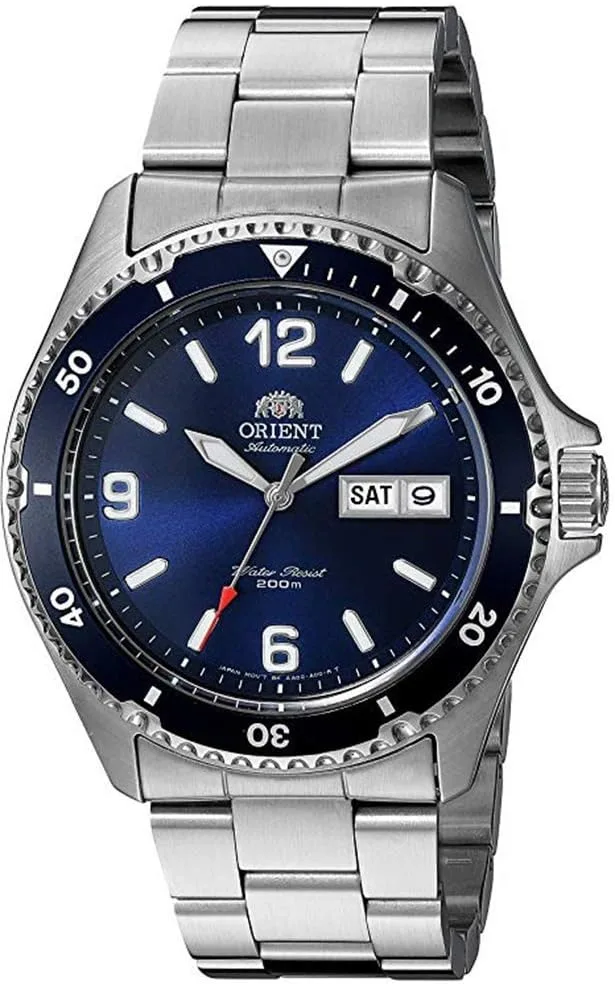
| Orient Mako II | Automatic F6922 | 41.5 mm | Mineral | 200 m | $180 to $260 |
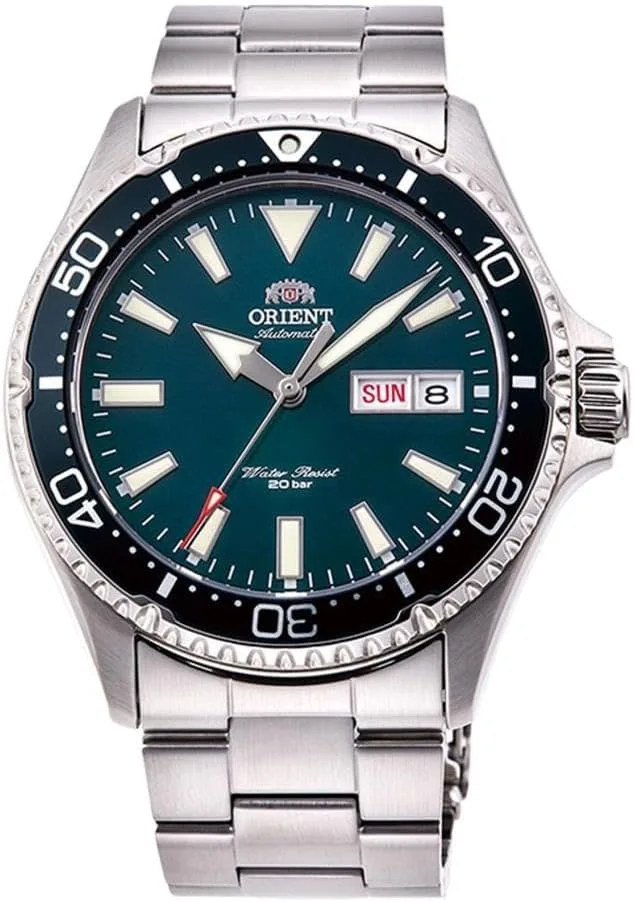
| Orient Kamasu | Automatic F6922 | 41.8 mm | Sapphire | 200 m | $250 to $380 |
- Citizen Promaster Diver: choose it if you never want to change a battery. Eco-Drive solar charging and an ISO-certified dive rating make it the low-maintenance upgrade
- Orient Mako II: choose it if you want an automatic diver for not much more money, in a slightly smaller case
- Orient Kamasu: choose it if you want sapphire crystal. It is the best value automatic diver we know of
For a first automatic with a dive-watch look, the Seiko 5 Sports is also worth a look. We cover it in our Seiko 5 Sports review.
Pros and cons
- Pros: real 200 m water resistance with a screw-down crown, crisp unidirectional bezel, accurate quartz movement, steel case with good finishing, very low price, 22 mm lugs for easy strap changes
- Cons: large 44 mm case, mineral crystal, average lume, poor stock resin strap, light bracelet, battery changes should be done by a shop to keep the water resistance
Who should buy the Casio Duro
Buy it if you want a cheap, tough watch for swimming, the beach and travel, a first dive watch to see whether the style suits you, or a beater you will not worry about. It also makes a great gift because it looks more expensive than it is.
Skip it if your wrist is under about 6.5 inches, if you want a mechanical movement, or if a scratch-proof sapphire crystal matters to you. In those cases, the 38.5 mm MDV-10, the Orient Mako or the Orient Kamasu are better fits.
FAQ
Yes. It has a 200 m water rating, a screw-down crown, a screw-lock caseback and a unidirectional bezel, so it is suitable for swimming, snorkeling and recreational diving. For serious diving, use it as a backup to a dive computer.
The standard Duro (MDV-106 and MDV-107) measures 44.2 mm wide, 49.5 mm lug to lug and 12.1 mm thick. The smaller MDV-10, often called the Baby Duro, measures about 38.5 mm.
22 mm. The steel bracelet on the MDV-107D tapers to 20 mm at the clasp.
The MDV-106 has the Marlin fish logo on the dial and caseback. The MDV-107 drops the logo and adds more color options. The case, movement and 200 m water resistance are the same.
No. The Duro is only made with a quartz movement. If you want an automatic diver at a similar price, look at the Orient Mako or Orient Kamasu.
Casio rates the SR626SW battery at about 3 years. Have it replaced by a shop that can reseal and ideally pressure test the case to keep the 200 m rating.
Our verdict
The Casio Duro is one of the easiest recommendations in watches. It gives you a real 200 m dive watch with a steel case, a screw-down crown and a bezel that feels better than it should, for less than many fashion watches cost. The trade-offs are honest ones: a big case, a mineral crystal and a strap you will probably replace. If your wrist can carry 44 mm, buy the MDV-107D on the bracelet and enjoy a watch you never have to baby.
Check the Casio Duro on AmazonImage credits: John Booty / Flickr (CC BY 2.0).