
As an Amazon Associate, AddWatch earns from qualifying purchases. This does not affect our reviews.
A NATO watch strap is a single long piece of woven nylon that passes under the watch's spring bars and wraps around your wrist, with an extra flap that holds the watch in place. It is cheap, tough, easy to change without tools and, crucially, it keeps the watch on your wrist even if one spring bar fails. This guide explains where the NATO strap came from, the main types, how to choose the right size, how to fit one in a minute and which NATO straps we recommend.
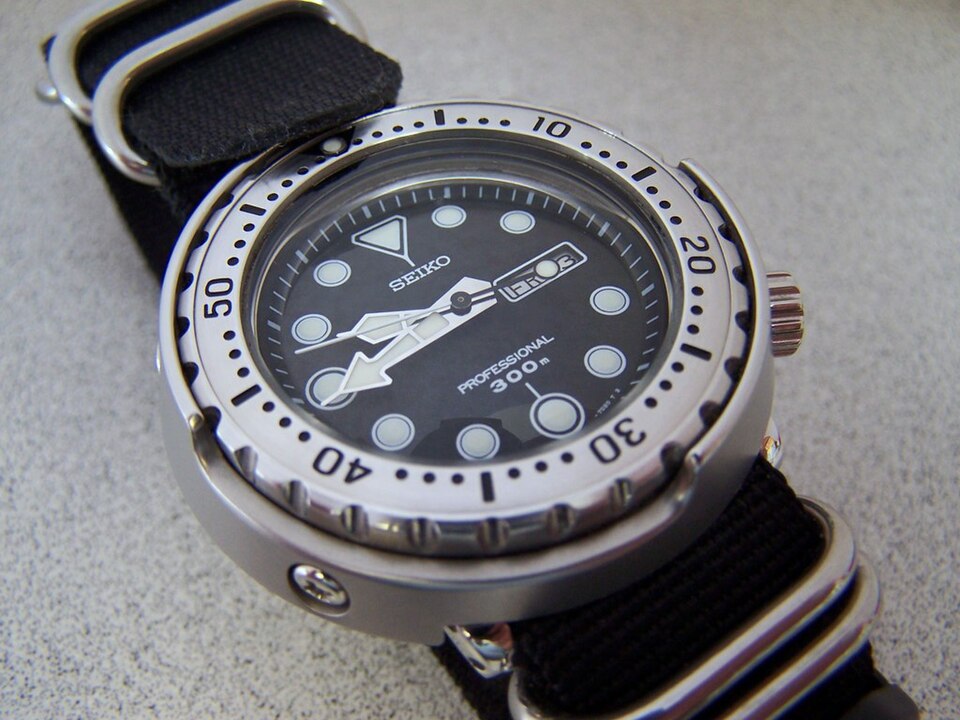
What is a NATO watch strap?
A NATO strap is a one-piece strap that threads behind the watch case through both spring bars. A second, shorter layer of nylon is stitched to the main strap with a keeper, so the watch sits on a double layer of fabric. Because the strap runs under the case rather than attaching at each end, a broken spring bar does not mean a lost watch: the other bar still holds the watch on the strap.
Most NATO straps are woven nylon with metal hardware: a buckle, two or three keepers (the loops that hold the strap end) and sometimes extra rings. Variants come in leather, seat belt nylon and rubber.
Where the NATO strap came from
The NATO strap began as a British military issue. In 1973 the British Ministry of Defence introduced a standard nylon watch strap for its forces. Soldiers ordered it using form G1098, which gave the strap its other common name, the G10. The original was a 20 mm nylon strap in a dark grey known as Admiralty Grey, with chrome-plated hardware.
The NATO name comes from the NATO Stock Number assigned to the strap, which let it be ordered across allied forces. The design spread from military use to the civilian world, helped by its appearance in films and by watch enthusiasts who liked its comfort, durability and low price.
Types of NATO straps
- Classic NATO: the original design, with a long main strap and a shorter flap under the watch. Secure and the most common
- Single-pass NATO: no extra flap. It sits lower on the wrist and looks cleaner, but it loses some of the security of the classic design
- Seat belt NATO: woven from a softer, smoother, denser nylon similar to car seat belts. More comfortable and often considered more premium
- Ballistic nylon NATO: a thick, rugged weave that is very durable and has a tactical look
- Leather NATO: the same one-piece construction in leather. Dressier, but avoid water
- Zulu: a heavier relative of the NATO with thicker round rings and hardware, popular on large dive watches
- Rubber or FKM NATO: waterproof and easy to clean, ideal for swimming
How to choose a NATO watch strap
1. Match the lug width. The strap width must equal the distance between your watch's lugs, usually 18, 20, 22 or 24 mm. Measure between the lugs or check the specs. A strap that is too narrow slides along the spring bars; one that is too wide will not fit.
2. Pick the right length. Standard NATO straps fit most wrists from roughly 6 to 8 inches. If your wrist is larger, or you want to wear the watch over a jacket cuff, choose an extra-long version. If your wrist is small, a shorter strap avoids a long tail.
3. Consider the extra height. Because the watch sits on two layers of nylon, a NATO raises it on the wrist by a few millimeters. On a thin dress watch that is barely noticeable. On a thick dive watch it can make the watch feel tall. A single-pass strap reduces the height.
4. Choose the material for how you use it. Nylon is the all-rounder. Seat belt nylon is softer. Leather is dressier. Rubber is best for swimming.
5. Check the hardware. Look for stainless steel buckles and keepers with smooth edges. Brushed hardware suits most steel watches, and black PVD hardware suits black or tactical watches.
How to fit a NATO strap
- Remove the existing strap or bracelet by pushing in the spring bars with a spring bar tool, then refit the spring bars to the empty lugs.
- Hold the watch face up and thread the long end of the NATO strap down through the top spring bar, behind the case.
- Continue under the case and up through the bottom spring bar.
- Thread the short flap through the bottom spring bar as well, so the watch sits on both layers.
- Put the watch on, pass the long end through the buckle, fasten it, then tuck the tail through the keepers. Fold any extra length back through the last keeper for a neat finish.
NATO watch strap size guide
| Watch lug width | NATO strap width | Typical watches |
|---|---|---|
| 18 mm | 18 mm | Small field watches, Citizen Garrison |
| 20 mm | 20 mm | Seiko Presage, Hamilton Khaki Field, Bulova Lunar Pilot |
| 21 mm | 20 mm (or 21 mm if available) | Orient Bambino |
| 22 mm | 22 mm | Seiko Turtle, Casio Duro, Orient Kamasu, Seiko 5 Sports |
| 24 mm | 24 mm | Large dive and pilot watches |
If your watch has an unusual lug width like 21 mm, a 20 mm NATO usually works fine because the strap can sit slightly loose on the spring bars.
Care and maintenance
Nylon NATO straps are easy to look after. Hand wash them in warm, soapy water, rinse and let them air dry, or put them in a laundry bag in the washing machine on a gentle cycle. Rinse with fresh water after the sea or a chlorinated pool. Leather NATOs should be kept away from water and wiped clean. Because NATO straps are inexpensive, many owners keep several and rotate them.
Common mistakes and myths
- Wrong width. The most common mistake. Always check the lug width first
- Too long. A long tail that does not fit in the keepers looks messy. Trim or choose a shorter strap
- Ignoring the height. On thick watches, a classic NATO can feel tall. Try a single-pass strap
- Myth: NATO straps are only for military watches. They suit dive, field and even some dress watches
- Myth: a NATO stops the caseback touching your wrist for hygiene. The real benefit is security if a spring bar fails, plus quick strap changes
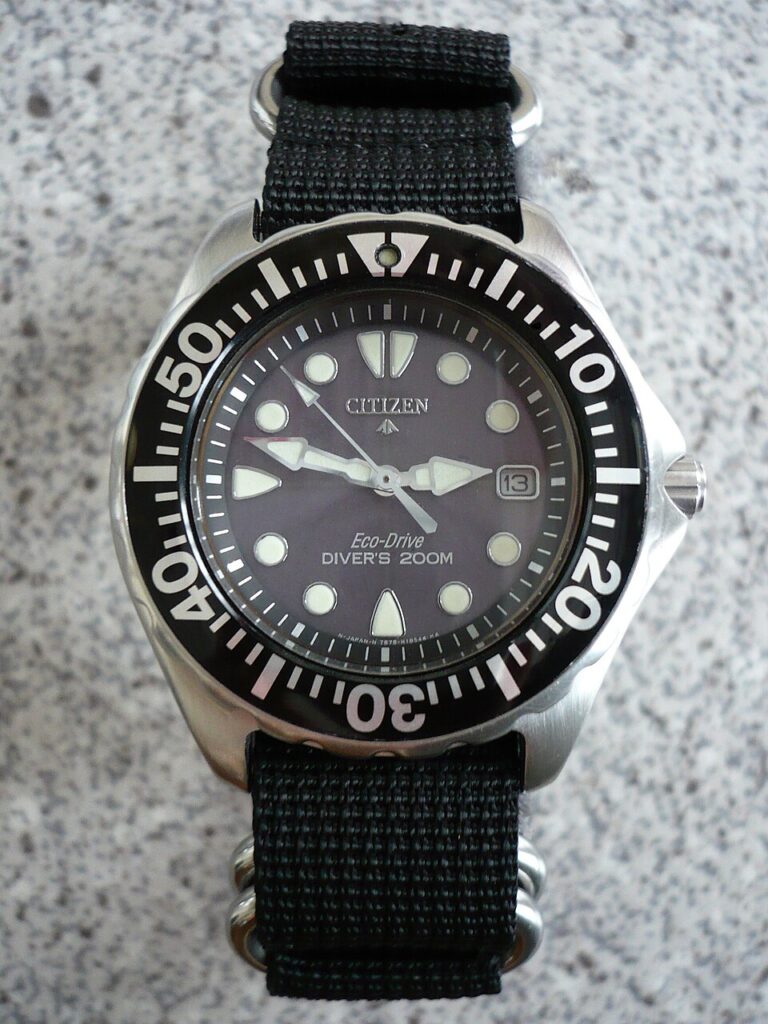
Our NATO strap picks
Barton is one of the most popular NATO strap makers on Amazon, with a wide choice of colors, widths and lengths, and quick-release spring bars on many styles. These are the three Barton styles we recommend, depending on what you want.
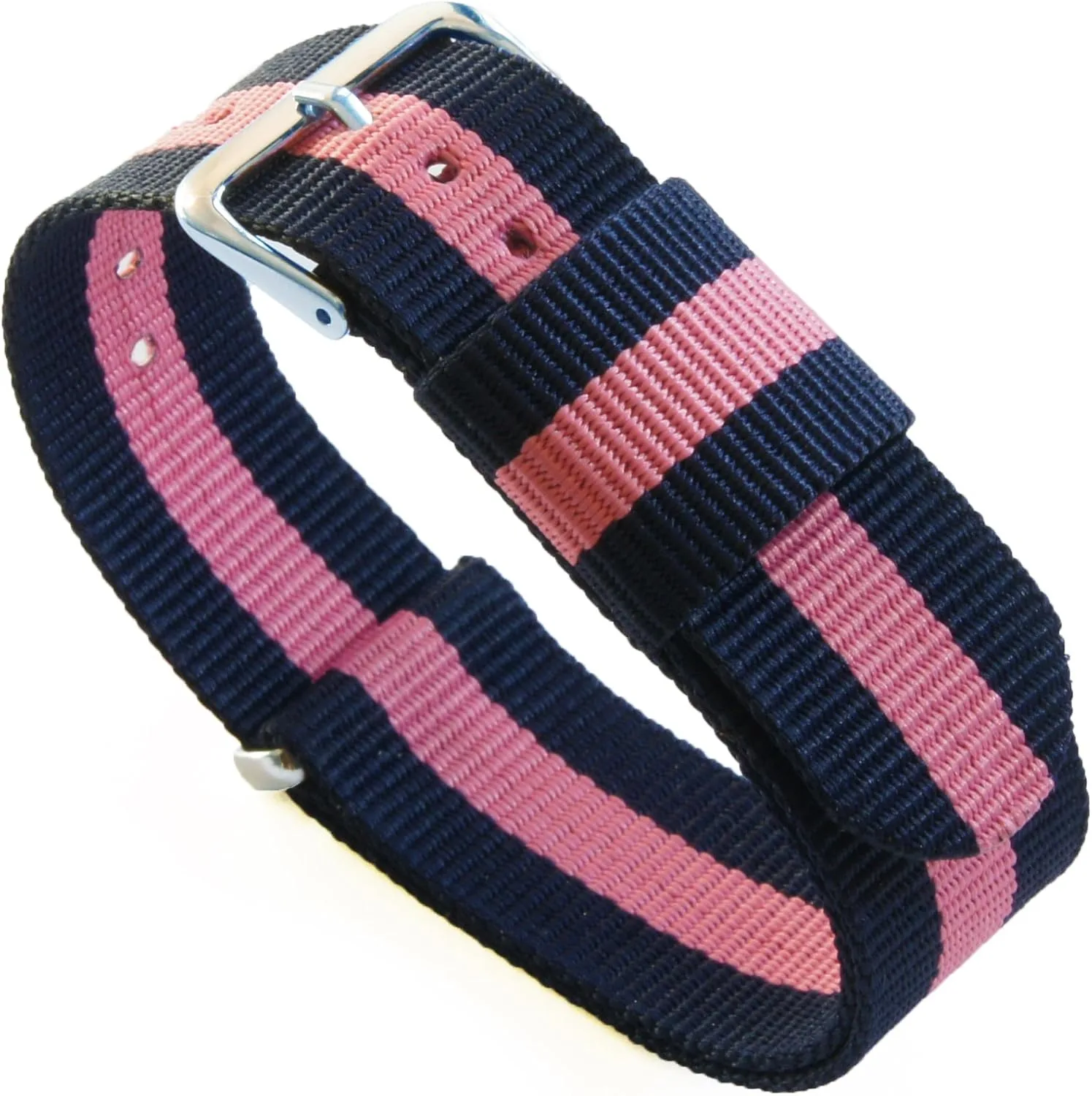
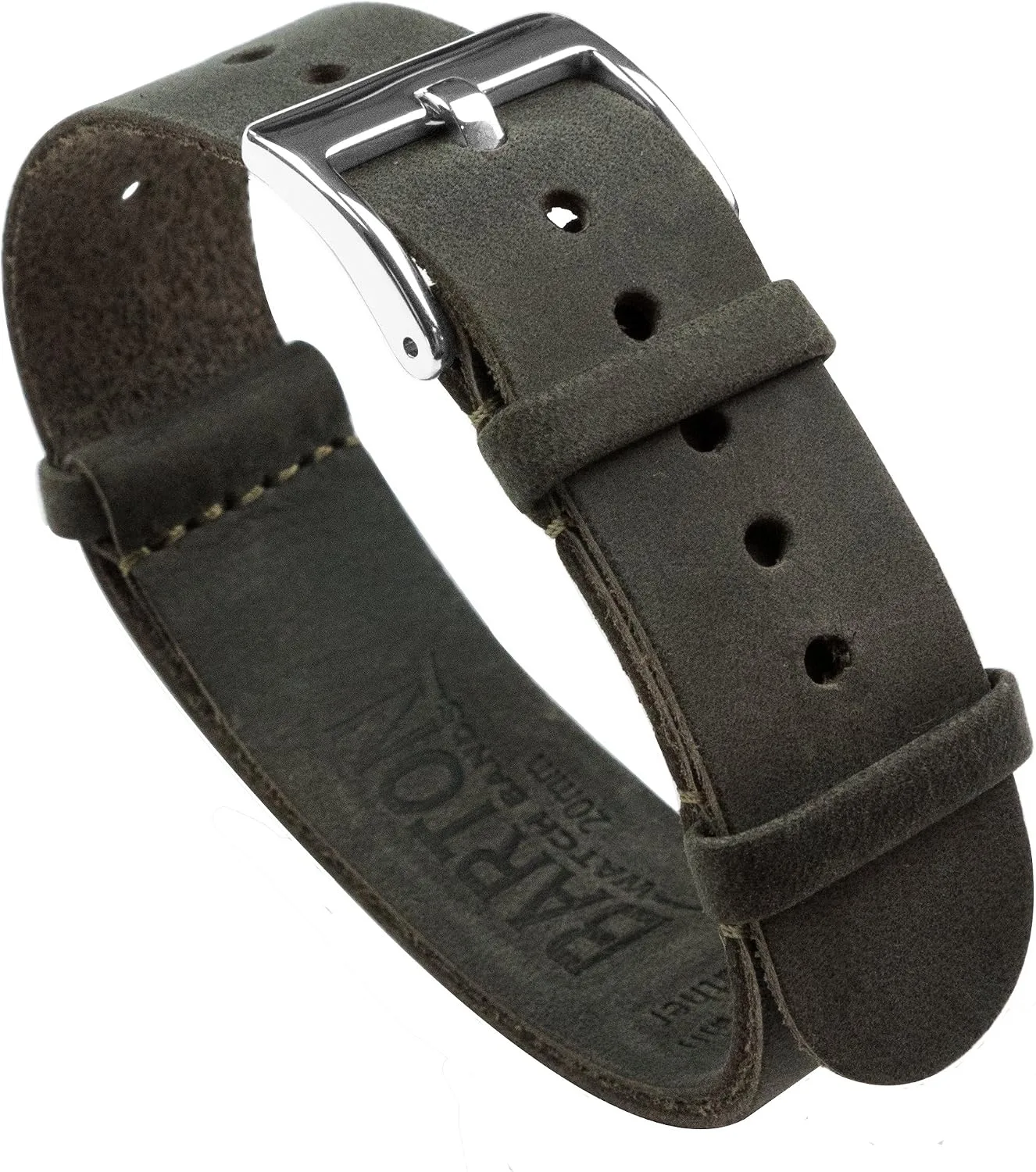
- Barton Ballistic Nylon NATO: the classic, tough nylon NATO in many colors and widths. The best place to start
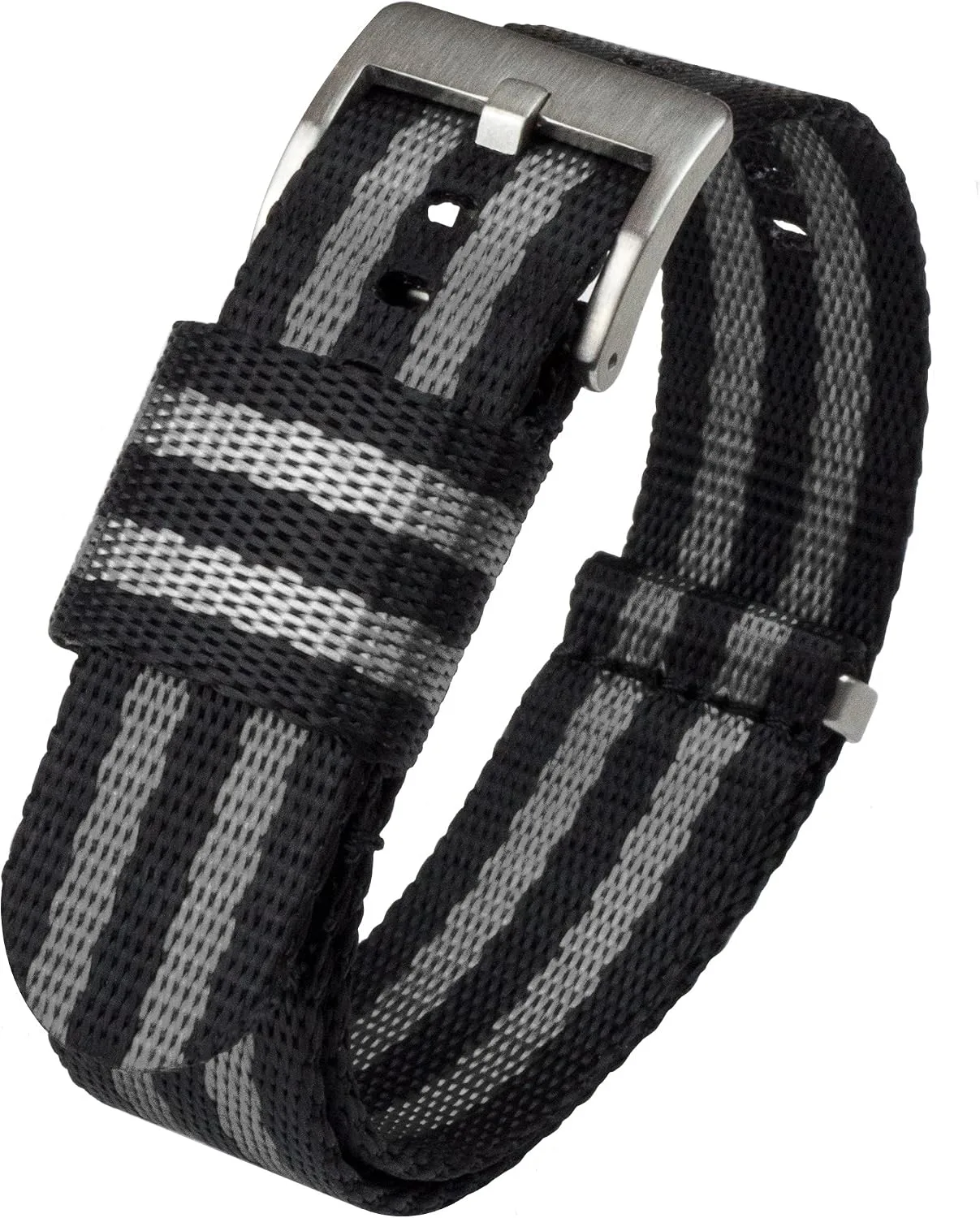
- Barton Elite Seat Belt NATO: a softer, smoother seat belt weave that feels more premium against the skin
- Barton Leather NATO: a leather NATO for a dressier look on field and pilot watches
Choose the width that matches your watch's lugs and the length that suits your wrist on the product page.
Watches that come on a NATO strap
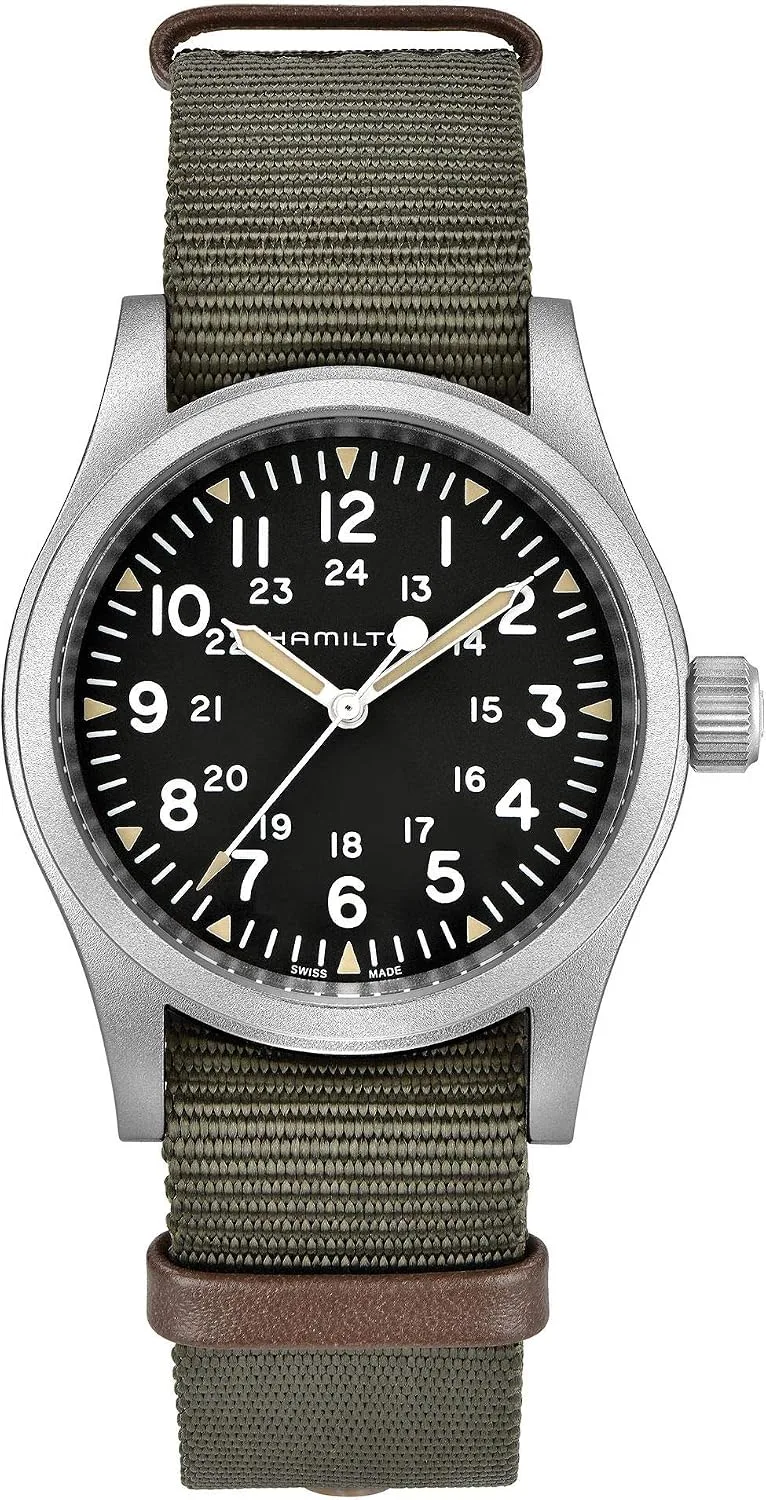
If you like the look and want a watch that comes ready on a NATO, the Hamilton Khaki Field Mechanical is the classic example: a hand-wound military field watch supplied on a NATO strap. Many dive watches also look great on a NATO, including the Seiko Turtle, the Casio Duro and the Orient Kamasu. You can find all three in our guide to the best watches under $500 and our Casio Duro review.
FAQ
A one-piece strap, usually nylon, that threads behind the watch through both spring bars, with a short extra flap that holds the watch. If one spring bar fails, the watch stays on the strap.
The design began as a British Ministry of Defence issue strap in 1973 and was given a NATO Stock Number, which is where the name comes from. It is also known as a G10 strap, after the form soldiers used to order it.
Match the strap width to your watch's lug width, usually 18, 20, 22 or 24 mm. Standard lengths fit most wrists from about 6 to 8 inches; choose a long version for larger wrists.
Yes, most people find them very comfortable, especially seat belt nylon. The main downside is that they raise the watch slightly on the wrist.
Nylon and rubber NATO straps are fine in water if your watch is water resistant. Rinse them with fresh water afterward. Avoid getting leather NATO straps wet.
A Zulu strap uses the same one-piece idea but with thicker nylon and heavier round rings and buckles. It is bulkier and suits large dive watches.
Our verdict
A NATO watch strap is the easiest and cheapest way to change the look of a watch and make it more secure at the same time. Start with a classic nylon NATO in your watch's lug width, try a seat belt version if you want more comfort, and keep a leather NATO for dressier field watches. At these prices, it is worth owning a few.
Image credits: Francis Flinch via Wikimedia Commons (public domain).