
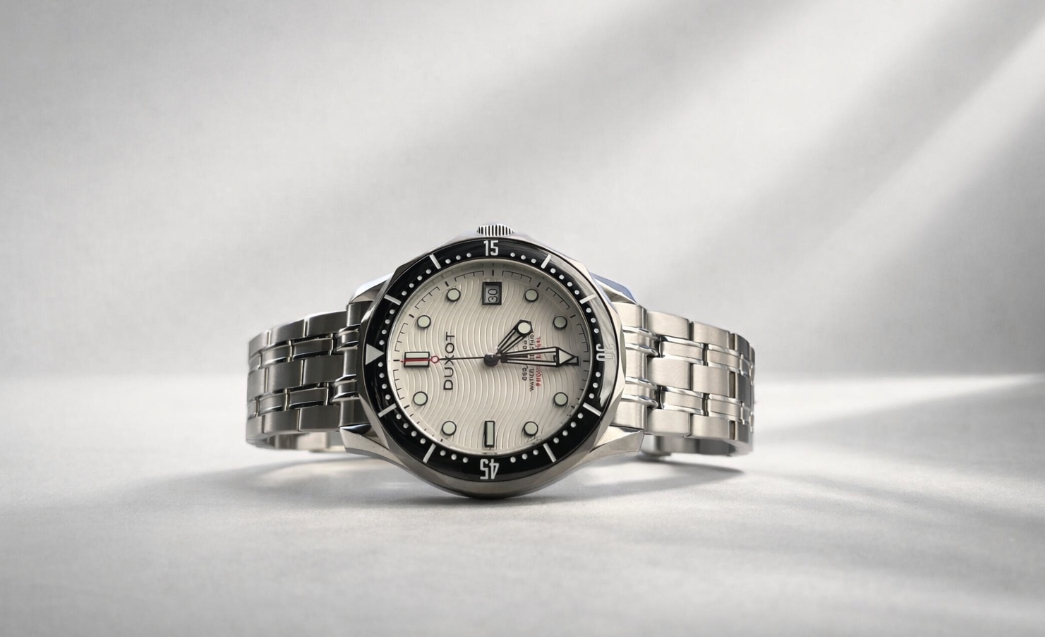
First Impressions: Unboxing and Initial Gut Reaction
Let me set the scene. Package arrives on a Tuesday afternoon. Generic brown box, nothing fancy. I’d been eyeing this particular Duxot watch for about three months, waiting for one of their infamous flash sales to hit. When the price dropped to around $160 from the listed $600-something MSRP, my credit card practically leaped out of my wallet.
Opening the presentation case—and yes, they actually include a decent presentation case—I remember thinking: “This genuinely looks more expensive than what I paid.” The dial caught afternoon sunlight streaming through my office window, and for a split second, I forgot about the price tag entirely. That’s not something I say lightly about watches in this bracket.
My wife walked past, glanced over, and asked if I’d finally bought “that Omega thing” I’d been obsessing over. When I told her the actual cost, she laughed. Good laugh, not mocking laugh. The kind that says “okay, fair enough, that’s actually reasonable.”
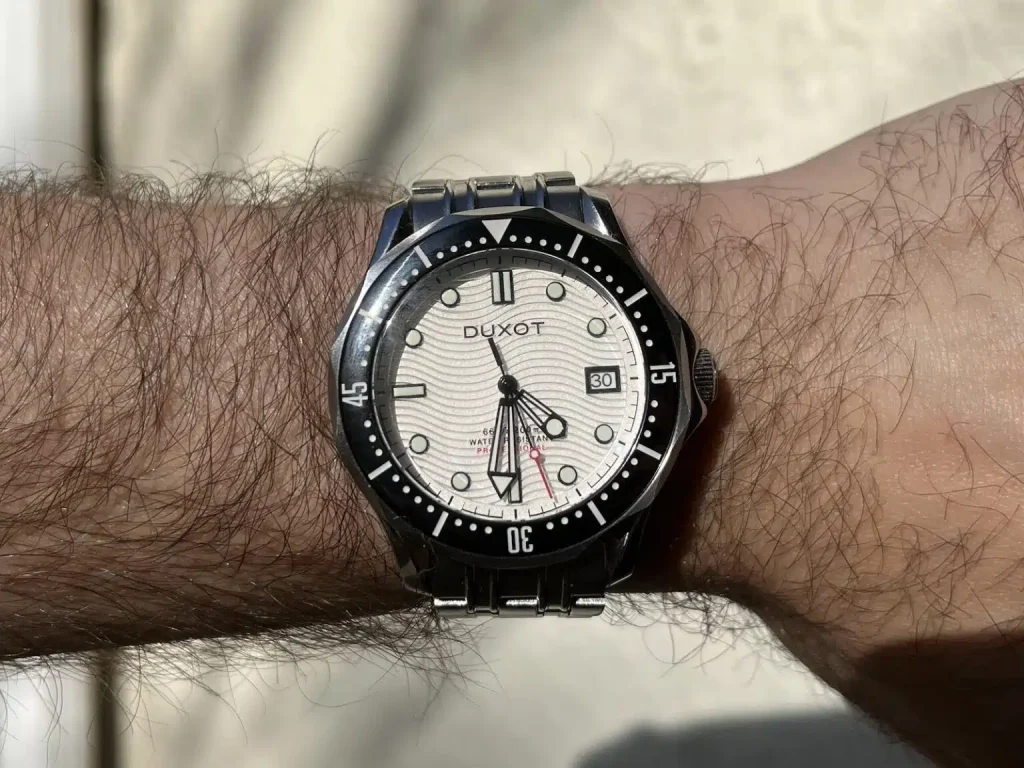
Brand Background: Who Exactly Is Duxot?
Origins and Parent Company
Duxot operates under the Dartmouth Brands umbrella—the same folks behind Spinnaker, Avi-8, and Thomas Earnshaw. If you’ve spent any time in the affordable mechanical watch space, you’ve probably encountered at least one of those names. Dartmouth has built a reputation for delivering surprisingly capable timepieces without obliterating your bank account.
For German-speaking enthusiasts searching for “duxot uhren” or “duxot armbanduhren,” the brand represents an interesting middle ground between Chinese microbrands and established Swiss or Japanese manufacturers. They’re not trying to reinvent horology. Instead, they focus on vintage-inspired designs—mostly from the 1960s through 1980s—executed with modern reliability.
Market Positioning
Here’s where things get interesting. Duxot primarily produces homage pieces. You’ll spot designs reminiscent of Omega Seamasters, Rolex Datejusts, and Patek Philippe Nautiluses throughout their catalog. Some collectors scoff at homages; others appreciate having accessible entry points into iconic aesthetics. Personally? I fall somewhere in the middle. A well-executed homage that doesn’t pretend to be something it isn’t sits perfectly fine with me.
Technical Specifications
Before diving deeper, here’s what you’re working with on paper. These numbers tell part of the story—real-world performance fills in the gaps.
- Case Diameter: 40-42mm depending on model (mine measures 41mm)
- Case Thickness: 12-15mm (varies by collection; my unit sits at 14mm)
- Lug-to-Lug: 47mm
- Case Material: 316L Stainless Steel
- Crystal: Sapphire (flat or domed depending on model)
- Water Resistance: 100-200m (model dependent)
- Movement: Seiko NH35 (21,600 bph / 6 beats per second)
- Power Reserve: Approximately 41 hours
- Lug Width: 20mm
- Warranty: 2 years
- MSRP: $500-785 (street price typically $149-250)
The duxot automatic watch I’ve been testing uses the venerable Seiko NH35 movement—a workhorse caliber that powers countless microbrands. Nothing groundbreaking here, but that’s perfectly acceptable. Reliability matters more than innovation at this price point.

Design and Build Quality
Case Construction and Finishing
Running my fingers across the case reveals a combination of brushed and polished surfaces. Top surfaces feature vertical brushing; sides carry that mirror polish. The transition between finishes? Not quite seamless. Under harsh lighting, you’ll notice slight imperfections where brushed meets polished. Nothing catastrophic, but don’t expect Grand Seiko-level execution.
The case shape varies dramatically across Duxot’s lineup. Mine sports a round diver aesthetic, but their Consillio line goes full 1970s tonneau. Lugs curve downward nicely on my particular reference, hugging my 6.75-inch wrist without awkward overhang. Smaller-wristed folks should definitely check lug-to-lug measurements before purchasing.
Crown operation deserves mention—and not entirely positively. Fresh out of the box, unscrewing felt rough, almost gritty. Not smooth at all. By week two, things improved noticeably. Whether that’s break-in or placebo effect, I can’t say definitively. Either way, initial impressions weren’t stellar in this department.
Dial Layout and Details
Here’s where the Duxot watch genuinely shines. Applied indices—actual raised markers, not printed—catch light beautifully throughout the day. The wave-textured dial on my diver model plays with illumination in ways that kept surprising me even after fourteen days of continuous wear.
Hands follow a classic dagger profile with generous lume application. Date window positioning at three o’clock works better than six o’clock placements on similar homages—no awkwardly cramped numerals fighting for dial real estate. The date wheel itself aligns properly with the window frame; misaligned dates plague cheaper alternatives, so proper execution here earns appreciation.
Branding remains tastefully restrained. “DUXOT” sits below twelve o’clock in a vintage-inspired font that complements rather than dominates. Beneath the center hands, you’ll find depth rating and “PROFESSIONAL” text—that red accent on certain models adds welcome color pop against predominantly monochromatic schemes.
Bezel Characteristics
Unidirectional rotating bezel with 120 clicks. Action feels firm and purposeful—no accidental rotation during normal activities. However, alignment drove me slightly crazy initially. Mine sat about half a click off-center when aligned to twelve. Fortunately, a gentle nudge while rotating eventually settled things into proper position. Your mileage absolutely may vary here; quality control inconsistencies appear throughout user feedback online.
Insert material appears to be painted aluminum rather than ceramic. Scratching resistance remains questionable long-term, though two weeks of daily wear haven’t left visible marks yet. Time will tell whether durability holds up.
Crystal and Anti-Reflective Coating
Sapphire crystal—confirmed via the water droplet test—sits flat on my model. Some references feature domed crystals that add vintage charm but introduce potential readability issues at angles. AR coating exists but performs modestly. Direct sunlight still produces noticeable reflections; indoor lighting proves far more forgiving. Perfectly adequate for the segment, though nothing exceptional.
Lume Performance
Okay, confession time. Lume performance genuinely caught me off guard—in the best possible way.
After spending a Saturday afternoon hiking (roughly four hours of direct sunlight exposure), I came home and immediately checked the bedroom closet. Hands blazed bright green; bezel markers glowed blue. Legitimate “lit up the hallway” intensity. My wife actually commented from downstairs, asking what I was doing standing in the dark staring at my arm.
Longevity proved equally impressive. Waking around 3 AM for a bathroom trip, dial remained readable without fumbling for my phone. By 5 AM? Significantly dimmer but still visible. Compare that to some watches I’ve owned where lume dies within ninety minutes, and you’ll understand why this particular aspect exceeded expectations.
Indoor charging capability falls short, though. Sitting at a desk near windows all day doesn’t provide sufficient exposure for strong nighttime output. You’ll need actual direct light—sunlight or a bright flashlight blast—to achieve maximum brightness. Once charged properly, results speak for themselves.
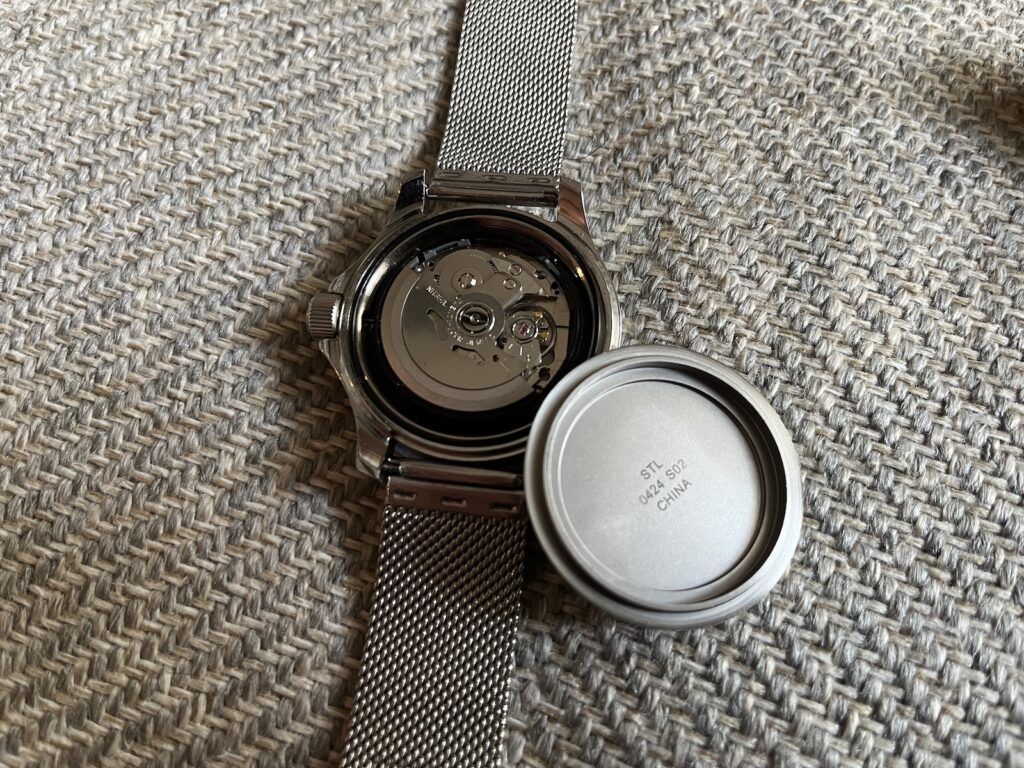
Movement and Accuracy
Movement Overview
The Seiko NH35 powering this duxot automatic watch needs little introduction among enthusiast circles. Japanese-made, proven reliable, easily serviceable, and cheaply replaceable if necessary. Hacking seconds allow precise time-setting; manual winding capability means you can top off power reserve without wearing the piece. No exhibition caseback here—solid steel with laser-etched specifications greets you underneath.
Power Reserve Reality
Stated 41-hour reserve proved roughly accurate during testing. Fully wound Friday evening, worn Saturday, left on the nightstand Sunday morning—still ticking Monday at noon when I checked. By Tuesday morning following complete rest, the movement had stopped. Practical implications? You can comfortably rotate this into a two or three watch collection without constant resetting, assuming occasional weekend wear.
Accuracy Testing Results
I tracked accuracy across both weeks using a simple method: syncing to atomic time each Monday morning and measuring deviation by Sunday evening. Results showed consistent +4 to +6 seconds per day. Within manufacturer specifications and perfectly acceptable for daily-wearer territory. Positional variance (dial-up versus crown-down overnight) shifted results slightly but nothing dramatic enough to warrant concern.
Some owners report regulation straight from the factory; others receive units running faster or slower. Quality control variability seems standard across Dartmouth Brands’ portfolio. Mine arrived within reasonable tolerances—luck of the draw perhaps, but a pleasant surprise nonetheless.

Wearability and Comfort
On-Wrist Presence
Numbers rarely tell the full wearability story. Despite 47mm lug-to-lug measurements that concern smaller-wristed buyers on paper, my 6.75-inch wrist handled this watch comfortably. Curved lugs deserve credit—they follow wrist contours naturally rather than jutting outward aggressively. Visual balance felt proportionate during mirror checks, though I’ll admit the 14mm thickness adds noticeable presence.
Weight distribution plays a role too. The solid bracelet shifts heft away from the case itself, preventing that “top-heavy” sensation plaguing some similarly sized alternatives. Switching to a NATO strap (more on that shortly) altered balance noticeably—lighter overall but more case-focused gravitationally.
Bracelet Experience
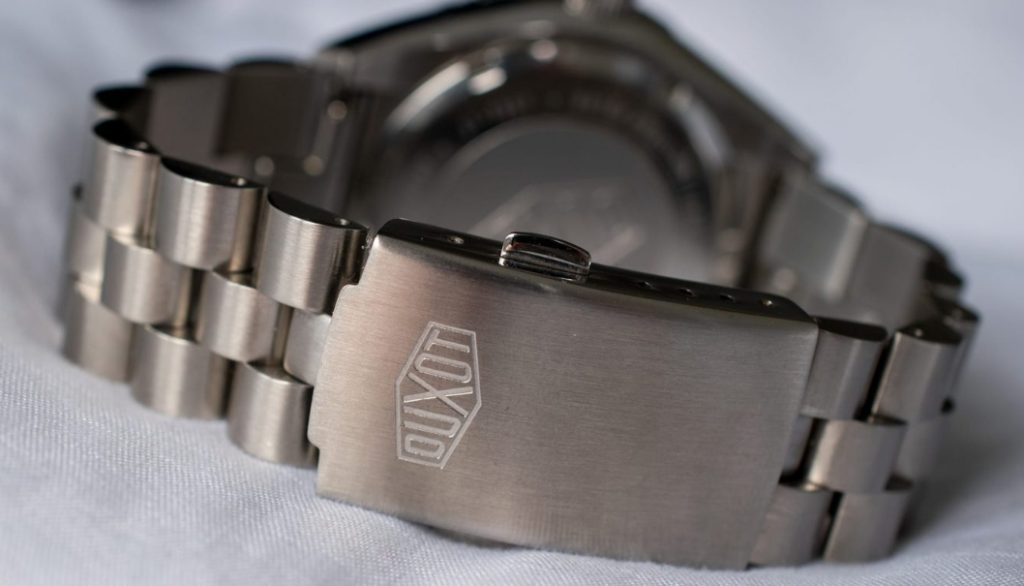
Factory bracelet features solid links throughout, including end links—no hollow construction cutting corners here. The five-link design mimics certain luxury references without pretending to match their finishing standards. Clasp mechanism locks securely via fold-over deployment with push-button release. Three micro-adjust holes provide fitting flexibility, though I found myself wishing for additional positions during temperature swings.
Hair-pulling? Minimal, actually. Links articulate smoothly without grabbing arm hair during normal movement. Extended keyboard sessions produced zero complaints—a genuine relief considering past experiences with lesser bracelets that turned typing into torture.
Shirt Sleeve Compatibility
That 14mm thickness creates challenges with dress shirt cuffs. Slim-fit sleeves? Forget it. Regular-fit French cuffs accommodate passage, barely. The rounded bezel edge helps tremendously—sharp edges would snag fabric constantly. Casual button-downs pose no problems whatsoever. Sporty aesthetics arguably suit weekend-wear better than boardroom meetings anyway.
Strap Swap Potential
Standard 20mm lug width opens endless aftermarket possibilities. During testing, I swapped between the factory bracelet, olive green NATO, black leather racing strap, and steel mesh Milanese. Each option transformed the aesthetic dramatically—the racing strap dressed things down beautifully; mesh added unexpected elegance. Spring bar access sits a bit tight between lugs and case, making thicker NATOs somewhat frustrating to install. Patience conquers, eventually.
Living With the Watch: A Two-Week Diary
Days One Through Three: Getting Acquainted
Initial sizing took longer than expected—removing bracelet links without proper tools isn’t fun. Day one wore slightly loose; by evening my wrist had swollen enough to feel snug. Adjusted micro-position before bed. Second morning, the gritty crown action already mentioned made setting time somewhat annoying. By day three, I’d stopped noticing and simply appreciated the sweep of that second hand during boring conference calls.
Days Four Through Seven: Building Confidence
Thursday happy hour brought the first unsolicited compliment. Coworker across the table asked if I’d “finally pulled the trigger on that Seamaster.” Explained the actual brand and price; his eyebrows rose. “Seriously? That’s… actually pretty impressive for under two hundred bucks.” Small victory, but validating nonetheless.
Weekend hiking revealed the lume performance mentioned earlier. Also discovered the rotating bezel’s practical usefulness tracking elapsed time during trail segments. Sporty tool-watch functionality proved genuinely helpful rather than merely aesthetic.
Week Two: Settled Opinions Emerge
Somewhere around day ten, the honeymoon phase faded enough for objective assessment. Minor quirks became more apparent—the slightly misaligned bezel, modest AR coating effectiveness, thickness that complicates dressier occasions. Simultaneously, genuine appreciation solidified for what this watch delivers at its actual street price. Value proposition remains genuinely compelling even after initial excitement subsides.
Dinner party Saturday evening generated three separate compliments before appetizers arrived. One guest—a self-described “watch guy” with several Swiss pieces—examined the bracelet closely and nodded approvingly. “You can feel these brands improving every year,” he observed. Coming from someone wearing a Tudor, that meant something.
Price, Value, and Competitors
Pricing Reality Check
Let’s address the elephant in the room: Duxot’s MSRP strategy borders on absurd. No reasonable person should pay $640-785 for these watches. Full stop. The brand clearly adopted the “permanent discount” model that Invicta pioneered (and earned criticism for). Actual market prices typically range $149-250 depending on sales timing and retailer inventory.
At inflated MSRP? Hard pass. At typical street pricing? The equation shifts considerably. Around $150-200, you’re receiving sapphire crystal, solid bracelet construction, proven Japanese automatic movement, and respectable finishing for the segment. That combination becomes genuinely attractive territory.
What You Actually Receive
Movement quality matches or exceeds most competitors at equivalent pricing. Finishing quality sits mid-pack—better than cheapest Chinese alternatives, below pricier microbrand offerings. Feature set (water resistance, sapphire, applied indices) checks appropriate boxes. Overall package represents solid value without groundbreaking execution in any single area.
Alternatives Worth Considering
Similar aesthetic seeking? Spinnaker (sister brand, often better value), Islander, Invicta Pro Diver, and various AliExpress offerings compete directly. Higher budget unlocks Christopher Ward, Mido, and pre-owned mainstream Swiss options. The actual Omega Seamaster inspiring many Duxot designs runs approximately $5,000+ new—roughly 25-30x the typical Duxot street price.
Who Should Buy This Watch?
Ideal buyer profile: Someone wanting luxury aesthetics without luxury expenditure; enthusiasts building affordable rotation collections; newcomers exploring mechanical watches before committing significant funds; gift-givers seeking impressive presentation at reasonable cost. Those demanding perfect quality control, brand prestige, or investment potential should absolutely look elsewhere.
Pros and Cons
Strengths
- Attractive design language that photographs even better than expected
- Reliable Seiko NH35 movement with proven track record
- Exceptional lume output surpassing many pricier competitors
- Solid bracelet construction with comfortable articulation
- Sapphire crystal protection at budget-friendly pricing
- Responsive customer service based on personal and reported experiences
Weaknesses
- Case thickness may deter dress-wear intentions
- Bezel alignment inconsistencies reported across multiple units
- Crown action initially rough before break-in period
- Inflated MSRP creates confusing value perception
- Limited brand recognition among mainstream consumers
- AR coating effectiveness merely adequate rather than impressive

Final Thoughts
Two weeks felt like enough time to understand what this Duxot watch brings to my rotation—and what limitations accompany it. The honeymoon glow faded around day ten, replaced by something more valuable: realistic appreciation.
Did it scratch that Seamaster itch I’ve carried for years? Temporarily, yes. Will I eventually pursue the genuine Omega? Almost certainly. But until that day arrives—and my bank account permits—this homage occupies the spot admirably. Not as placeholder exactly, more like… understudy. Capable, professional, lacking only that ineffable quality distinguishing true luxury from competent imitation.
Will this stay in rotation six months from now? Ask me then. For now, it’s earned consistent wrist time over pieces costing considerably more. Sometimes that says everything necessary; sometimes it reveals nothing at all. Either way, I keep reaching for it most mornings. Make of that what you will.
Frequently Asked Questions
Where are Duxot watches manufactured?
Assembly occurs in China with Japanese movements (typically Seiko-made). Design direction comes from Dartmouth Brands’ international team. Components source from various Asian suppliers.
What movement does a Duxot automatic watch use?
Most models feature Seiko NH35 or NH38 calibers. Some quartz references utilize Swiss Ronda or Japanese Miyota movements. Always verify specific model specifications before purchasing.
Is Duxot a reputable watch brand?
Operating under Dartmouth Brands provides established infrastructure and customer support. Quality falls within expected parameters for the price point. Reputation among enthusiast communities remains generally positive, particularly at discounted street pricing.
How does Duxot compare to Spinnaker?
Both share the same parent company. Spinnaker tends toward original designs while Duxot leans heavily into vintage homages. Pricing structures overlap significantly; quality appears comparable across similar price tiers. Personal aesthetic preferences should guide selection between the two.
Should I pay MSRP for a Duxot watch?
Absolutely not. Wait for inevitable sales dropping prices 60-75% below listed MSRP. Patience rewards itself consistently with this brand. Check official website promotions, authorized dealers like Long Island Watch, and secondary marketplace listings.
Got my Henri Diver six months ago for $149 during a flash sale. Honestly blown away by the lume — it’s insane for this price. Crown was stiff at first but smoothed out after a few weeks. Still wearing it 3-4 times a week. Solid beater watch.
Been eyeing the Consillio for a while now. Your review pretty much confirms what I suspected — wait for sales, never pay MSRP. Quick question: does the bracelet taper much toward the clasp? Hate when they stay the same width throughout.