
The Dress Watch Everyone Recommends — And Why
Post "best affordable dress watch" on any watch forum and start counting replies. You won't get far before someone types two words: Orient Bambino.
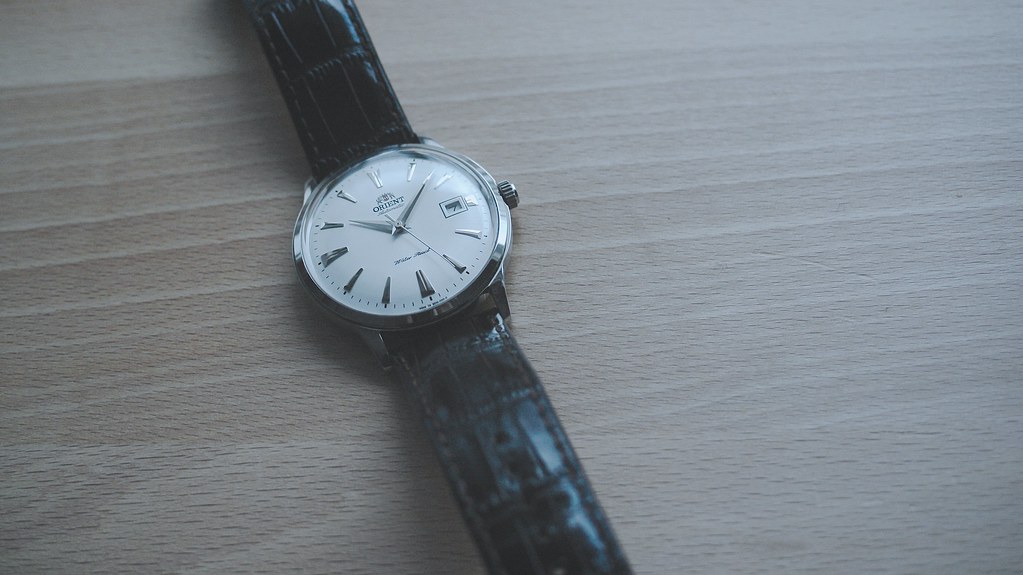
It's become the default answer. The safe pick. The watch people buy as their first automatic, and the one they quietly keep after they've moved on to pricier pieces.
But default answers deserve scrutiny. Is the Bambino genuinely great, or just familiar? Which of the many versions should you buy? And what do owners complain about once the honeymoon fades?
This orient bambino review pulls together the official specs, years of owner feedback, and a straight comparison with its main rivals. No hype, no filler — just what you need to know before you click "add to cart."
Orient Bambino Specifications at a Glance
The Bambino now comes in two main case sizes. Here's how the classic 40.5mm model compares with the newer 38mm Version 7:
| Spec | Classic Bambino (40.5mm) | Bambino Version 7 (38mm) |
|---|---|---|
| Movement | Orient F6724 automatic, hand-winding, hacking | Orient F6724 automatic, hand-winding, hacking |
| Power reserve | Approx. 40 hours | Approx. 40 hours |
| Jewels | 22 | 22 |
| Case diameter | 40.5mm | 38.4mm |
| Lug-to-lug | Approx. 46.8mm | 44mm |
| Thickness | 11.8mm | 12.5mm |
| Lug width | 21mm | 20mm |
| Crystal | Domed mineral | Domed mineral |
| Water resistance | 30m | 30m |
| Lume | None | None |
| Rated accuracy | +25 / −15 seconds per day | +25 / −15 seconds per day |
Notice that lug-to-lug number on the 38mm. At 44mm, it fits wrists that the 40.5mm version simply overwhelms. More on sizing later.
Generations vs Versions — Clearing Up the Confusion
The Bambino naming system confuses almost everyone at first. Here's the simple version: generation refers to the movement inside, while version refers to the dial design.
Generation 1 vs Generation 2
First-generation Bambinos used Orient's caliber 48743. It winds automatically, but you can't hand-wind it, and the seconds hand doesn't stop when you pull the crown. Setting the time to the exact second? Not happening.
Second-generation models moved to the F6722 and later the F6724 caliber. Both add hand-winding and hacking — the seconds hand stops when you pull the crown, so you can sync to the second.
Buying used or from a marketplace seller? Look at the bottom of the dial. First-generation watches typically read "Water Resist," while second-generation dials spell out "Water Resistance." It's a small detail that saves you from buying the older movement by mistake.
The Main Versions Explained
- Version 1: The minimalist original — pointed hour markers, dauphine-style hands, a clean and almost architectural dial.
- Version 2: The fan favorite. Roman numerals, a printed minute track, an onion-style crown, and the famous cream dial with blued hands. This is the Bambino most people picture.
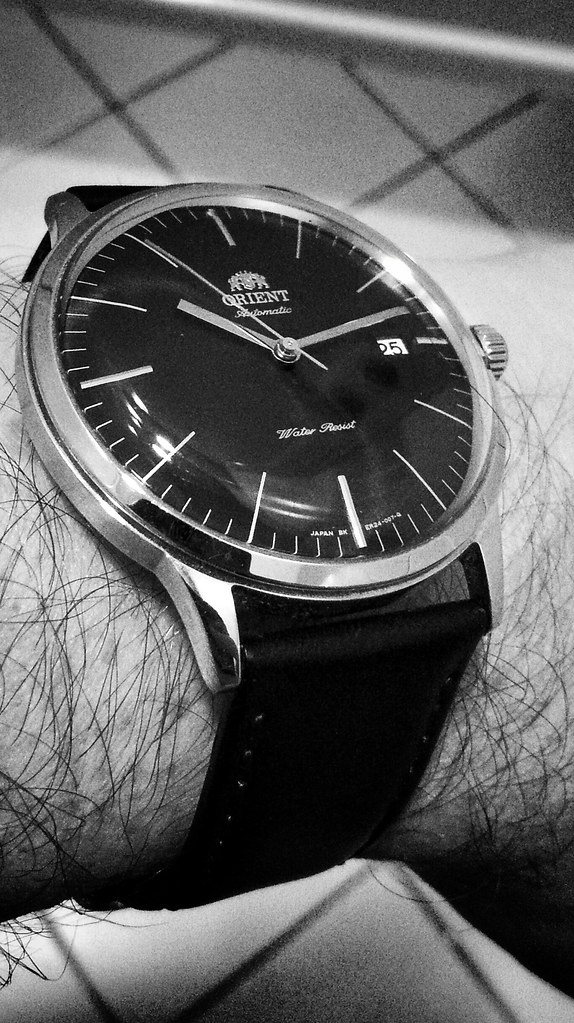
- Version 3: Orient's Bauhaus take. Thin indices, rectangular hands, no numerals — modern and very clean.
- Version 4: A refined return to the Version 1 look, with sunburst dial options and a more common 22mm lug width.
- Version 7: The compact 38.4mm case with an exhibition caseback, later also offered in the classic 40.5mm size.
- Version 8: A busier, more functional take with day, date, and a 24-hour subdial, plus 50m water resistance.
- Small Seconds and Open Heart: Special variants — one moves the seconds to a subdial, the other cuts away part of the dial to show the balance wheel.
Orient also releases limited editions and seasonal colorways regularly, so you'll see plenty of dial colors beyond this list.
Which Version Should You Choose?
Want the classic vintage look? Version 2 with the cream dial and blue hands. Prefer minimalism? Version 3. Have a smaller wrist or want to see the movement? Version 7 in 38mm. Want a bit more everyday practicality? Version 8.
Design and Build Quality
The Domed Crystal — The Whole Point
If the Bambino has one signature feature, it's the crystal. It rises from the bezel in a pronounced dome that bends light at the edges and makes the dial look deeper than it is.
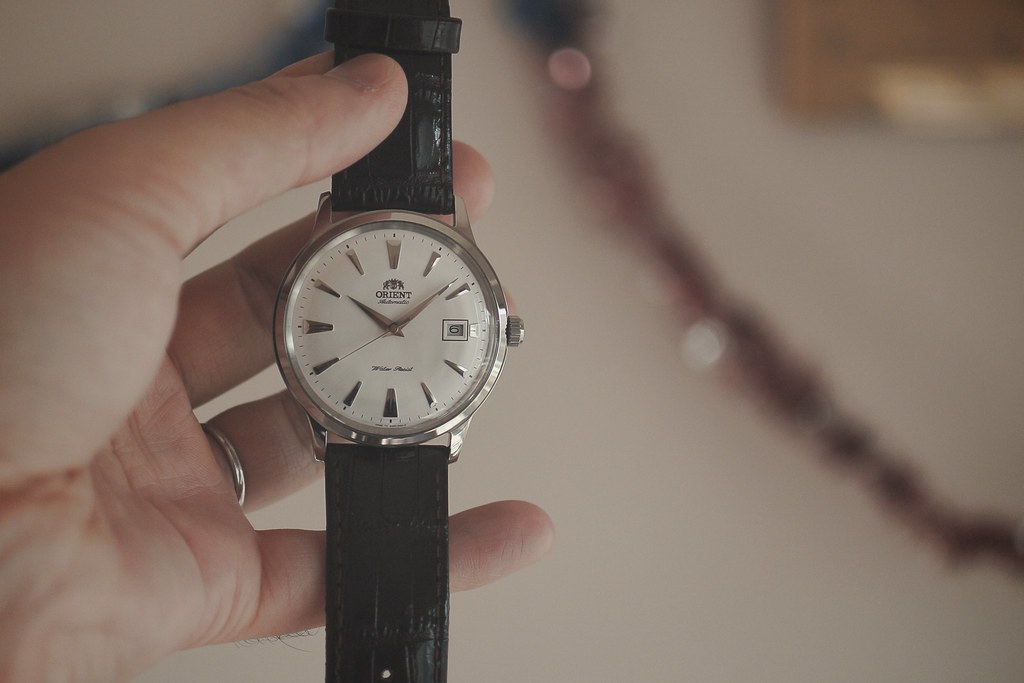
This is what makes the watch look far more expensive in person than in product photos. Tilt your wrist and reflections slide across the curve. Catch it at 45 degrees and the dial seems to glow under glass.
It's a vintage design trick from the mid-century era, and almost nothing else at this price does it as convincingly.
The Dial
Many Bambino dials are subtly domed too, following the curve of the crystal. Combined with long, slim hands that reach the edge of the dial, the result looks balanced and deliberate.
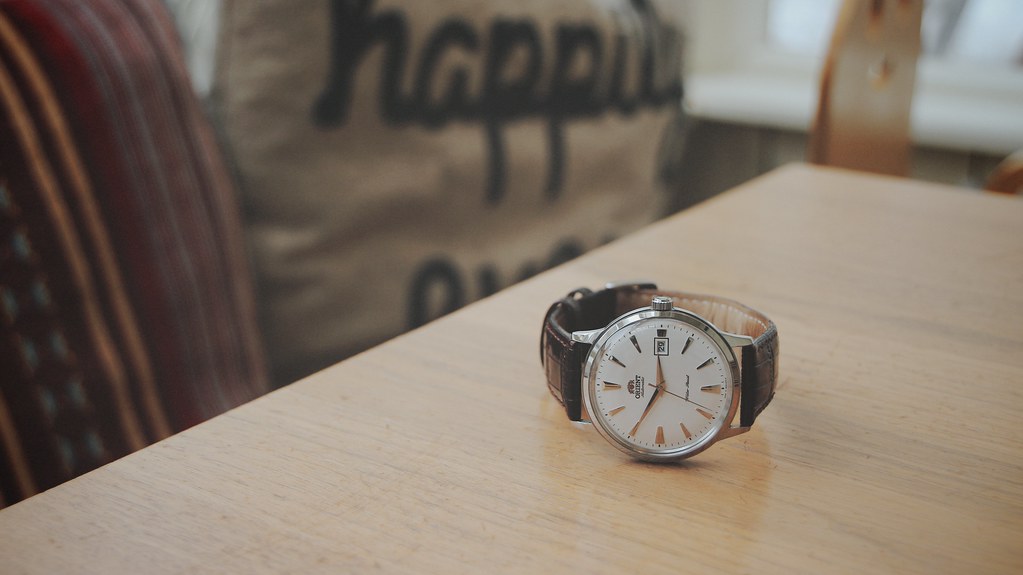
The printing is crisp for the price. Hour markers are applied on several versions, which adds depth. Don't expect the texture of a Seiko Presage Cocktail Time dial — the Bambino wins through proportion and simplicity, not surface finishing.
The Case and Crown
The case is polished stainless steel with a thin bezel that leaves most of the face to the dial. That thin bezel is also why the 40.5mm version wears larger than its number suggests.
The crown is a simple push/pull design — no screw-down. That's fine for a dress watch, and it makes daily hand-winding and time-setting easy.
The Strap — The Weak Link
Almost every owner says the same thing: the stock leather strap is the first thing to go. It tends to arrive stiff, needs a long break-in period, and feels basic next to the watch it's attached to.
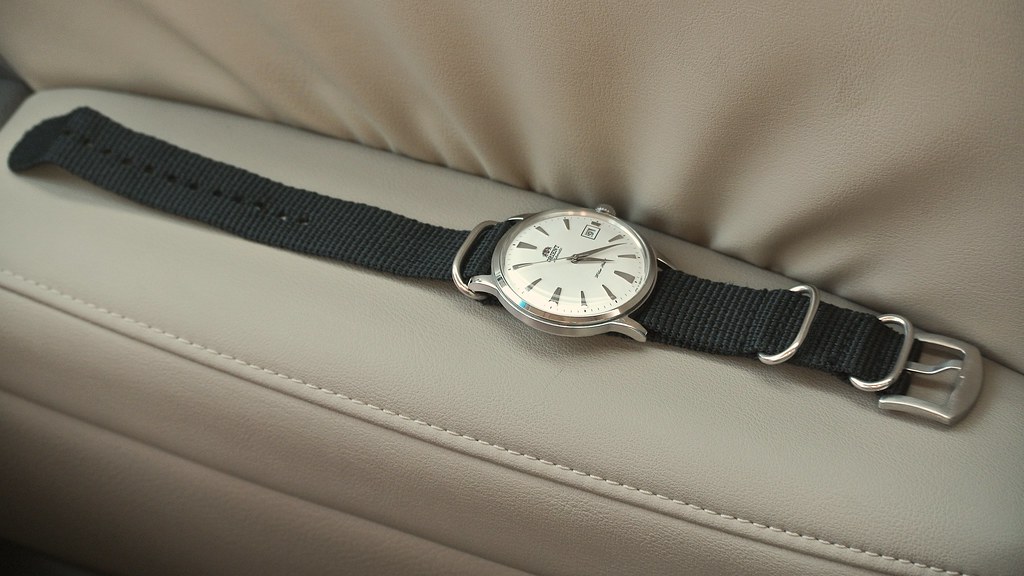
The bigger annoyance on classic 40.5mm models is the 21mm lug width. It's an uncommon size, which limits your aftermarket choices. The good news: plenty of strap makers now offer 21mm options, and a decent quick-release leather strap transforms the watch for little money. The 38mm Version 7 uses a standard 20mm width, which makes strap shopping much easier.
Movement and Accuracy
Inside the Caliber F6724
Orient designs and builds its own movements — something rare at this price point. The F6724 is a 22-jewel automatic with hand-winding, hacking, a date complication, and roughly 40 hours of power reserve.
It's not a showpiece movement. Finishing is basic, which is why many classic versions use a solid caseback. But it's a proven workhorse that has been powering Orients for years.
Real-World Accuracy
Officially, Orient rates the movement at +25 to −15 seconds per day. On paper, that's a wide window.
In practice, owners frequently report much better results — many say their watch runs within a handful of seconds per day. But that varies from unit to unit, and position, temperature, and how often you wear it all affect the numbers. Plan for the spec, and treat anything better as a bonus.
One practical note: with 40 hours of reserve, the Bambino will stop if you leave it off over a long weekend. Thanks to hand-winding and hacking, getting it running and set again takes seconds.
Servicing and Long-Term Reliability
The F6724 is a simple, widely understood movement, so any competent watchmaker can service it. That said, a full professional service can cost a meaningful chunk of what the watch itself costs. Many owners simply wear their Bambino until it needs attention and then decide whether servicing or replacing makes more sense.
Sizing and Wearability
40.5mm vs 38mm — Which Should You Pick?
The classic Bambino measures 40.5mm across with a lug-to-lug of around 46.8mm. Because the bezel is so thin and the dial so open, it wears larger than many 40mm watches — closer to a modern sports watch than a traditional dress watch.
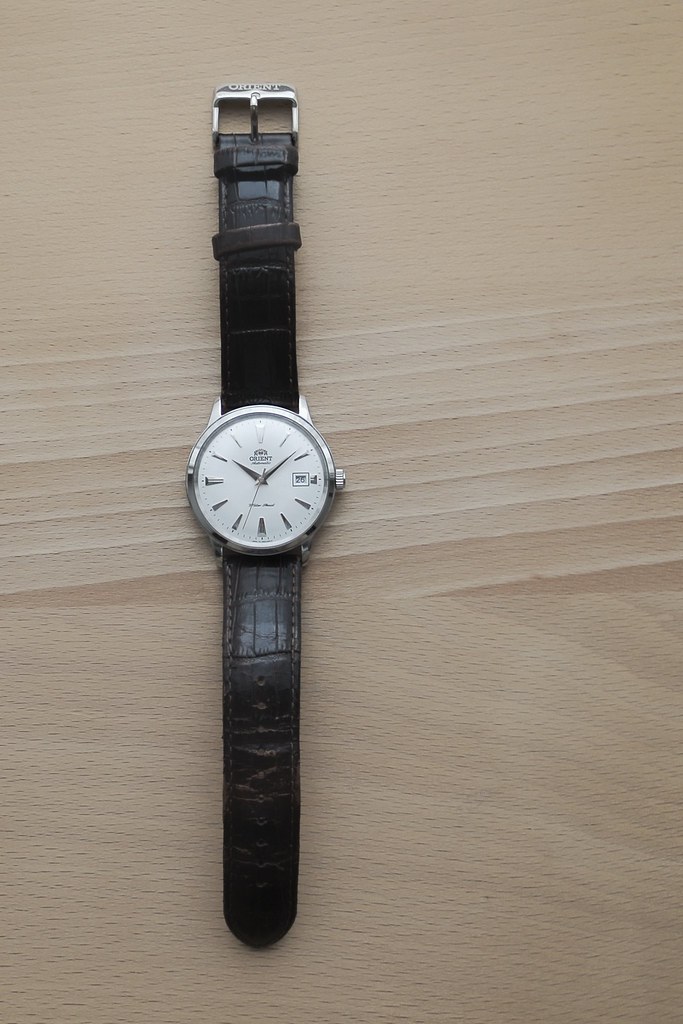
Traditional dress watches often sit between 34mm and 38mm. If you have a slimmer wrist or prefer that classic proportion, the 38mm Version 7 is the better choice. Its 44mm lug-to-lug keeps the lugs from hanging over the edge of smaller wrists.
Have a larger wrist? The 40.5mm model will feel right at home and still look dressy.
Under a Shirt Cuff
The Bambino measures around 12mm thick, but a good portion of that height is the domed crystal. The case itself is relatively slim, so it slides under a shirt cuff more easily than the spec suggests.
Water Resistance — Take It Seriously
A 30m water resistance rating sounds reassuring, but in practice it means splash resistance. Hand washing and rain are fine. Swimming, showering, and hot tubs are not. Treat it like a dress watch and it will treat you well.
What Owners Say After Years of Wear
Short-term reviews tend to focus on first impressions. Long-term owner feedback tells a more useful story. Across forums, retailer reviews, and long-term write-ups, the same themes come up again and again.
What Holds Up
- The design doesn't get old. Owners who've moved on to expensive watches often keep the Bambino because nothing else looks quite like it.
- The movement is dependable. Reports of serious mechanical failures are relatively rare for a watch at this price.
- Accuracy is frequently better than the official spec suggests.
What Wears Out or Annoys
- The mineral crystal scratches. That beautiful dome is also the most exposed part of the watch. Expect hairline scratches with daily wear.
- The rotor can be noisy. Some owners notice the automatic rotor spinning, especially in a quiet room.
- The build feels light. The Bambino is comfortable, but it doesn't have the dense, solid feel of more expensive watches.
- The stock strap rarely survives the first few months.
One more tip: buy from a retailer with a clear return policy. Some buyers report frustrating return and customer service experiences, and a good retailer protects you if your unit arrives with a defect.
Orient Bambino vs the Competition
Bambino vs Seiko Presage Cocktail Time
The Cocktail Time is the Bambino's most common rival. It offers more elaborate textured dials, a different design personality, and usually a higher price tag. The Bambino counters with its domed crystal, a cleaner vintage look, and a lower entry price. If you want dial texture and sparkle, choose the Presage. If you want classic understatement, choose the Bambino.
Bambino vs Seiko SARB035
The SARB035 is a cult classic with a sapphire crystal and a smoother 6R15 movement. But it has been discontinued, so finding one means hunting the used market at higher prices. If you're curious, read our full Seiko SARB035 review. For most buyers today, the Bambino is the easier and cheaper way to get a similar clean, classic look.
Bambino vs Timex Marlin
The Timex Marlin channels mid-century style too, with a smaller, more vintage-proportioned case. It's a great choice for very slim wrists. The Bambino feels more substantial and offers an in-house automatic movement with hacking and hand-winding across its range.
| Watch | Strength | Trade-off |
|---|---|---|
| Orient Bambino | Domed crystal, in-house automatic, low price | Mineral crystal, basic strap |
| Seiko Presage Cocktail Time | Textured dials, strong brand appeal | Usually costs more |
| Seiko SARB035 | Sapphire crystal, refined movement | Discontinued, used market only |
| Timex Marlin | Authentic vintage proportions | Smaller case won't suit everyone |
Price and Value
Bambino pricing depends heavily on the version and the retailer. Classic versions are often available for well under $300, while the 38mm Version 7, open-heart models, and limited editions sit higher. Orient's own store lists higher regular prices but frequently runs sales, and large retailers often discount popular references.
Prices shift often, so check the current price before buying. Whatever you pay, the value equation is hard to beat: an in-house automatic movement, a genuinely distinctive design, and a dress watch you'd happily wear to a wedding.
Pros
- Gorgeous domed crystal that makes the watch look far more expensive
- In-house automatic movement with hand-winding and hacking
- Huge choice of versions, colors, and two case sizes
- Comfortable, light, and easy to wear under a shirt cuff
- Excellent value for an automatic dress watch
Cons
- Mineral crystal scratches more easily than sapphire
- Stock strap is stiff and basic
- 21mm lug width on classic models limits strap choices
- Only 30m water resistance and no lume
- Wide official accuracy tolerance
Who Should Buy the Orient Bambino?
First-time automatic buyers: It's an affordable, low-risk way to experience a mechanical watch without sacrificing style.
Anyone needing a dress watch: Weddings, interviews, office days — the Bambino looks right in all of them.
Vintage design lovers: The domed crystal and classic dials deliver mid-century charm without vintage maintenance headaches.
Gift shoppers: It looks significantly more expensive than it is, which makes it one of the safest watch gifts around.
Skip it if: You need a tough everyday watch for sports, water, or rough work. Or if scratch resistance matters more to you than looks. A sapphire-crystal field or dive watch will serve you better.
Frequently Asked Questions
Does the Orient Bambino have an in-house movement?
Yes. Orient designs and manufactures its own movements, and current Bambinos use the in-house F6724 automatic caliber.
Does the Orient Bambino hack and hand-wind?
Second-generation and newer models do. First-generation Bambinos with the 48743 caliber don't hack or hand-wind.
Can I swim with an Orient Bambino?
No. The 30m rating means splash resistance only. Remove it before swimming or showering.
Is Orient owned by Seiko?
Orient is part of Seiko Epson Corporation, which is a separate company from the Seiko watch brand most people know. The two share history, but they're different businesses.
What strap size does the Orient Bambino use?
Most classic 40.5mm versions use 21mm straps. The 38mm Version 7 uses 20mm, and Version 4 uses 22mm.
Which Orient Bambino size is right for me?
As a rough guide, wrists under about 6.5 inches usually suit the 38mm version better. Larger wrists will be comfortable with the 40.5mm.
Final Verdict
The Orient Bambino isn't perfect. The crystal scratches, the strap is forgettable, and you'll need to keep it away from the pool.
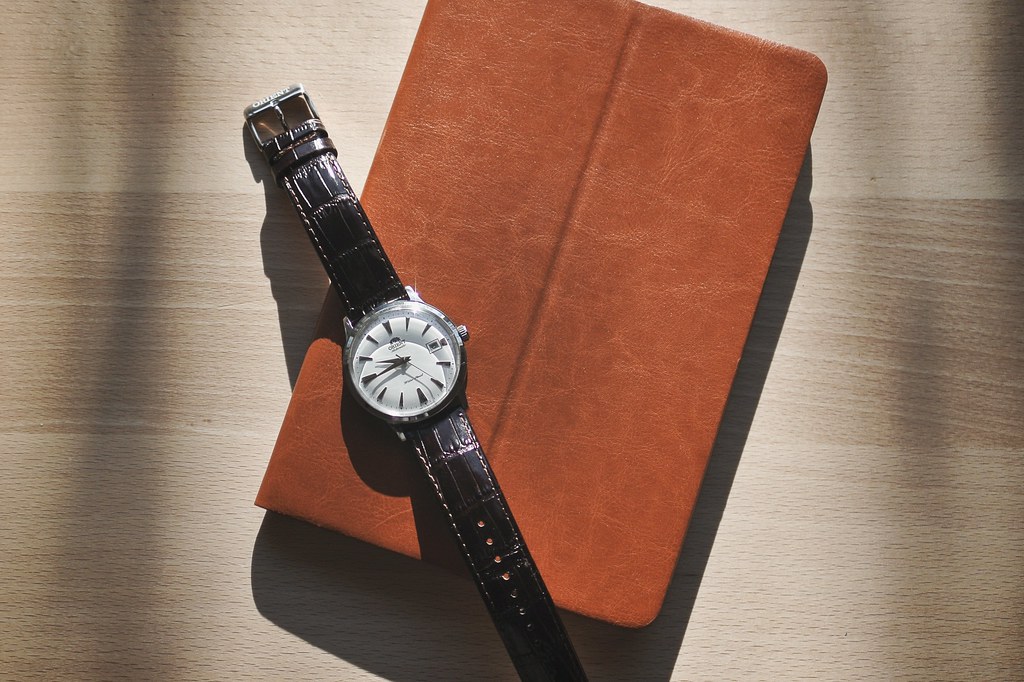
But none of that changes the core truth: few watches at this price look this good. The domed crystal, the classic dials, and an in-house automatic movement add up to a dress watch that punches far above its weight.
Pick your version, swap the strap, and you'll have a watch that looks at home anywhere a jacket is involved. There's a reason it's still the default answer — it earns it.
Image credits: MIKI Yoshihito, hnt6581 / Flickr, CC BY 2.0 (creativecommons.org/licenses/by/2.0).